2017 BJC Fellows
BJC welcomed the third class of BJC Fellows in 2017, bringing 10 young professionals together to deepen their historical, theological and legal understanding of religious liberty and develop skills to advocate for the cause throughout their careers.
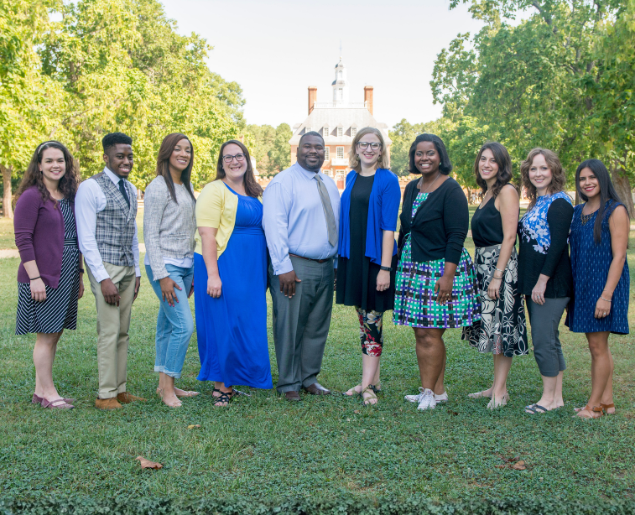
Meet the 2017 Class
-
-
Sofi Hersher / Washington, D.C.
Aurelia Dávila Pratt / Cedar Park, Texas
Courtney Pace / Memphis, Tennessee
Kathryn Freeman / Austin, Texas
Libby Mae Grammer / Richmond, Virginia
Corey Mitchell / Raleigh, North Carolina
Stephanie Renee Ellis / Russellville, Arkansas
Charles Carrington / Edgewater, Maryland
Kristen Nielsen Donnelly / Yardley, Pennsylvania
Meriah Tigner / Sioux Falls, South Dakota
See Photos from the Week in Colonial Williamsburg
Hailing from nine different states and the District of Columbia, the ten young professionals selected for the 2017 class attended the BJC Fellows Seminar in Colonial Williamsburg July 26-30, which prepares them to be religious liberty advocates.

The Seminar included a tour of Colonial Williamsburg with an emphasis on religious history.

Classroom sessions included lessons on Baptist history from the Rev. Dr. Pam Durso; a look at the Founders from author and professor Michael Meyerson; sessions on religious liberty law from BJC’s Jennifer Hawks; and presentations on effective advocacy from BJC Executive Director Amanda Tyler.

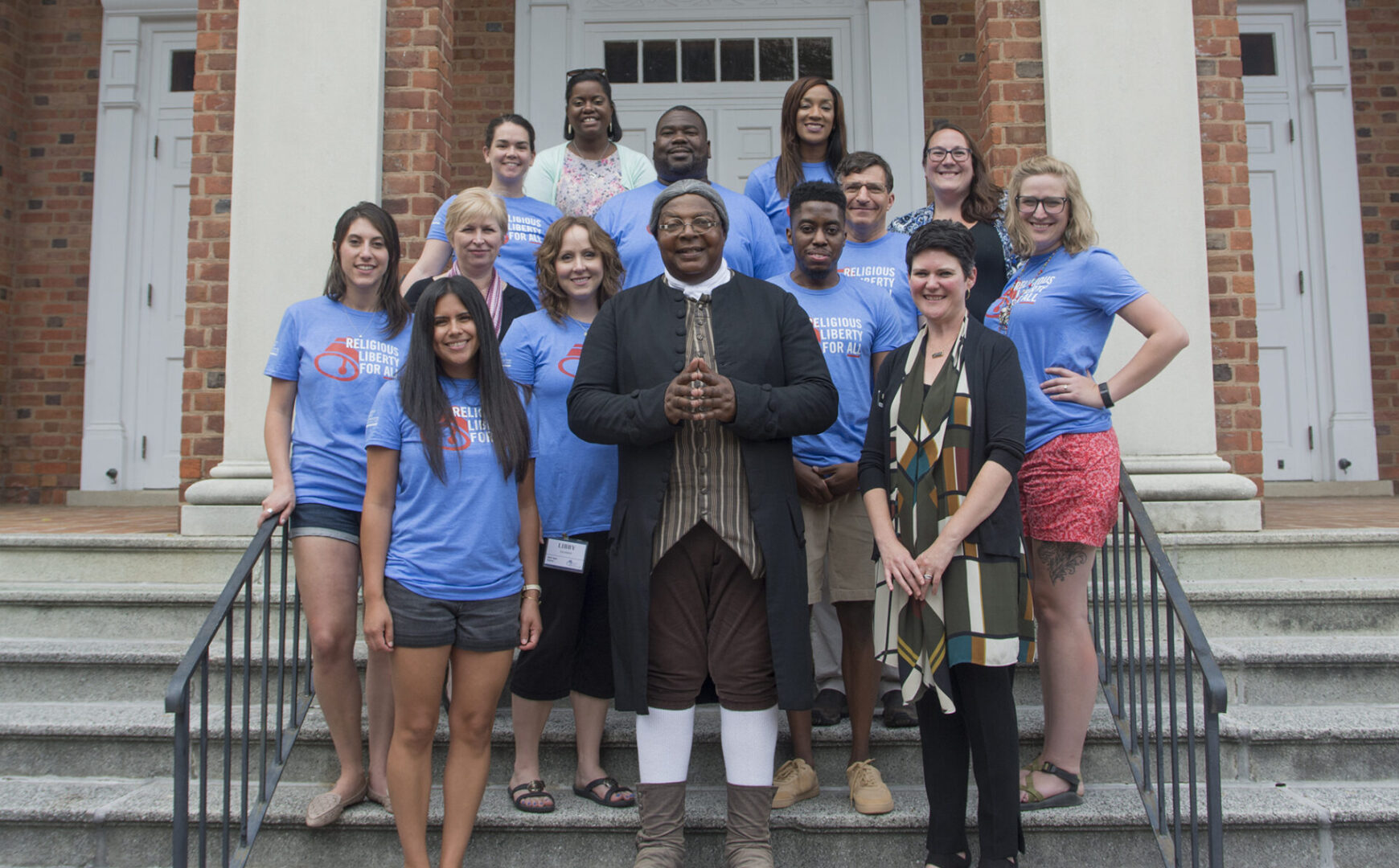
The BJC Fellows also had a chance to interact with historical interpreters, including one portraying Gowan Pamphlet, the first black ordained Baptist minister in America.

“Because of this program, I am more passionate than ever to take up the mantle and participate in the work of protecting religious liberty in our country, but perhaps more importantly, I am also now more equipped than ever to do so. … For me, it is about more than tolerance; it is practicing radical and loving inclusion toward everyone no matter what.”
-Aurelia Dávila Pratt

“One of the many gifts the BJC Fellows Program gave to me was an invitation to wrestle with the foundations of America in a way I’d never been allowed to before.”
-Kristen Donnelly

Hailing from nine different states and the District of Columbia, the ten young professionals selected for the 2017 class attended the BJC Fellows Seminar in Colonial Williamsburg July 26-30, which prepares them to be religious liberty advocates.
The Seminar included a tour of Colonial Williamsburg with an emphasis on religious history.
Classroom sessions included lessons on Baptist history from the Rev. Dr. Pam Durso; a look at the Founders from author and professor Michael Meyerson; sessions on religious liberty law from BJC’s Jennifer Hawks; and presentations on effective advocacy from BJC Executive Director Amanda Tyler.
The BJC Fellows also had a chance to interact with historical interpreters, including one portraying Gowan Pamphlet, the first black ordained Baptist minister in America.
“Because of this program, I am more passionate than ever to take up the mantle and participate in the work of protecting religious liberty in our country, but perhaps more importantly, I am also now more equipped than ever to do so. … For me, it is about more than tolerance; it is practicing radical and loving inclusion toward everyone no matter what.”
-Aurelia Dávila Pratt
“One of the many gifts the BJC Fellows Program gave to me was an invitation to wrestle with the foundations of America in a way I’d never been allowed to before.”
-Kristen Donnelly
Read Reflections
A Life-Changing Experience by Corey Mitchell
Simply put, the BJC Fellows Seminar was a life-changing experience. From the moment I stepped foot onto the beautiful campus of Colonial Williamsburg to the time I left the historic city, my mind was stretched and challenged to think in new ways. I was encouraged to step outside of my comfort zone and engage in advocacy work and the promotion of religious liberty for all Americans; not just the black Baptists in my local congregation, but every denomination represented in these great United States, as well as those who do not subscribe to any religious belief.
For starters, I found that the required texts were quite helpful in understanding the historical, theological, political and biblical underpinnings of religious liberty in this country and prepared me for the BJC Fellows Seminar. The best part, however, was the fact that our sessions were led by leading thinkers in the field of religion and religious liberty law.
Even though I’m a lifelong Baptist, I learned more about my heritage and denomination in those four days than I have my whole life! I also learned how to communicate religious liberty and the law to others, as well as how to become an ambassador for religious liberty in my community. As a minister and civic leader, this piece was quite helpful for me as I engage others in my religious and social context.
The BJC Fellows Seminar truly changed the way I think about religion in this country. I realize now that a threat to anyone’s religious freedom is also a threat to my religious freedom. Knowing that, historically, Baptists have led the fight for religious liberty in this country has really changed my views on several issues. I never realized how closed-minded I was about the freedoms we enjoy and how easy it is to infringe on others’ rights based on my religious views.
For more than 80 years, the BJC has been the only faith-based organization fighting to preserve the religious freedom for all Americans, and I’m proud to be a BJC Fellow.
More Than Tolerance by Aurelia Dávila Pratt
For some time, I felt like I was living in two separate worlds: the world of the Baptist pastor and the world of the concerned citizen. I was interested in what I was seeing play out politically on the local, state and national stage, but I wasn’t sure what my role should look like as ordained clergy. My two worlds collided when I learned about John Leland, an American Baptist minister who was fundamental in the struggle for religious liberty in the United States. John Leland taught me that I have a role to play in the political arena, not despite my being a pastor, but because of it.
On the first full day of my BJC Fellows experience, it really sunk in that I had been given a gift by being chosen to attend. Of course I was grateful for the obvious things: a paid trip, room and board, and delicious meals. But the real gift became more apparent with each lecture and the accompanying activities. This was the gift of knowledge, and I felt like a grateful sponge, soaking up information as it changed me from the inside out.
Specifically, I was inspired by the stories of those who advocated tirelessly for religious freedom upon the founding of our country. I especially loved reading direct quotes from people like John Leland. He may be gone now, but his passion for what is right is still very much alive, and it’s contagious! Leland said, “The only way to prevent religion from being an engine of cruelty is to exclude religious opinions from the civil code.”
Because of this program, I am more passionate than ever to take up the mantle and participate in the work of protecting religious liberty in our country, but perhaps more importantly, I am also now more equipped than ever to do so. I think about the people who have gone before me — people like John Leland — and I am reminded of why the preservation of religious liberty is absolutely necessary. This protection is for the good of all people in our society. For me, it is about more than tolerance; it is practicing radical and loving inclusion toward everyone no matter what.
This is the kind of work I believe my faith calls me to every day, and it comes to life when good intentions are combined with well equipped knowledge. Having both is truly a gift worth sharing.
Get to Know Other Classes