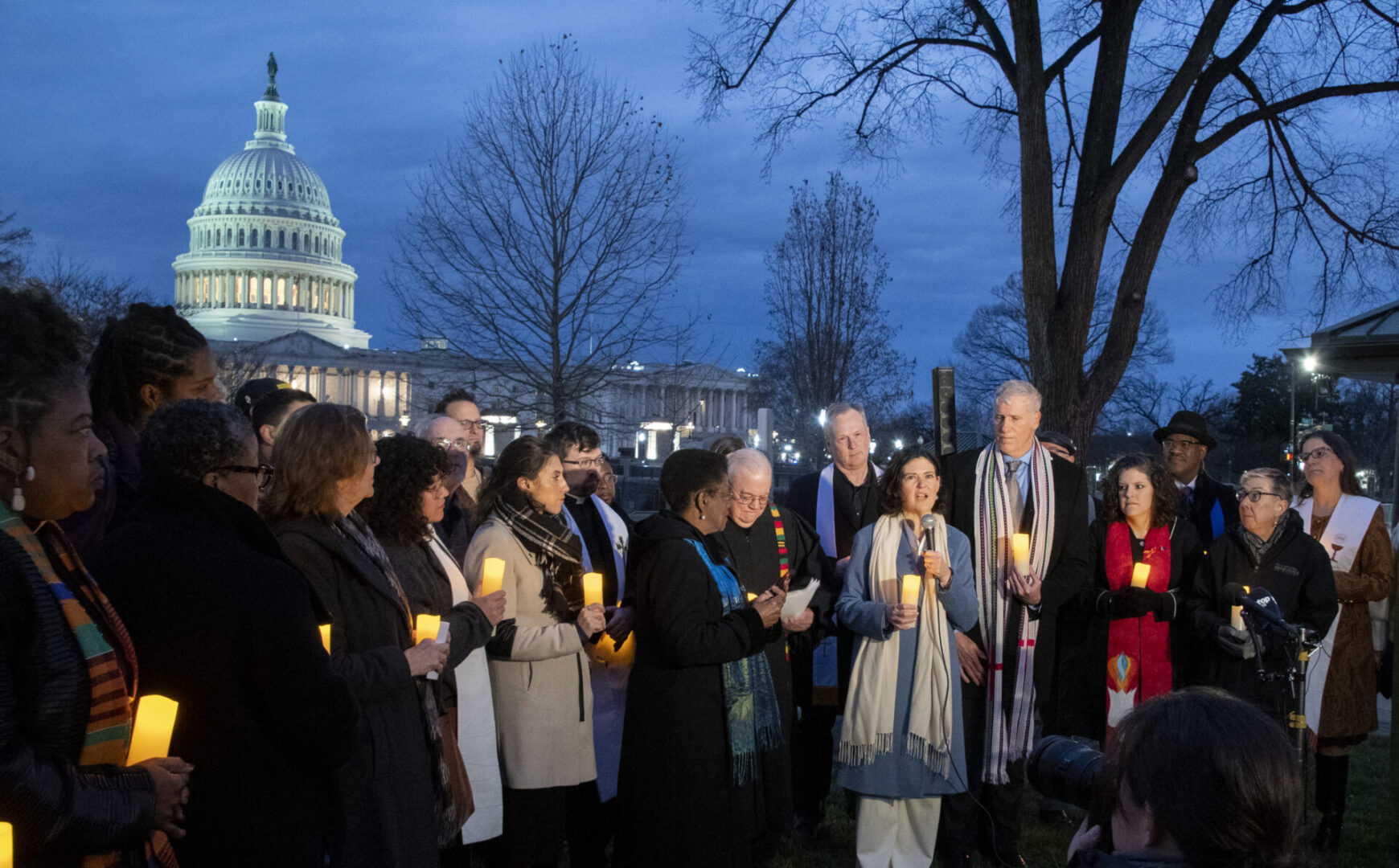
2024 BJC Fellows
The BJC Fellows come from diverse theological, educational and geographic backgrounds, all united in their call to defend faith freedom for all. This year’s class explored the importance of listening to all narratives; in addition to the stories on the grounds of Colonial Williamsburg, the class heard from an archaeologist who explained how building structures were previously prioritized in archaeology instead of the stories of the people who lived and were buried there.
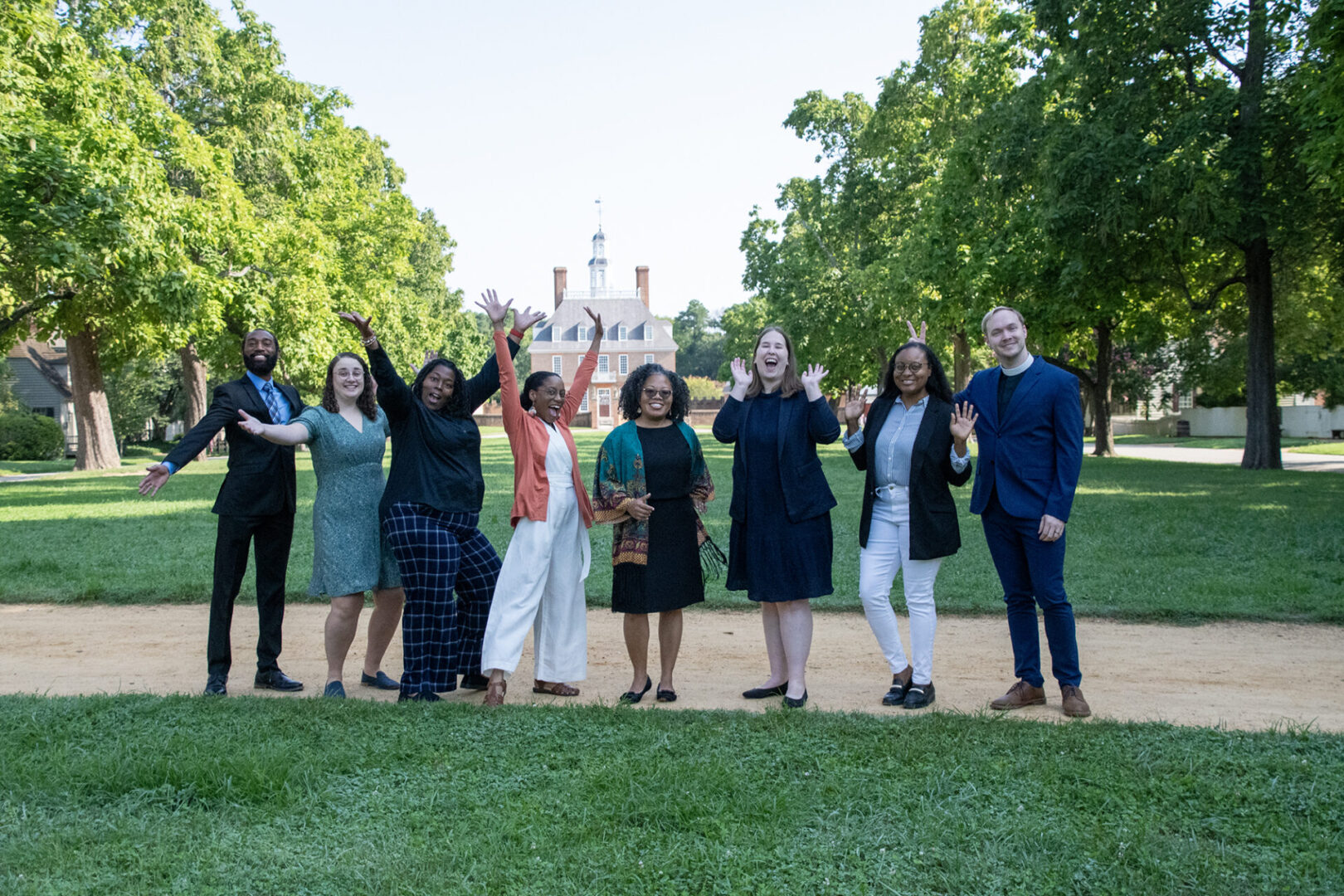
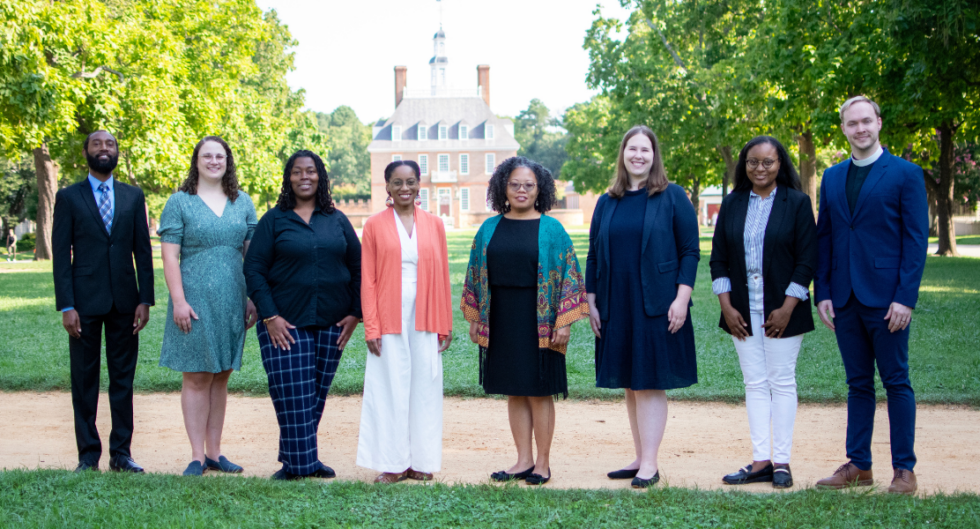
Meet the Class
2024 BJC Fellows
-
Jamil Grimes (Nashville, TN)
Rev. Leigh Curl-Dove (Seattle, WA)
Rev. Margaret L. Conley (Cartersville, GA)
Lakia Marion (Knoxville, TN)
Sejana Yoo (Temple, TX)
Margaret Hamm (Somerville, MA)
Brittany Washington (Fort Worth, TX)
Rev. Wesley Poole King (Nashville, TN) -
See More
Learning in Action
Eight BJC Fellows participated in a rigorous five-day training seminar in Colonial Williamsburg, Va., designed to prepare them to advocate in defense of religious freedom.
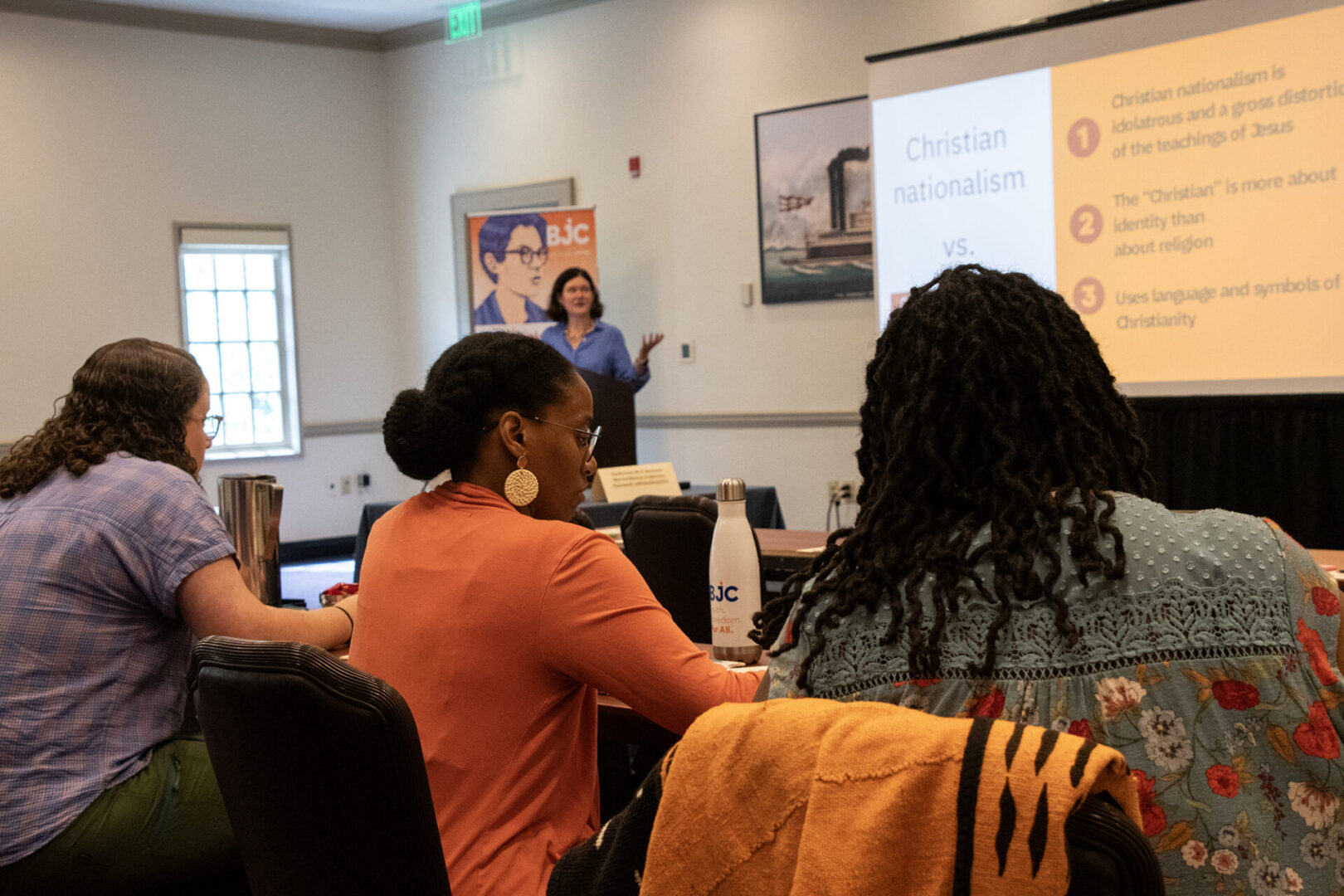
During the seminar, BJC staff joined with other legal and theological experts and Colonial Williamsburg’s own historical interpreters to provide the BJC Fellows with an overview of the historical, legal and theological foundations of religious liberty.
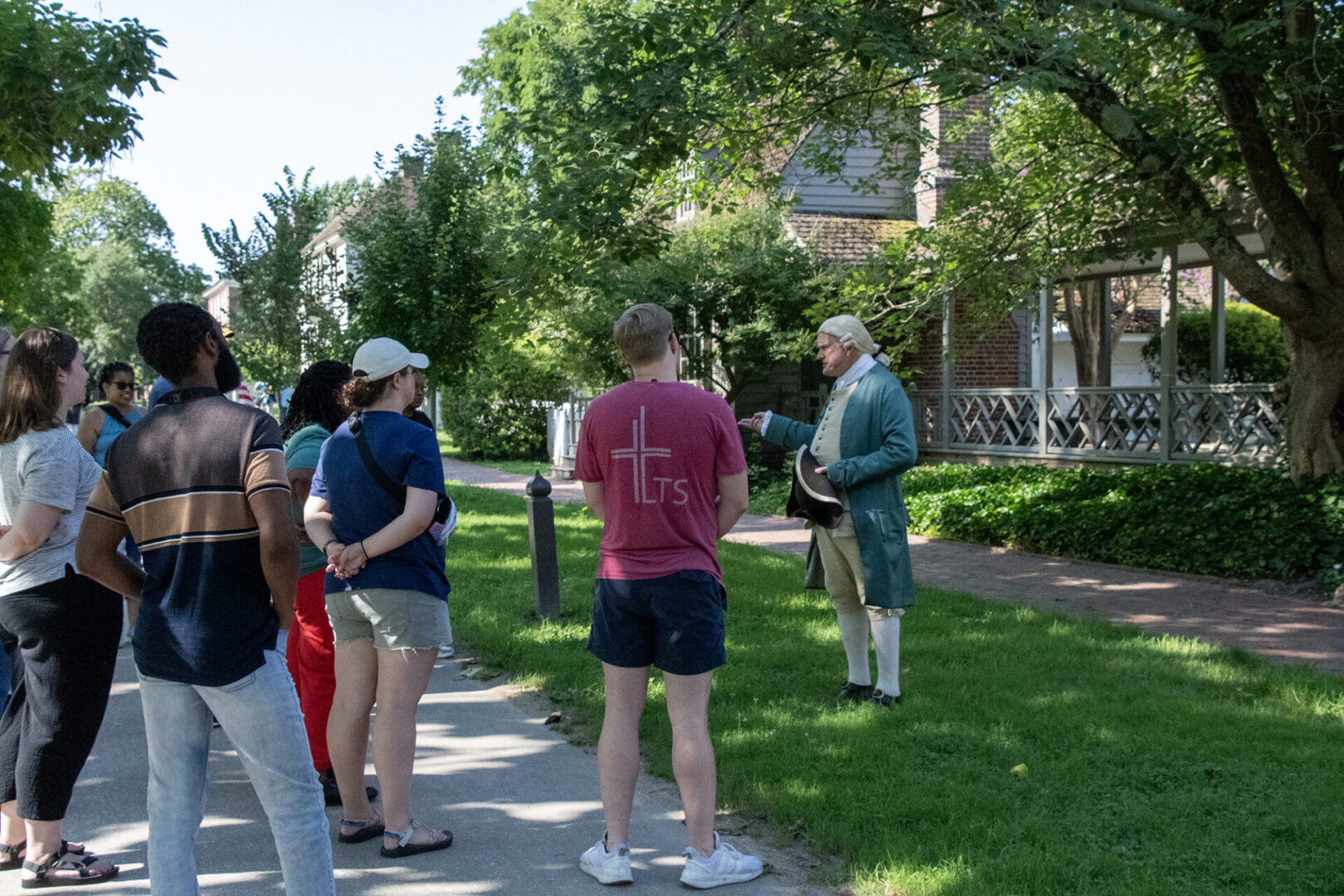
“The BJC Fellows Seminar continues to be a vital space for emerging leaders to explore the intersection of religious freedom and justice in today’s complex political landscape,” said Dr. Sabrina E. Dent, director of the BJC Center for Faith, Justice and Reconciliation, which serves as the home of the BJC Fellows Program.
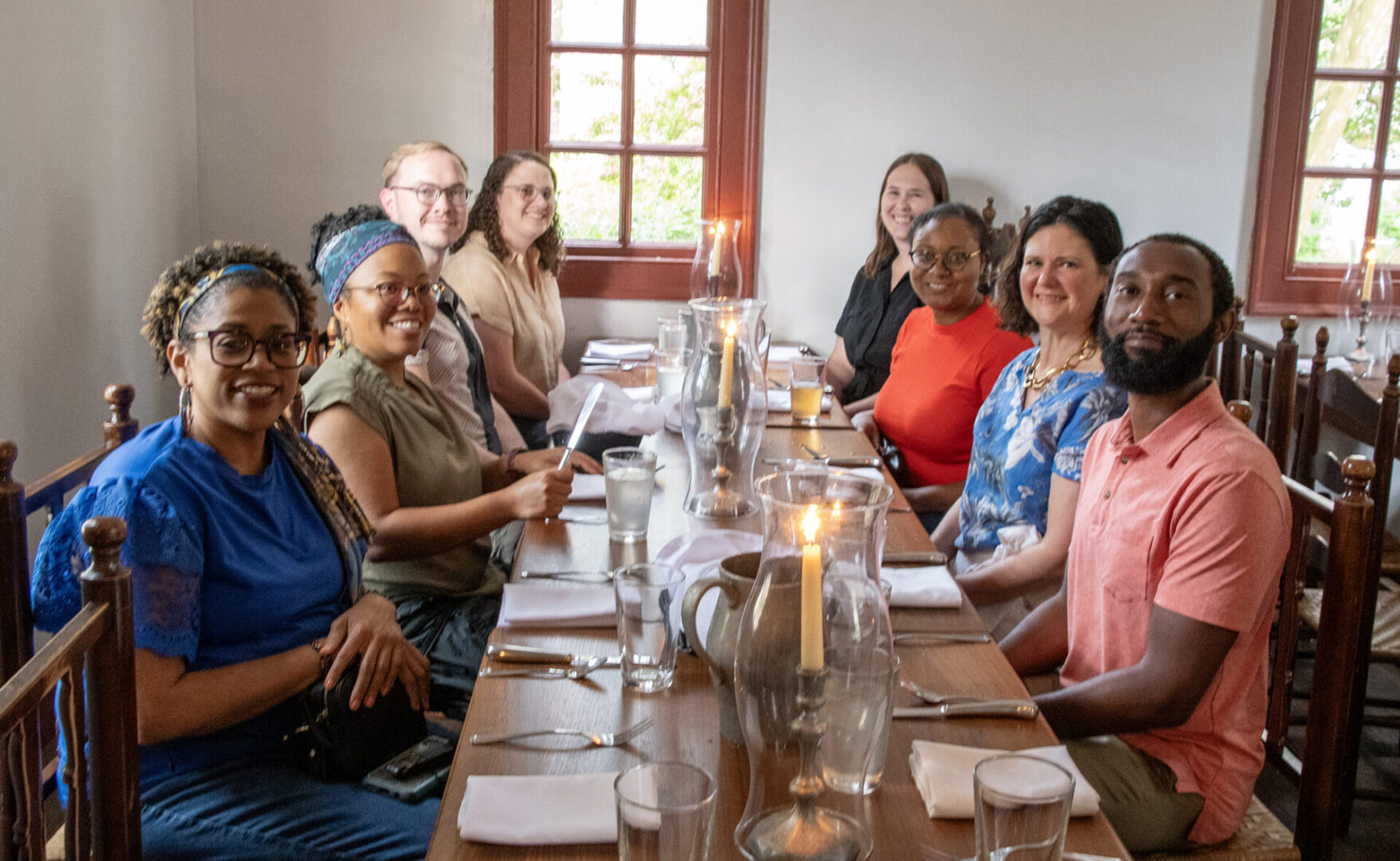
“During our time in Colonial Williamsburg, the speakers continually reminded us of how intersectional religious freedom is,” said the Rev. Leigh Curl-Dove. “We cannot talk about religious freedom for all people unless we look at the full history and see who is missing from the narrative.”
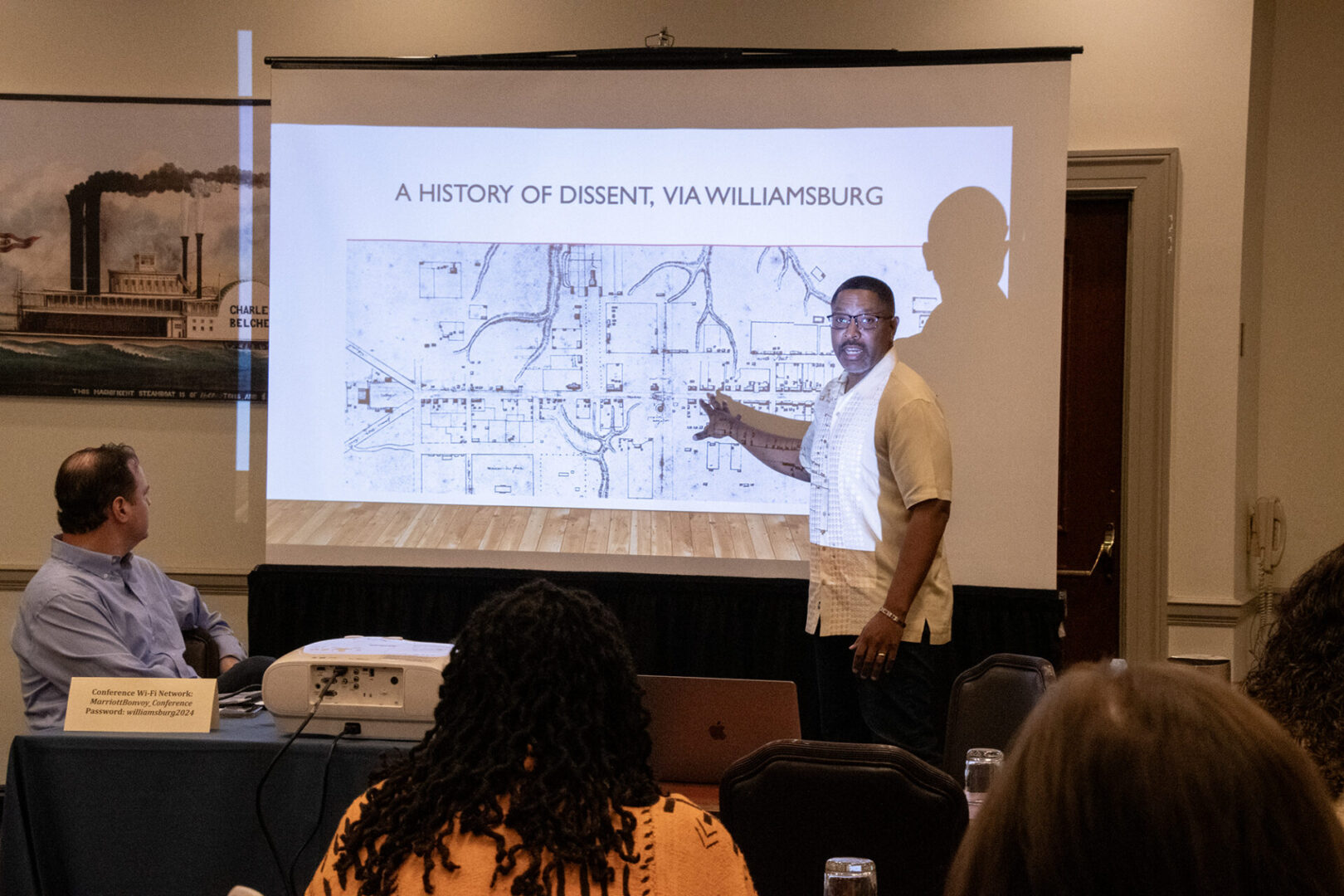
“The passion, dedication and insight displayed by the 2024 BJC Fellows remind us that the future of faith freedom is in capable hands,” Dent said. “We are excited to witness how these leaders will bring the principles of religious freedom for all into their work, fostering communities that reflect true justice.”
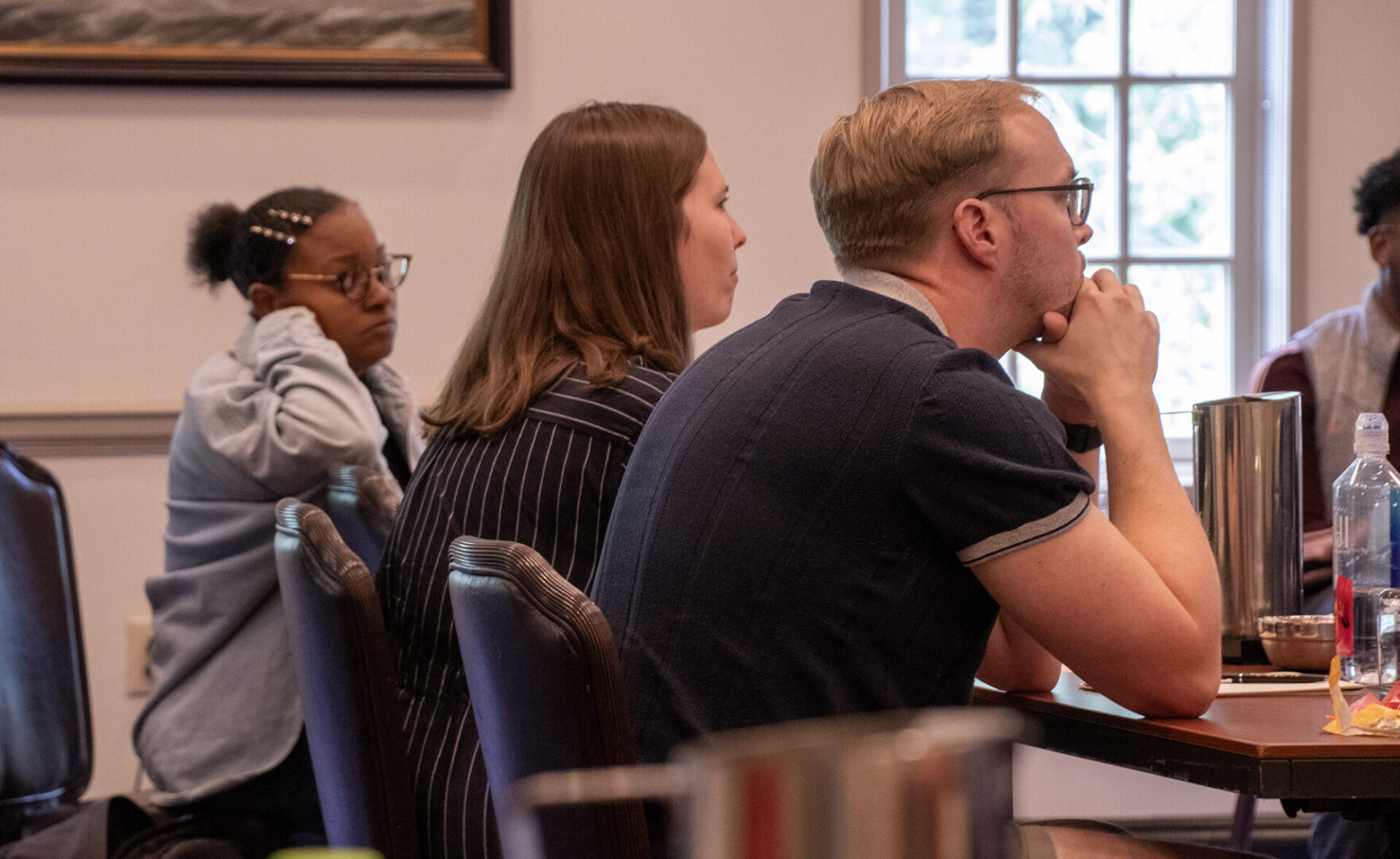
Eight BJC Fellows participated in a rigorous five-day training seminar in Colonial Williamsburg, Va., designed to prepare them to advocate in defense of religious freedom.
During the seminar, BJC staff joined with other legal and theological experts and Colonial Williamsburg’s own historical interpreters to provide the BJC Fellows with an overview of the historical, legal and theological foundations of religious liberty.
“The BJC Fellows Seminar continues to be a vital space for emerging leaders to explore the intersection of religious freedom and justice in today’s complex political landscape,” said Dr. Sabrina E. Dent, director of the BJC Center for Faith, Justice and Reconciliation, which serves as the home of the BJC Fellows Program.
“During our time in Colonial Williamsburg, the speakers continually reminded us of how intersectional religious freedom is,” said the Rev. Leigh Curl-Dove. “We cannot talk about religious freedom for all people unless we look at the full history and see who is missing from the narrative.”
“The passion, dedication and insight displayed by the 2024 BJC Fellows remind us that the future of faith freedom is in capable hands,” Dent said. “We are excited to witness how these leaders will bring the principles of religious freedom for all into their work, fostering communities that reflect true justice.”
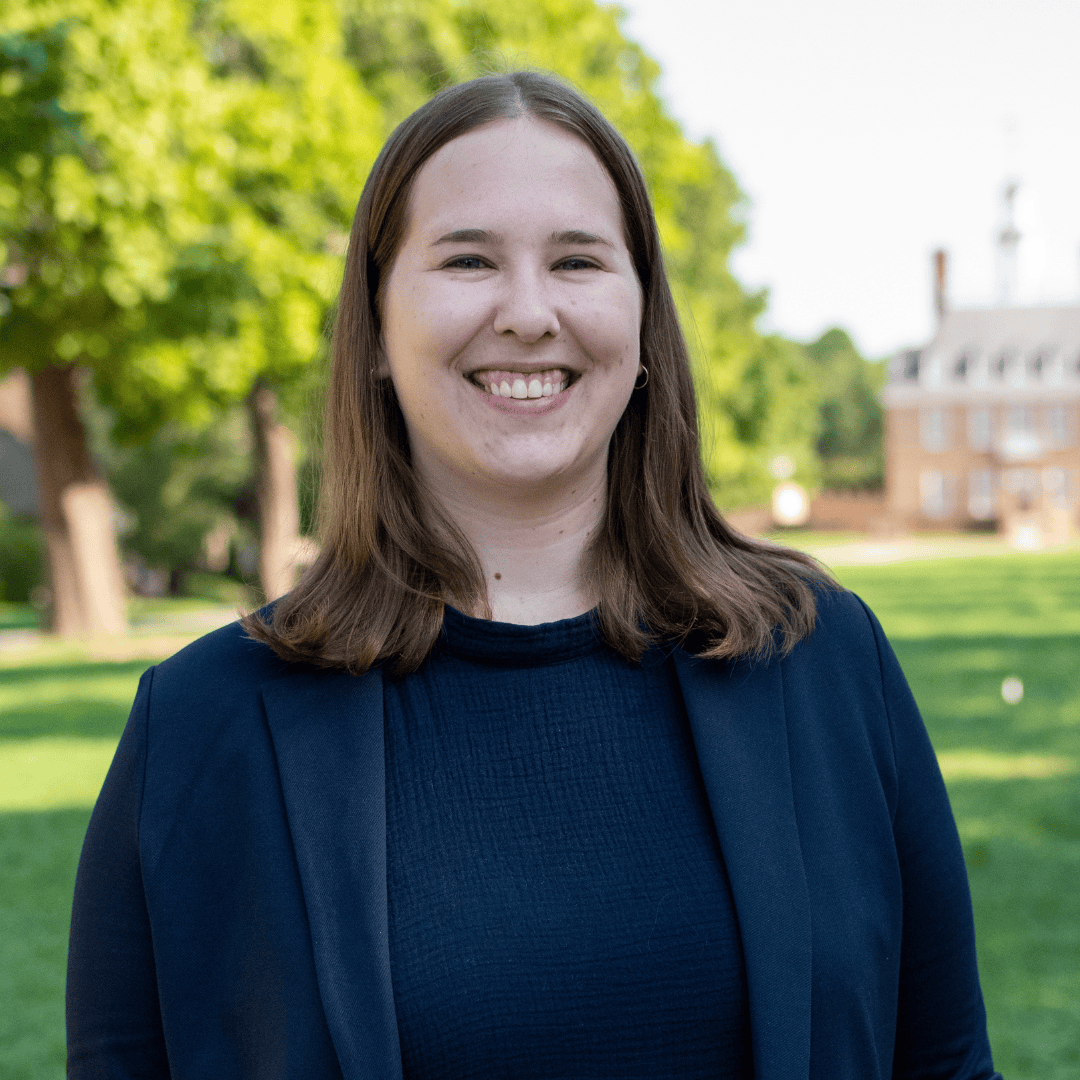
Through my experience as a BJC Fellow, I’ve gained a renewed appreciation for the historical roots of religious freedom in America and a newfound confidence in my role as a voice for religious freedom, both inside and outside of the classroom.
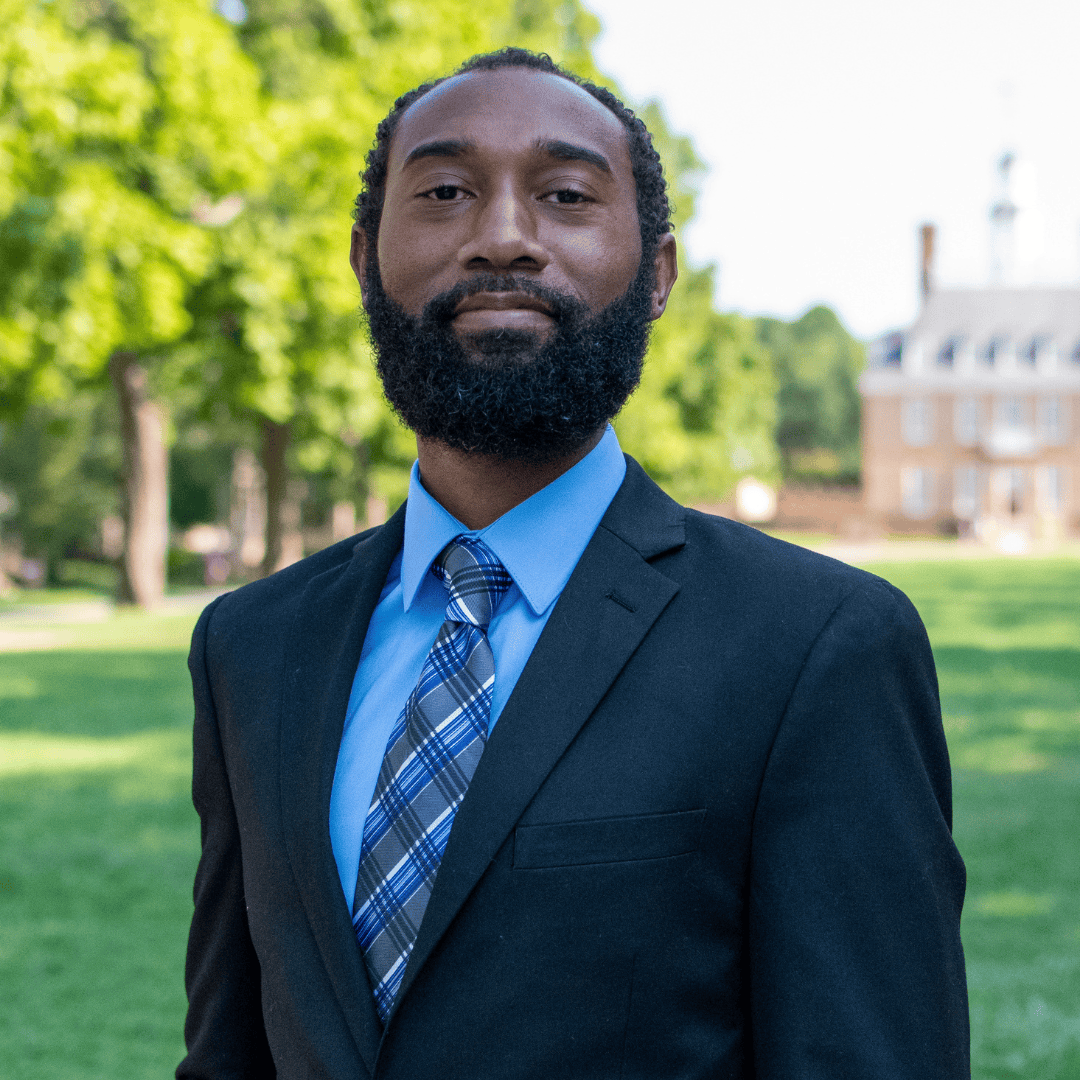
What I read and heard as a participant in the 2024 BJC Fellows Seminar reframed my understanding of religious liberty, powerfully shifting its focus from a legal to human constitution.
Read Additional Reflections on the Week
Toward a new religious freedom in Colonial Williamsburg By Rev. Dr. Corey D.B. Walker
Walking the streets of Colonial Williamsburg, one cannot help but be captured by the colonial panorama on display. History and imagination combine to extend an invitation to creatively revisit a day in the life of colonial America. Yet, Colonial Williamsburg is “the world’s largest living history museum.” As such, it conveys multiple narratives about the past and is also very much a product of the present. It is this quality that makes Colonial Williamsburg such an interesting site for the annual BJC Fellows Seminar.
In 2019, the Rev. Dr. Nathan Taylor and I came together to develop a novel tour of Colonial Williamsburg for the BJC Fellows. Nathan is executive director of the Virginia Baptist Historical Society with a deep knowledge of Baptist history in Virginia. Five years later, we reprised our tour for the 2024 BJC Fellows Seminar. The prosaic title of our tour, “A Baptist History of Dissent,” takes on multiple meanings as we reimagine the geography of Colonial Williamsburg as a geography of religious freedom. The tour is one where questions are welcomed, openness is valued, and closed, totalizing answers are eschewed.
The Capitol Building and the Public Gaol not only represent law and order, they also represent the struggles for religious liberty and the limits of religious dissent. The Raleigh Tavern and the King’s Arms Tavern emerge as distinctive spaces of a new commons where public discussions of liberty, including religious liberty, were daily fare. The home of Robert Carter and Bruton Parish Church are key sites where the existence of freedom and slavery mark the limits of traditional narratives of religious freedom. Colonial Williamsburg crystallizes a complex and complicated past that exists as a living legacy in our contemporary moment. That is what makes this living history museum an exemplary classroom for exploring the multiple histories of religious freedom in America.
Colonial Williamsburg is a prescient reminder that there is no single “real” history of colonial America or “real” story of religious freedom. The BJC Fellows come to critically recognize this important point as they walk the streets of this living museum. They learn that interpretations of the past are influenced by our constructions of the past and by the contingencies of the present. And they become cartographers of new geographies of religious freedom that is not “out there” waiting to be discovered in some pristine state. Rather, it is always in a process of becoming as we continue this grand experiment of democracy in America.
Rev. Dr. Corey D. B. Walker is Dean of Wake Forest University School of Divinity and Wake Forest Professor of the Humanities at Wake Forest University. He also serves as a member of the advisory council of the BJC Center for Faith, Justice and Reconciliation.
Reflections from Sejana Yoo
Early on our final morning of the BJC Fellows Seminar, I chose to interact with someone online who was upset that I shared a post that they didn’t agree with on Instagram. In one of their replies to me, the phrase “Christianity is what our Country was founded on, we have completely turned from that…” caught my attention. I had just spent several intensive days taking a close look at the Constitution and the First Amendment, which laid out faith freedom for all as a central idea, not faith freedom for one particular faith tradition. This person was letting me know that as a Christian, they felt I was wrong in sharing a post that didn’t align with their stance. They thought that as a Christian, I should want everything in our nation and government to be centered around Christianity, but I don’t share that view.
This online conversation was my opportunity to practice respectfully speaking up about matters in which we thought differently. So, using my chaplaincy and spiritual direction interpersonal skills alongside information from the BJC Fellows Seminar, I crafted a response that acknowledged this person’s feelings of concern while sharing that I disagreed, but I left the door open for future conversations.
I shared about this experience with our BJC Fellows group, and my peers felt I modeled well how to have tense one-on-one conversations. I also heard some say that they would not have engaged that person, but I found myself declaring, “No, we need to be open to having conversations with people who think differently than us. Otherwise, how can any change take place?”
The location of the BJC Fellows Seminar was an immersive experience located right next to a key site in our nation’s history. Colonial Williamsburg’s mission – “that the future may learn from the past” was experienced repeatedly, but also specifically when I happened upon a certain sign. I was waiting next to a market, and I saw a sign posted — next to the benches, on a wooden barrel — that said, “Auctions held most Saturdays.” (see photo) Why was that there? What does that mean? I don’t know about you, but for me, I saw that sign and immediately thought they were auctioning people. They are auctioning slaves. “Why was this sign here?” I wondered. I’m glad that it was there and that I saw it, but I also wish it were never there. I ended up pointing it out to my BJC Fellows peers without giving them any context, and I watched them as they experienced similar reactions.
There’s nothing surprising about the reality of slave-owning in the history of the United States. It is a grim reality of our past. But I didn’t expect to see that sign right in front me standing there as a quiet witness. During our week in Colonial Williamsburg, I remembered hearing peers share that one of the house guides informed them that the wife’s bedroom was facing towards the back to oversee the slaves that worked for their household. This was the reality of life back then and because we had so much conversation about different narratives in the BJC Fellows Seminar, I was acutely aware of what had always been there, but I didn’t see it fully when I first visited Colonial Williamsburg many years ago.
When two peers from the BJC Fellows Seminar joined me in an Uber to the Richmond airport, the driver nonchalantly asked us why we were in Williamsburg, mentioning that he grew up there. I shared with him about the sign and asked him what he thought they were auctioning. “Colonial furniture,” he stated, matter-of-factly. (I should mention that the driver was white and all three of us passengers were non-white.) I replied that I had not thought of that; for me, when I saw that sign — as a minority race female that grew up in the South — I thought it meant they were selling slaves. I also talked about our BJC Fellows experience in Williamsburg, learning about faith freedom for all, including how several writers of the U.S. Constitution made sure to include faith freedom in the founding documents, even though they owned people as slaves.
So, on that final day, as we were leaving, I was curious what the driver thought about that sign. I recognized that, perhaps like me before, he wasn’t thinking about other narratives of what that sign could mean, to which he admitted “that wasn’t [his] context.” I also sensed that he was open to hearing more about my own experience (or was I courageously stepping into education and advocacy work?).
Some might react defensively to topics sensitive to them, like the person on Instagram, but others may be open to dialogue and hearing other people’s views. Suppressing conversation, especially on difficult topics or when people are expressing emotion, hinders our ability for all of us as a people, and us as a nation, to learn, develop and grow.
I was extremely comfortable throughout this brief conversation. But once we arrived at the airport, one peer expressed concern that I would even bring up the subject of race or slavery, potentially sensitive topics, to a person that is white. I realized that our past or other’s past or present negative experiences can cause us to feel unsafe and shy away from potential experiences and interactions that could be enlightening (or can go awry). But just like my earlier interaction on Instagram, we can choose to be open enough to engage others with empathy and curiosity to see their point of view. Thinking about our situation further, I realize that one BJC peer had the posture of a peacemaker and the other had the posture of a bystander. One felt it was unsafe to discuss sensitive topics and so intentionally changed the subject while the other was quietly waiting to see how this conversation was going to turn out. Even the Instagram conversation was with someone who felt like their beliefs and values were being threatened, especially by someone who shared the same faith. All these different responses are common and ones that I have operated from as well. But what was surprising to me in Colonial Williamsburg was how I had already moved courageously towards taking positive actions in advocacy work.
I’ve become very aware of other narratives and perspectives that were also very much a part of our history. Today, there are other voices too, perhaps standing as silent witnesses waiting to be seen.
Reflections from Rev. Margaret Conley
The unmitigated gall of this nation’s Framers in creating documents that spelled out freedom and humanity has led us to believe these documents, such as the Declaration of Independence and the United States Constitution, are infallible and inerrant, which completely disturbs my very being. What I think is missing from the narrative of the conversation around the creation of the country and the work of religious freedom is the psychological framework of the Framers.
I make this statement because, as a black embodied, queer female, I am aware that I was never a part of the Framers’ thoughts when they created the documents that framed and shaped what we now know as the United States of America. During one classroom conversation, I felt as if I had made a quantum leap into the space of my transhumanist thought of weaponizing my own body as a technology for use when we discussed that “‘We the People’ is still expanding.”
The shock of those words hit me at my core because clearly, at one point, someone was not included in this opening phrase of a document that created this “land of the free… .”
My experience during the week was stuck with the statement that “‘We the People’ is still expanding.” What does that mean, that “We the People, are still growing?” Are “people” still being defined by the standards of white men who could not even define themselves? Are people still being defined as less than human and given a fraction of humanity to meet the need for economic acquisition?
The Framers had an opportunity; they took it upon themselves to define what humanity is, and thus, this brings me to my thoughts about how “We the People” are still being defined. What I did gather from this week, being stuck in the era of the freshness of “We, the People,” is that America was built on its own trauma response to the Framers of this nation. And those who came — those who in some other place and time, appeared to have lost some level of dignity and personhood — attempted to gain their understanding of humanity again by saying they discovered something that was already inhabited. The Framers were trying to make right for themselves with no focused thought on how they were bringing pain, harm, and death to others.
From a bioethical standpoint, with theology leading out in the understanding, we see from a theological standpoint that these individuals were taking upon themselves this space to determine what God had already determined to be. Well, they decided that they would define who and what could be human and animal. From a psychological standpoint, the Framers used what was mentally available because physical freedom was obtained without freedom of mind being made well. It makes me ask, “What was the capacity of the Framers in their minds that they thought was right to define humanity so that we could have the notion of thinking that ‘We the People’ could be an expanding thought? From a sociological standpoint, was it in the Framers’ minds that they could own bodies?” They could steal land from others and then claim it as their own, reproduce it, resettle it and then give rules to that land as if it were God’s gift. And in my thinking, I can only assume they thought this to be right based on the biblical notions of being “chosen people.” Moving from captivity to being promised a land that flowed with milk and honey, which was already inhabited and tended to by others. And then, from an anthropological standpoint, what does it look like historically that we are still in a space where we are defining humans and people? What does it look like that we sit in spaces where, in 2024, we are defining what humanity is, who can be, and what is fully human? We decide who needs to be caged, what types of racially aligned jobs are being offered, or who needs to be killed for the sake of liberation because they are not our types of “We the People”?
It is sad that the Framers thought and dismissed the value of writing down instructions to revisit this country’s ‘sacred’ documents. Though we seem to think it radical the offer of religious freedom in the work that framed this country, we also like to dismiss what that term really meant and even how segregation in the settlements of this nation started with their wounds from the lack thereof. I am saddened, yet I embrace levels of hope that, one day, we will move away from the ever-expanding thoughts of defining bodies and humanness. We will move into allowing people to genuinely experience religious freedom from the context of their humanity because “We are the People,” and that is something that does not need to be defined.
Reflections from Lakia Marion
To my surprise, I woke to a lament when I returned home from the BJC Fellows Seminar. Tears filled my eyes as I reflected on the historical underpinnings of religious liberty in America. We read Endowed by our Creator by Dr. Michael Meyerson, and within the pages, he unveiled the framing of the Constitution and the formation of the First Amendment. I came to this experience with some knowledge of the mistreatment inflicted upon others in the name of religion. However, I was shocked to learn the extent of the power struggles between church and state as well as the violence that occurred during the framing of this country. So many lives were lost and degraded, and voices were silenced because of ill-informed theology about God, freedom and religion.
Although the Constitution’s language speaks of a diverse and free nation, I discovered through our readings and open discussion that the plight of those on the margins remained limited. For example, enslaved peoples and other ethnic groups were not seen as human or worthy of freedom—racial or religious freedom. Simply put, their human rights were not considered. They were invisible and treated as spiritual and economic commodities. The experience of walking the grounds at Colonial Williamsburg and learning the history of my ancestors’ plight is one of the reasons I woke up to a lament. Still, most importantly, tears filled my eyes because America’s history demonstrates that our inability to embrace “otherness and difference” originated during colonization.
History informs us that the language of Christianity here in America was shaped by those who had the most power – white males. Their proximity to law, government, and religion granted them the power to implement policies shaping every aspect of our social institutions. These policies were not formed to include all members of society, thus leading to the injustices and inequalities we see today. Additionally, I believe the fact that all members were not included in the framing of this country has contributed to our inability to see that we share a common humanity.
Dr. Sabrina Dent asked, “Who has the right to be human?”
I instinctively answered “everyone” in my heart.
The answer to this question is obvious, right?
We all have the right to be human. Yet, in our world, we are quick to label, categorize and make snap judgments about each other before learning the essence of our neighbor. After my 2024 BJC Fellows Seminar experience, this question echoes in my heart and mind: “Who has the right to be human?” This question has broadened my view of God and who I am to be in relation to others. My faith in God and my commitment to follow Jesus convicts me to love my neighbor as myself. My neighbor is whoever I encounter, and I am to love them regardless of race, class, gender or religious belief. I walk away from this experience with a more pronounced understanding that we share a common humanity.
To this end, this is my call to action: to be an agent of healing on the earth. I will do this by creating healing spaces in my community for ALL people to share their stories and experiences in a safe environment without judgment. I firmly believe that the healing of nations is possible. I shall endeavor to use the insights from this experience to engage in courageous conversations that challenge injustice and inequalities so that reconciliation may abound in families, communities and nations.
Get to Know Other Classes