Immigration
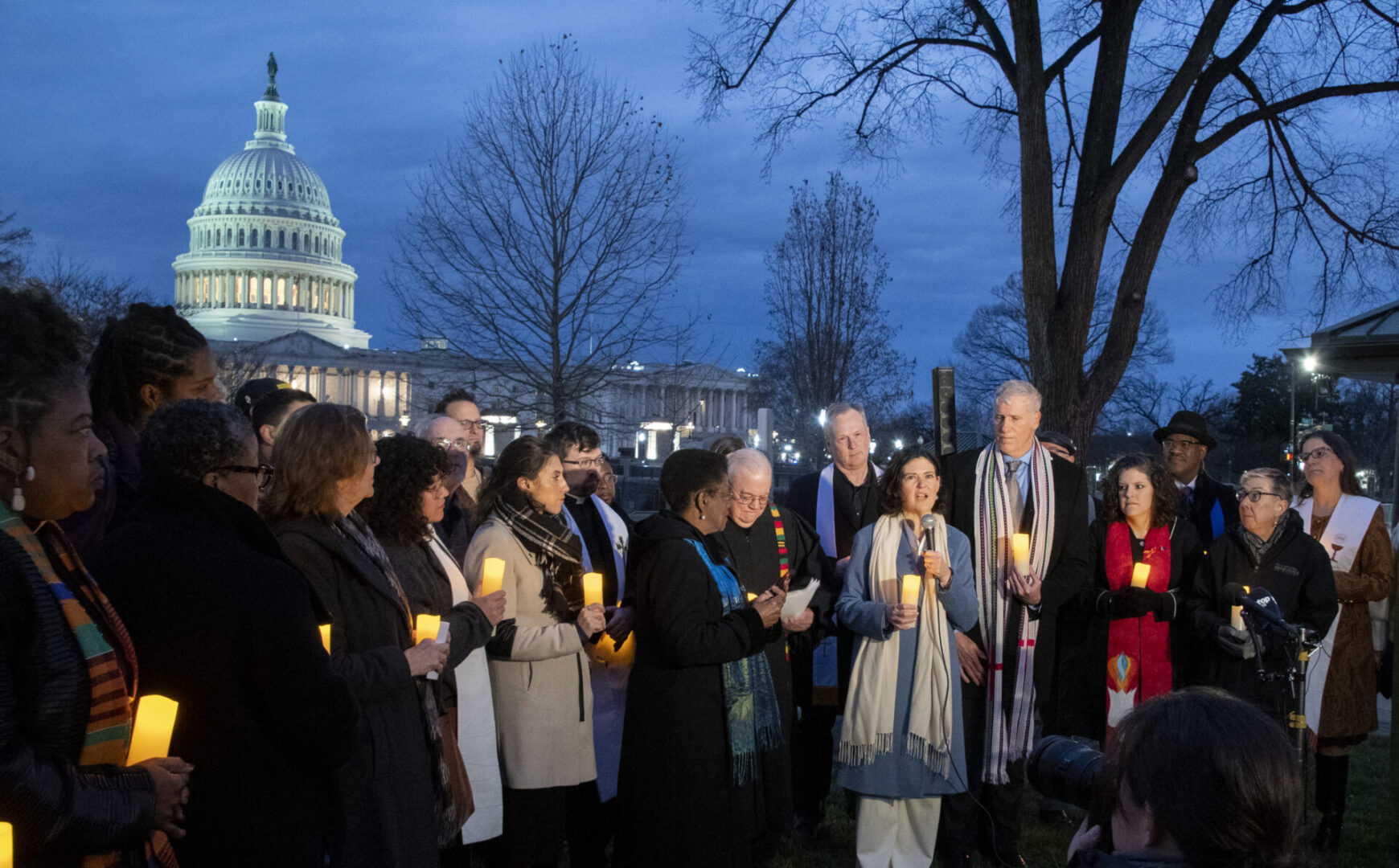
Immigration policy becomes a religious freedom issue when government actions make it harder for people to live, gather, and worship without fear. When state enforcement practices prevent communities from safely entering places of worship or participating in civic life, the conditions that make religious freedom possible begin to break down.
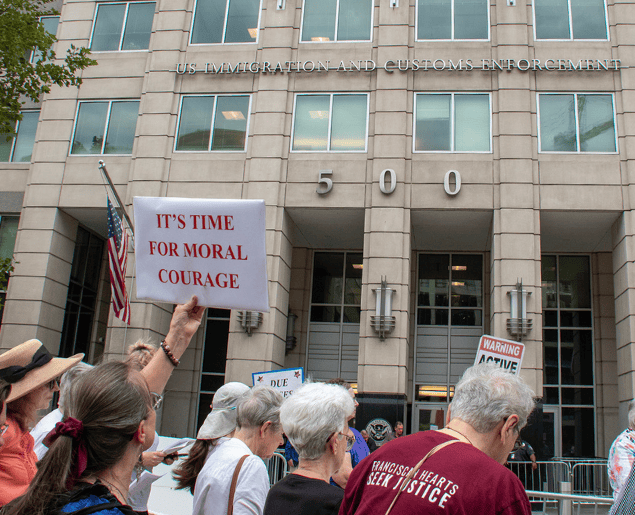
Across the country, immigration enforcement has increasingly undermined those conditions. The erosion of protections for sensitive locations has allowed federal agents to conduct enforcement actions on church grounds and near places of worship. Mass raids, arrests near churches, the intimidation of pastors, and the dehumanizing treatment of immigrant and refugee communities have created an atmosphere of fear that keeps people from worshiping freely or participating fully in civic life. When state power is used this way, it weakens pluralism and threatens religious freedom not just in law, but in lived reality.
How Does Immigration Policy Affect Religious Freedom in Everyday Life?
-
Immigration Enforcement at Houses of Worship
In January 2025, the federal government rescinded more than 30 years of policy protecting houses of worship from immigration enforcement. At Our Lady of Guadalupe Parish in San Diego, the parish cancelled its community food sale because people were too afraid to come. In the first three weeks alone, 80 to 100 percent of Pastor Scott’s time shifted from pastoral care to emergency response. Separately, the Roman Catholic Diocese of San Bernardino reported that a longtime parishioner was detained by ICE on the grounds of his church. When people cannot enter a house of worship without fear of arrest, religious freedom has already been lost.
-
Discrimination Against Mixed-Status Families in Housing
You cannot keep the Sabbath, observe Ramadan, or raise your children in faith without a stable place to do it. A proposed federal rule would eliminate housing assistance for mixed-status families — households where at least one member is ineligible due to immigration status. Nearly 80,000 people, including approximately 37,000 children, could lose their homes. Stability is not a luxury. It is the ground on which a life of faith is built.
-
Travel Bans
President Trump issued an executive order blocking entry from several majority-Muslim countries in January 2017. It followed campaign promises calling for a “total and complete shutdown of Muslims entering the United States,” explicitly tying immigration policy to religious identity. Later versions of the ban continued to restrict entry largely from majority-Muslim nations, reinforcing the message that Muslims were less welcome as participants in American civic life.
How is BJC Addressing Immigration?
Here are some recent actions:
-

We’re providing opportunities to stop troublesome policies.
Federal law has long allowed families with mixed immigration status to live together in housing connected to the U.S. Department of Housing and Urban Development (HUD). These families often include loved ones who cannot receive assistance due to their immigration status, such as temporary visa holders. When HUD proposed upending that policy, we knew it would fracture families and faith communities. During our quarterly clergy touchpoint in April 2026, we led participants through the process of submitting public comments to oppose the rule.
-
We’re gathering clergy and constituents to meet with lawmakers.
Hearing from our sources on Capitol Hill that there were some key senators who were perhaps persuadable to support the Protecting Sensitive Locations Act as part of an appropriations package, we gathered clergy and laypeople in Georgia, Michigan, Utah, Missouri, Maine, Oklahoma, Alaska, Virginia, and New York to talk with their senators – via Zoom – about why this matters to them. They joined with members of clergy of other faiths, too, to show the widespread need for protecting parishioners of all faiths.
-
We’re sharing your stories with decision-makers.
During conversations surrounding the Protecting Sensitive Locations Act, we heard that some members of Congress were doubtful about the impact of ICE enforcement on faith communities. BJC collected stories from people across the country about the harm happening by ICE enforcement on church grounds and sent them to key members of the Senate during deliberations on funding the Department of Homeland Security in February 2026. We turned those into packets to share information from real people as the senators weighed their decisions, and we hand-delivered them to offices.
-
We’re creating resources.
We have a guidebook for faith communities with a collection of resources and action steps for addressing enhanced immigration enforcement in your community.
-
We’re working with member bodies on lawsuits to stop raids.
Five of BJC’s member bodies are involved in three different lawsuits to protect houses of worship and other sensitive locations from immigration enforcement. Keep reading for more details on those cases.


What Can You Do?
-
Support the Protect Sensitive Locations Act
Tell your elected leaders to protect places of worship from immigration enforcement by supporting the Protecting Sensitive Locations Act. We have a form you can use to make it simple and direct!
-
Stop Travel Bans
We must ensure no president can use executive power to impose religious or racial discrimination in our immigration system. The best way is to ask your lawmakers to support the NO BAN Act, and we have a form you can use.
-
Be part of our next call for stories and action!
Things happen fast. Be in the know when there is something you can do to protect your neighbors and defend religious freedom. Join our email list, and check the box for updates on “immigration”!


Latest Articles and Podcasts on Immigration from BJC
-
Podcast
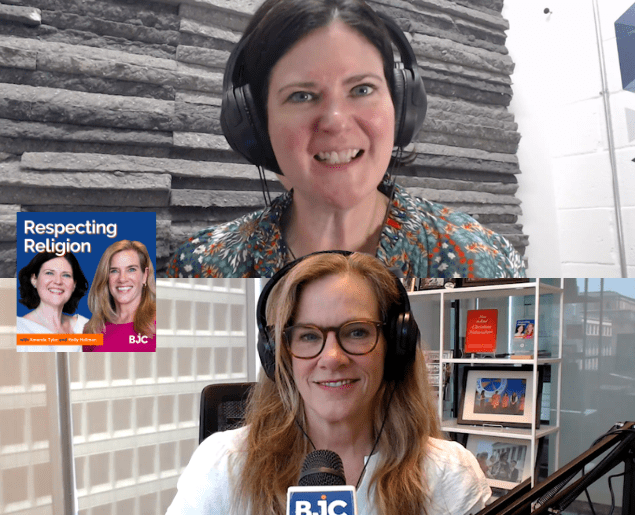
S7, Ep. 11: Immigration is a religious freedom issue
June 18, 2026
How is increased immigration enforcement impacting the right to religious freedom? Should some...
Read More -
Press Release
BJC statement on immigration enforcement in Minneapolis and nationwide
January 20, 2026
"In Minneapolis and across the country, the threats to the religious freedom of all people are not...
Read More -
Magazine
There are neighbors everywhere: Learning to see at the Texas-Mexico border
December 19, 2025
The Rev. Dr. David Rice reflects on a recent trip to an area between Mexico and the United States....
Read More -
Magazine
Providing mercy in the face of repression
December 19, 2025
“How did prayer and protests — the physical manifestation of mercy — all become grounds for conflict...
Read More


Updates on Immigration Developments
There are many ongoing legal cases involving immigration, and the news changes quickly. If you, your house of worship, or your denomination are participating in a case, contact them for the latest news that directly impacts you as part of a lawsuit.
For a comprehensive look at federal lawsuits involving religious groups, individual faith leaders, and the second Trump administration over the administration’s immigration policies, check out the Religion and Immigration Litigation Tracker, provided by the Law, Rights & Religion Project at Union Theological Seminary and Religion News Service.
Here are updates on a few news and legal items related to immigration. This page was last updated Oct. 20, 2026.
Religious groups working to stop ICE enforcement in sensitive locations, including churches
There are four current lawsuits focused on protecting sensitive locations, and five of BJC’s member bodies are involved in litigation.
- Philadelphia Yearly Meeting v. DHS: The Cooperative Baptist Fellowship joined a legal challenge Feb. 4, 2025, alongside a group of Quaker meetings and the Sikh Temple Sacramento, and a judge issued a temporary injunction that blocked immigration enforcement at houses of worship tied to those groups in 2025. In August 2026, the 4th U.S. Circuit Court of Appeals upheld that injunction. For CBF congregations, there is a resource page to show churches what to do and how to make sure the injunction is respected.
- New England Synod, Evangelical Lutheran Church in America v. DHS: The Alliance of Baptists and American Baptist Churches USA are involved in a different lawsuit filed July 28, 2025. On Feb. 13, 2026, a judge issued a preliminary injunction preventing ICE from conducting warrantless enforcement at the houses of worship tied to the plaintiffs in the case. In June, other litigants were added to the suit, including the DC Baptist Convention.
- Mennonite Church v. DHS: FaithWorks (formerly Fellowship Southwest) and the Hispanic Baptist Convention of Texas joined a different lawsuit filed Feb. 11, 2025. A district court first denied a preliminary injunction, but on Oct. 20, 2026, the U.S. Court of Appeals for the D.C. Circuit reversed that denial, and it sent the case back to the lower court to reconsider. “Whatever interest DHS has in enforcing immigration law, it cannot meet its burden of demonstrating that its interference with Plaintiffs’ religious practices is the least restrictive means of serving that interest,” according to the suit.
- Pineros y Campesinos Unidos del Noroeste v. Noem: This lawsuit was brought by several churches and interfaith groups, as well as the National Education Association and American Federation of Teachers. Filed in April 2025, the case says “Civic gatherings, houses of worship, schools, and health clinics should be places for adults and children to assemble, celebrate, worship, learn, and heal—not zones for deportation enforcement.” No ruling has been issued in this case.
Questions about what the recission of the policy means for everyone? Check out a fact sheet and FAQ from the National Immigration Law Center.
Birthright citizenship case: Trump v. Barbara
The Supreme Court says a president cannot limit birthright citizenship through an executive order.
That was the issue in Trump v. Barbara. On the day of his inauguration in January 2025, President Donald Trump issued an Executive Order that placed limits on birthright citizenship, noting that “The Fourteenth Amendment has always excluded from birthright citizenship persons who were born in the United States but not “subject to the jurisdiction thereof.”
The Supreme Court released its decision upholding birthright citizenship on June 30, 2026. Read more on SCOTUSblog: Supreme Court strikes down Trump’s order ending birthright citizenship
Asylum and the Supreme Court case of Noem v. Al Otro Lado (now called "Mullin v. Al Otro Lado")
When someone is seeking the legal protection of “asylum” because they fear persecution or harm in their own country, at what point can they be screened by border officials and put into the asylum system in the United States? On June 25, 2026, the Supreme Court upheld the federal government’s policy of turning back asylum seekers in Mexico before they can reach the U.S. border
According to the Immigration and Nationality Act, someone who arrives in the United States may apply for asylum. But, what “arrived” means was at the center of the dispute – often, arriving at a port of entry would count as “arrival” for the purposes of those seeking asylum.
The Supreme Court heard this issue during arguments for Noem v. Al Otro Lado on March 24, 2026, and released their decision on June 25. (Due to a change in leadership at the Department of Homeland Security since the case was filed, it is now called Mullin v. Al Otro Lado.)
Read more about the intricacies of the case and the decision on SCOTUSblog: Justices side with Trump administration in border dispute over asylum seekers
On June 1, it was reported that the Trump administration is working on a plan to reject asylum applicants without interviews. Read more in this story from CBS News.
Temporary Protected Status for Citizens of Haiti and Syria
The federal government can remove protections for citizens of Haiti and Syria, as a result of the Supreme Court’s decision in Mullin v. Doe on June 25, 2026. A federal program known as Temporary Protected Status (TPS) allows foreign citizens to stay in the United States when it is not safe for them to return home. When Secretary of Homeland Security Kristi Noem ended the TPS designations for Haiti and Syria when she was in office, the case went to court. But, the Supreme Court’s ruling says the determinations regarding TPS by the Secretary of Homeland Security are generally not subject to judicial review.
Read more in this article from NPR: The temporary protected status program may effectively be over. Here’s what we know
Get more details on the decision in Mullin v. Doe from SCOTUSblog: Court allows Trump administration to end removal protections for Syrian and Haitian nationals