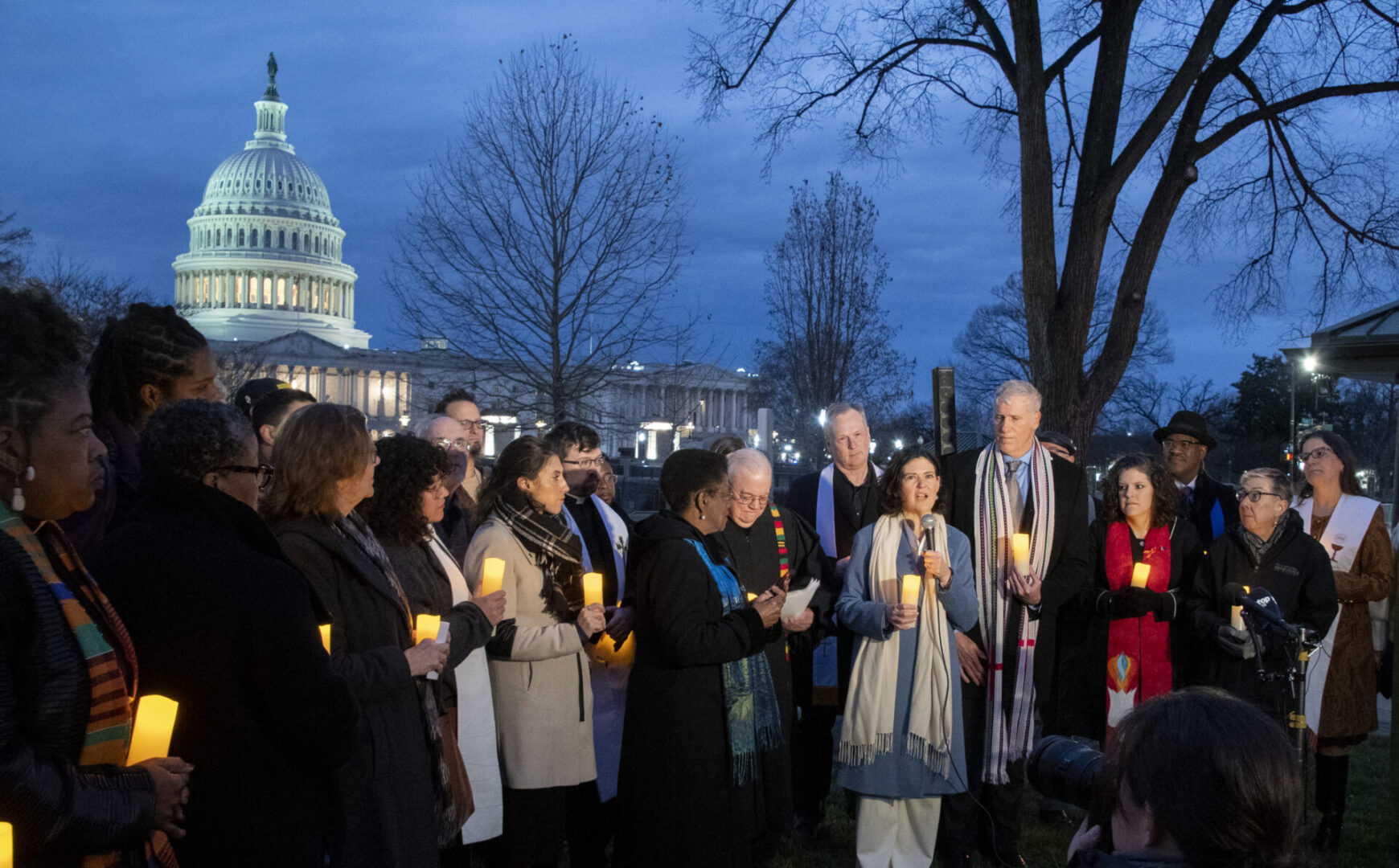
2025 BJC Fellows
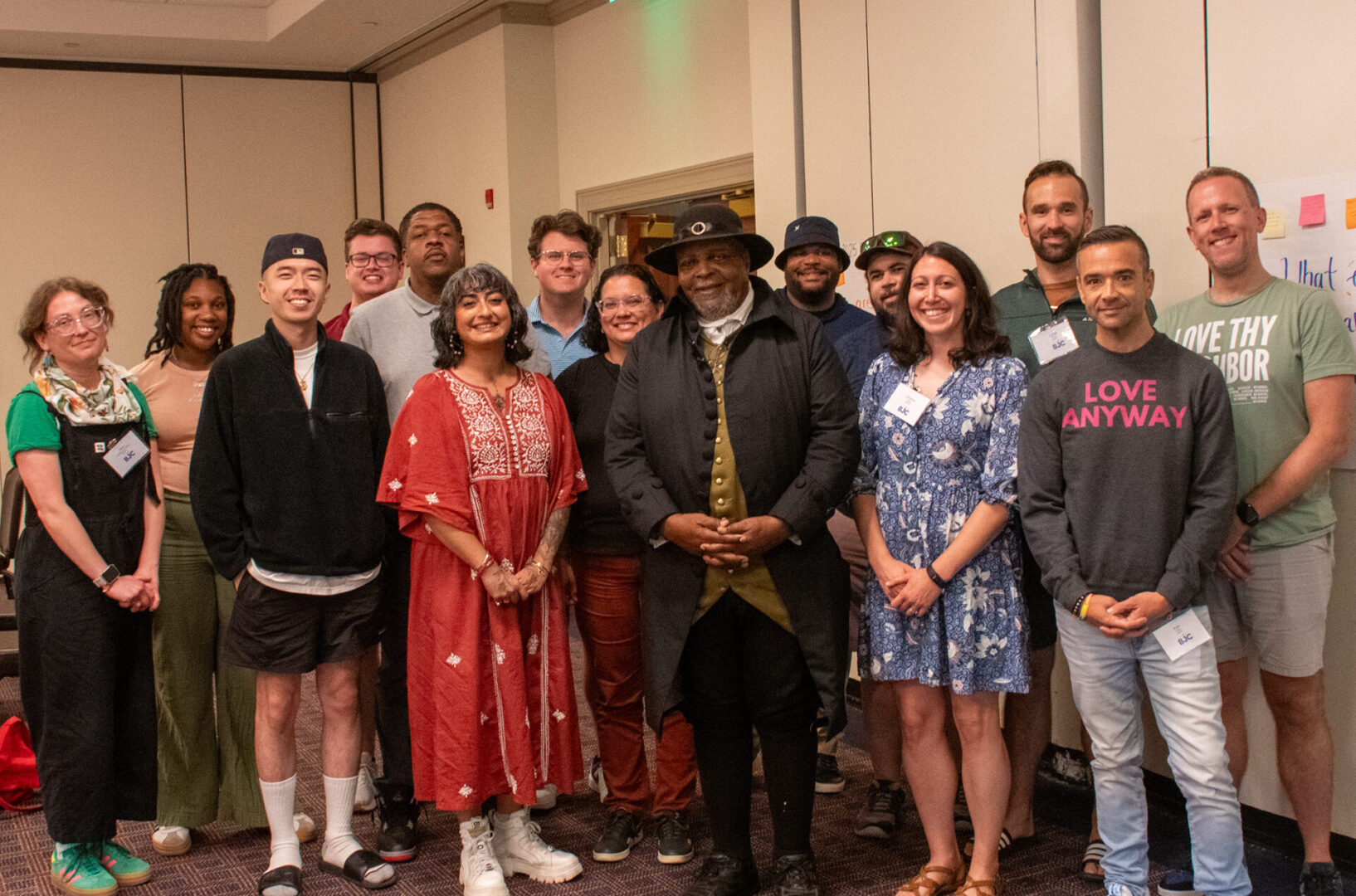
The 2025 class brought together 14 young professionals from across the country, representing a range of professions — educators, clergy, nonprofit professionals, social workers and health care workers. This group highlights an important foundation of the program: religious freedom intersects with issues across all sectors of society, and we all have a role to play in protecting it.
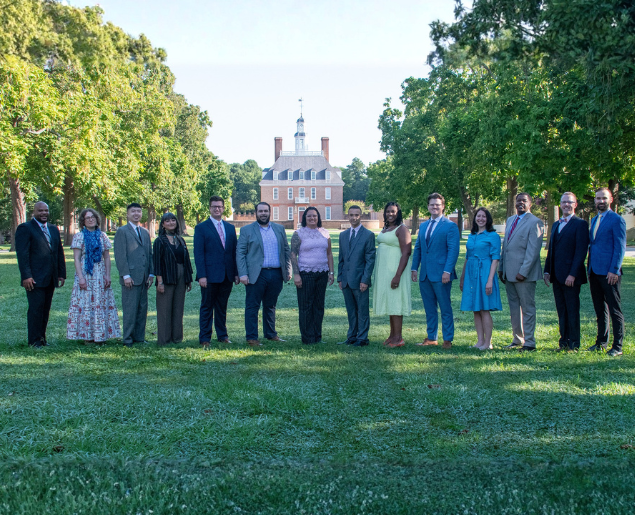
Meet the 2025 BJC Fellows
-
-
Alphabetically:
Kale Anderson: Little Rock Arkansas
Rev. Abigail Medina Betancourt, PMP: Catano, Puerto Rico
Rev. Christopher M. Coates: Rocky Mount, Virginia
Pastor Caleb Cooke: Bowie, Maryland
Rev. Alexis Engelbrecht-Villafane: Claremore, Oklahoma
Rev. Zack Jackson: Hattiesburg, Mississippi
Harmeet Kaur Kamboj: New York, New York
Christine Krieger: Baltimore, Maryland
Victor Lee: Philadelphia, Pennsylvania
Rev. Tom Reid: Newton, Massachusetts
Clareese Saunders: Queens, New York
Lukas Smith: Los Angeles, California
Rev. Aaron Tinch: Bowie Maryland
Kyle Zuber: Pataskala, Ohio
See Photos from the Week in Williamsburg
My time at the 2025 BJC Fellows Seminar was transformative on multiple levels. Personally, my time in Colonial Williamsburg provided a space for deep reflection and growth. Standing in the very city where the Rev. Gowan Pamphlet, an enslaved man turned Baptist preacher, led one of the earliest Black congregations in America, I felt connected to a lineage of courage that continues to shape my vocation. – Rev. Caleb Cooke
Before my time in Colonial Williamsburg, I understood religious liberty as a noun – a concept. I now understand it as dynamic movement. It is the freedom to move and be moved while providing space for others to do the same, without coercion or conformity. It is the humility to know that my way of connecting with the Holy is not the only way. It is the openness to sit down with others, willing to be moved and inspired by them. Religious liberty invites and welcomes all to make their own plate and sit down to be nourished together. – Rev. Alexis Engelbrecht-Villafane
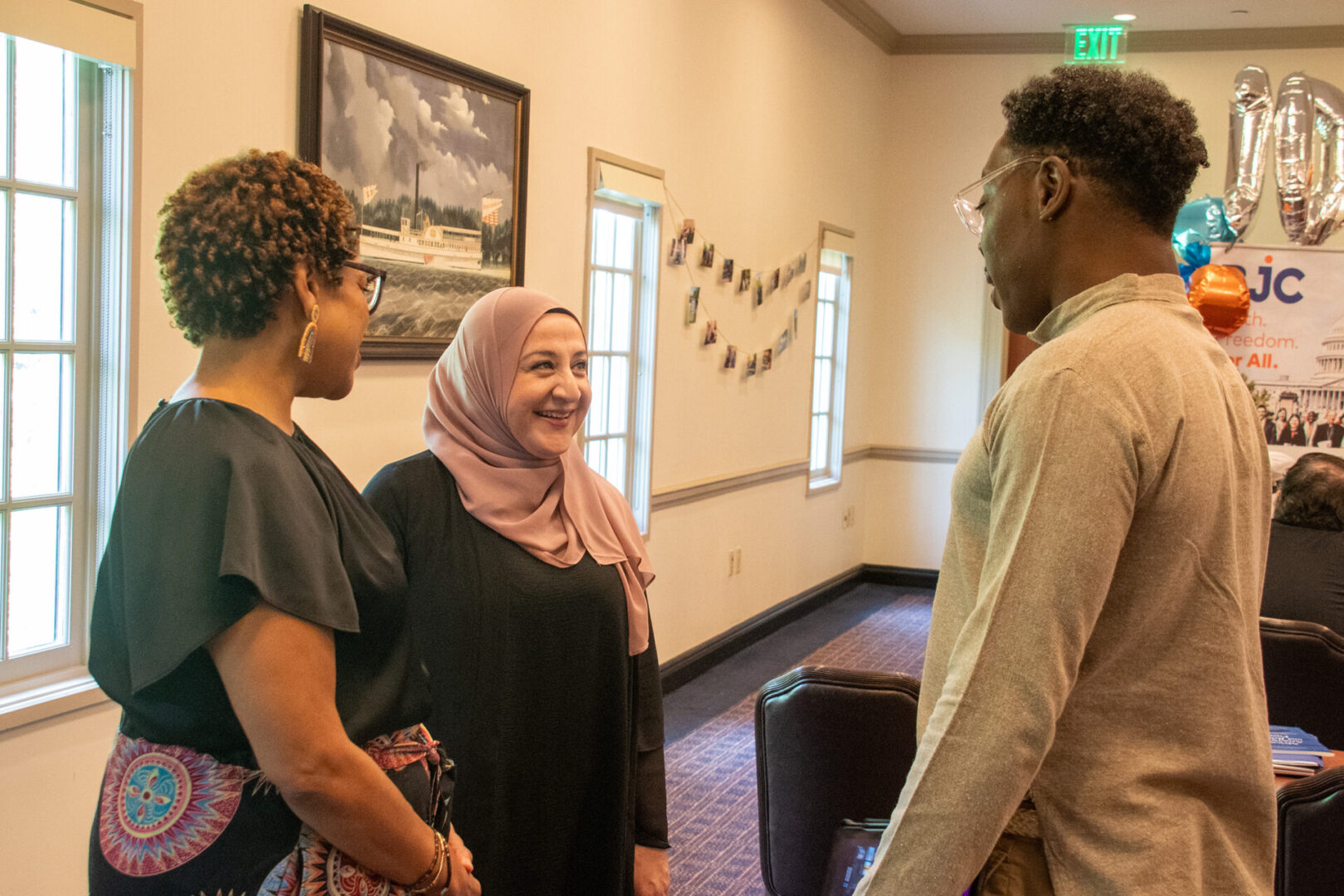
When people hear the phrase “religious freedom”, they often imagine it as something of a shield that protects only their own expression of faith. What I really wish everyone knew is that religious freedom is not just about defending what I believe, but it’s also about protecting the rights of others to believe differently, or not to believe at all. True religious freedom is both broader and deeper than many understand or believe. It is not a tool for dominance, but rather a framework for dignity and coexistence. – Kyle Zuber
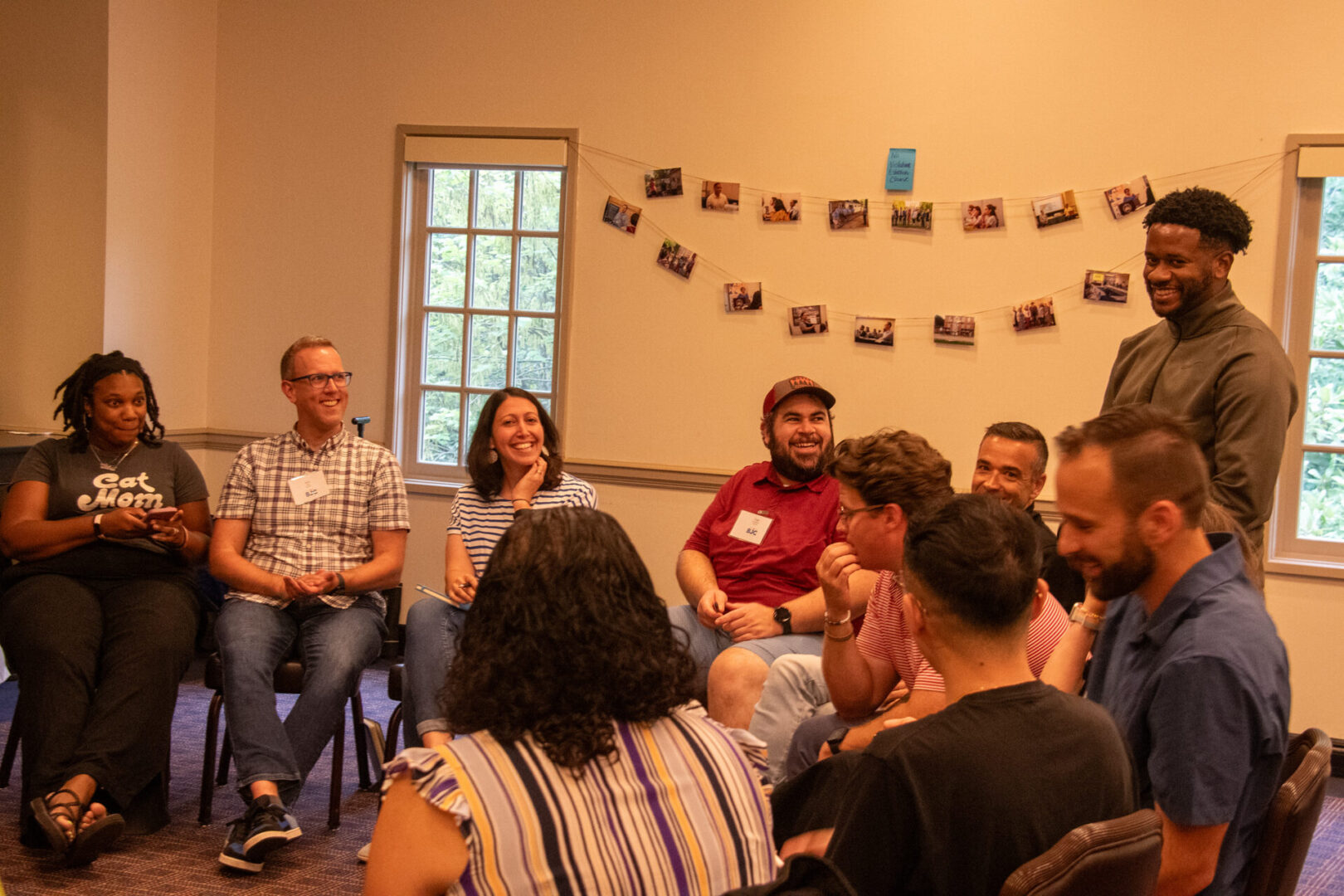
My time at the 2025 BJC Fellows Seminar was transformative on multiple levels. Personally, my time in Colonial Williamsburg provided a space for deep reflection and growth. Standing in the very city where the Rev. Gowan Pamphlet, an enslaved man turned Baptist preacher, led one of the earliest Black congregations in America, I felt connected to a lineage of courage that continues to shape my vocation. – Rev. Caleb Cooke
Before my time in Colonial Williamsburg, I understood religious liberty as a noun – a concept. I now understand it as dynamic movement. It is the freedom to move and be moved while providing space for others to do the same, without coercion or conformity. It is the humility to know that my way of connecting with the Holy is not the only way. It is the openness to sit down with others, willing to be moved and inspired by them. Religious liberty invites and welcomes all to make their own plate and sit down to be nourished together. – Rev. Alexis Engelbrecht-Villafane
When people hear the phrase “religious freedom”, they often imagine it as something of a shield that protects only their own expression of faith. What I really wish everyone knew is that religious freedom is not just about defending what I believe, but it’s also about protecting the rights of others to believe differently, or not to believe at all. True religious freedom is both broader and deeper than many understand or believe. It is not a tool for dominance, but rather a framework for dignity and coexistence. – Kyle Zuber
Read More About This Class
2025 BJC Fellows Seminar Brings Number of Advocates to 100
In the summer of 2015, the first class of BJC Fellows gathered in Colonial Williamsburg, Va., to learn about the theological, historical and legal foundations of religious freedom. Now, a decade later, we welcomed the 10th class of BJC Fellows to that same historic setting. What began as a small, pioneering program has blossomed into a robust network of 100 people — advocates, scholars, clergy and community leaders — who carry forward the vital work of protecting religious freedom for ALL people.
This year’s class brought together 14 young professionals from across the country, spanning from California to Massachusetts to Puerto Rico. Representing a range of professions — educators, clergy, nonprofit professionals, social workers and health care workers — the 2025 cohort highlights an important foundation of the program: that religious freedom isn’t just reserved for religious leaders and people of one — or any — faith. It intersects with issues across all sectors of society, and we all have a role to play in protecting it.
Over five hot summer days, the 2025 BJC Fellows participated in sessions on Christian nationalism, religious exemptions in our nation’s legal landscape, Baptist history and its deep connection with religious freedom for all, and much more. While many sessions are interactive lectures, they also help develop tangible skills, such as talking to the media or facilitating effective faith-based advocacy strategies.
The BJC Fellows also heard from other voices who are part of the fight for faith freedom for all. A session on religious freedom in the 21st century featured an insightful and honest conversation between Arthur “Ro” Fibby, a music industry veteran, activist, educator and former minister of music; and Hurunnessa Fariad, a Muslim American leader and advocate. In a conversation facilitated by BJC Research Fellow Jaziah Masters, they talked about what it means to fight for faith freedom for all as non-Christians in this country.
“Solidarity is not transactional. It cannot wait until our names are on the headline or our pain is at the center,” said 2025 BJC Fellow the Rev. Aaron Tinch after the session with Hurunnessa and Ro. “If I only show up for causes that promise me the favor of return, I’m not practicing justice — I’m managing alliances.”
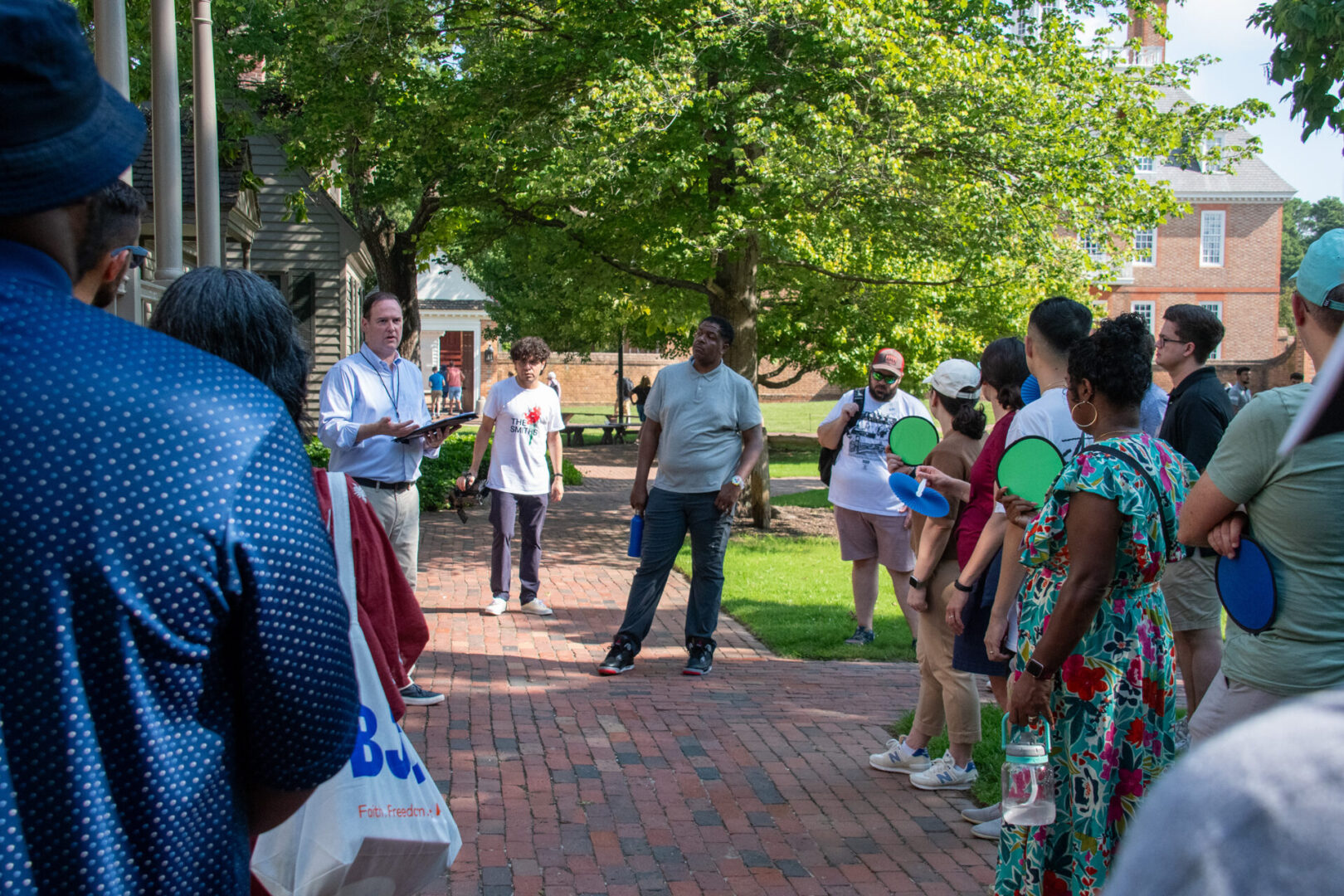
The historic setting of Colonial Williamsburg served as a catalyst for deeper reflection of untold stories and marginalized voices. On the first full day of the seminar, the Rev. Dr. Nathan Taylor, executive director of the Virginia Baptist Historical Society and the Center for Baptist Heritage & Studies, and Dr. Corey D.B. Walker, dean of the Wake Forest University School of Divinity, led the 2025 BJC Fellows on a walking tour of Colonial Williamsburg. The tour was more than a list of historical stops — it also invited wrestling with how history is told and who gets to tell it.
They stopped at the First Baptist Church, one of the earliest African American congregations in the United States, to explore the roots of Black religious life and how enslaved and free African Americans forged spiritual communities as an act of both faith and resistance. At Bruton Parish Church, they examined the legacy of government establishment of religion and the role of dissenting Baptists in pushing for disestablishment in this country and broader protections of conscience. One of the last stops was at the Public Gaol (“Jail”), where the BJC Fellows learned that religious dissent was criminalized and how early Baptists, Presbyterians and others pushed forward, navigating the law in their pursuit of religious freedom for all.
“From the reflections we all shared at the end of the week together, I could tell these ghosts were deeply felt by all,” said 2025 BJC Fellow Harmeet Kaur Kamboj. “Now, how do we make them seen and heard in the ways they deserve?”
The Rev. Abigaíl Medina-Betancourt, another member of the class, reflected on the people not often mentioned in history books who were part of the community. “What can I do to make sure that 300 years from now, the tour guide shares their stories? How can I continue reading the stories that silences tell? Let’s start writing them.”
The five-day seminar also included other experts from BJC and beyond. Dr. Sabrina E. Dent, director of the BJC Center for Faith, Justice and Reconciliation and the leader of the BJC Fellows Program, led a session on religious pluralism in America. The Rev. Jennifer Hawks, who serves as the director of advocacy for the Cooperative Baptist Fellowship, led sessions on the legal foundations of religious freedom and religious exemptions. Melissa Rogers, the former director of the White House Office of Faith-based and Neighborhood Partnerships, spoke with the BJC Fellows about her book Faith in American Public Life and her time working in the Obama and Biden administrations. Following her session, Rogers engaged in a conversation with Dr. Walker on the theological and legal basis for religious freedom. The cohort also got a crash course on Christian nationalism and effective advocacy, featuring presentations from Joy Pettigrew, BJC’s community partnership manager, and Lisa Endean-Jacob, North Texas organizer for BJC’s Christians Against Christian Nationalism movement. BJC Communications Director Israel Igualate provided media training and some practice interview sessions for the cohort as well. The group also got to meet other BJC Fellows alumni who came to the session, creating new connections and expanding their networks.
And, no time in Colonial Williamsburg would be complete without hearing from historical interpreters, who interacted with the class as the people they portray. The BJC Fellows got to hear from and speak with a person portraying Patrick Henry, a founding father who was a staunch supporter of religious liberty throughout his political career, and the Rev. Gowan Pamphlet, an enslaved tavern worker who was also a preacher and the founder of Williamsburg’s First Baptist Church.
By the final day of seminar, the 2025 BJC Fellows emerged with an expanded vision of what religious liberty truly means. “What I really wish everyone knew is that religious freedom is not just about defending what I believe,” said 2025 BJC Fellow Kyle Zuber, “but it’s also about protecting the rights of others to believe differently, or not to believe at all.”
Each year, young professionals between the ages of 25 and 45 accepted into the program commit to more than just attending the seminar in Colonial Williamsburg; they pledge to advocate for religious liberty in their local communities and across the country. This commitment creates a ripple effect, as each person returns home equipped with knowledge as well as the tools and network necessary to effect real change.
The BJC Fellows Program is vital to the work of extending and defending faith freedom for all people. In an era marked by rising religious polarization, increasing challenges to pluralism and threats to the very foundations of religious liberty, this program stands as a symbol of hope and practical action.
“The 2025 BJC Fellows represent the future of faith freedom advocacy,” said Dr. Dent. “Their unique voices and experiences will help shape a more inclusive and equitable conversation around religious freedom.”
Reflections from Rev. Abigail Medina Betancourt
I’m a woman who was born and raised in one of the oldest colonies in the world, Puerto Rico. I’m the youngest of my five siblings, and I was raised in an extreme poverty situation. My upbringing gave me a few lenses through which I see the world: poverty, woman, Puerto Rican, Latina, marginalized. Living on the margins gave me an aptitude to read between lines, to see what is invisible, and to use my imagination to find the gap where I belong. Sometimes I use my imagination to create a place I cannot find for myself. … I had the feeling that a guided tour of Colonial Williamsburg — such a touristic place — led by people from the United States was going to be another day that I would have to utilize my preferred tools (lens frames) to view the world through a feminist lens and the hermeneutics of suspicion.
When I looked at the schedule, I only had names and positions: Rev. Dr. Nathan Taylor, Executive Director of the Virginia Baptist Historical Society; and Dr. Corey D. B. Walker, Dean of Wake Forest University Divinity School. I wasn’t expecting critical analysis on the tour, so I was ready to find the non-official story in the cracks.
To my surprise, Nathan and Corey did a great job together. First, they made clear that this is not a real town, that people were relocated from the land to create this artificial town. They also showed us the house of the person who decided not to leave, as a testament to the resistance. Corey helped us to look through the cracks of official history by giving voice to the slaves, and Nathan made sure to share facts even if they were inconvenient for the history of the United States. It was comforting not to have to do all the critical thinking by myself.
Of course, there were always some readings I had to do on my own, given the time constraints and their use of their own lenses. I kept asking myself about the people who were barely mentioned during the weekend. Not the 500 enslaved people who attended the Baptist Church, but the people who practiced African religions were not allowed to practice them. Or the ones that stopped believing that there is a God, and if there is one, it is a sadist for not halting the hell they were living in.
Yes, some men were allowed to be religious leaders, but what about the women who were not allowed to have a position, rather than to be a baby carrier, a currency maker? I heard stories about how white Protestant Christian males built the town, wrote the constitution from the center without considering the periphery. What about the women and children? What about the atheists, the people who practice any other religion that is not Abrahamic? I think about them during the times of Colonial Williamsburg, but also today. What can I do to make sure that 300 years from now, the tour guide shares their stories? How can I continue reading the stories that silences tell?
Let’s start writing them.
Reflections from Rev. Aaron Tinch
There are moments in life when we sign up for growth, not fully knowing what it will require of us. When I applied to be a BJC Fellow, I knew I was stepping into a space where I would be challenged intellectually, emotionally, and spiritually. I knew I would be among diverse voices wrestling with questions of religious liberty, justice, and identity. What I didn’t anticipate was the mirror this experience would hold up to my own assumptions and boundaries—the ones I had quietly erected between myself and others.
Growth, as it turns out, is rarely comfortable.
During our time in Colonial Williamsburg, amidst deep conversations about the Constitution, conscience, and coalition, I found myself in a quiet wrestle—an internal dialogue about who I am willing to show up for, and why. The tension wasn’t in the classroom debates or the historical reflections; it was in the realization that I sometimes require certainty and reciprocity before offering solidarity. Somewhere in my lived experience, I adopted a posture of caution: Will they show up for me the way I show up for them? Will they speak up for Black lives, for justice, for equity—before I extend my voice for their pain?
That mindset was cracked open by a moment I didn’t see coming.
Hurunnessa Fariad, one of our guest speakers, spoke with clarity and conviction about her work, her faith, and her unwavering commitment to building bridges in the face of misunderstanding, hate, and indifference. As a Muslim woman, her story reminded me of the painful aftermath of 9/11. In those days, America—still reeling from tragedy—misplaced its grief and weaponized its ignorance. Sikh communities, Muslim families, and those simply perceived to be of Middle Eastern descent became scapegoats for a nation hungry for blame.
And in that moment of national crisis, I was relieved—relieved that, for once, Black men weren’t the face of fear in white America. But what I didn’t do, and what Hurunnessa’s words illuminated with sharp honesty, was show up. I didn’t lend my voice to speak against the rising tide of Islamophobia. I didn’t advocate. I didn’t protest. I didn’t pray publicly.
That realization pierced me.
Her courage and consistency in the face of silence—silence from people like me—revealed a truth I needed to confront: justice cannot be contingent on comfort. Solidarity is not transactional. It cannot wait until our names are on the headline or our pain is at the center. If I only show up for causes that promise me the favor of return, I’m not practicing justice—I’m managing alliances.
Being in this BJC Fellows space required more than my intellect or theological training. It required my honesty. It required me to reckon with the ways I had subconsciously rationed my empathy, calculating whether others had “earned” my support. And it called me to repent—not in shame, but in conviction.
I now understand that part of my growth—as a Black man, as a Christian, as a leader—is choosing to show up anyway. Even when I’m unsure. Even when I feel unseen. Even when others may never return the favor. I must be willing to speak up for the dignity of others, not as a favor, but as a reflection of my own integrity.
Growth, real growth, asks us to do the inconvenient thing. It invites us to stand in places that stretch us, to sit with questions that discomfort us, and to listen to voices that convict us. The BJC Fellows Program didn’t just expand my knowledge of religious liberty—it expanded my understanding of what it means to be in beloved community.
So yes, I’ve learned about myself. I’ve learned that growth sometimes begins with a question—why did I put myself here? —but ends with a declaration: because I needed to be. I needed to be reminded that advocacy is not a one-way street. That justice requires all of us. That showing up—consistently, compassionately, and without conditions—is one of the most radical acts of love we can offer in this world.
And so, I leave this experience not just informed, but transformed—committed to showing up, even when it’s hard, even when it’s lonely, even when it costs me.
Because liberation isn’t liberation until it includes us all.
Get to Know Other BJC Fellows Classes