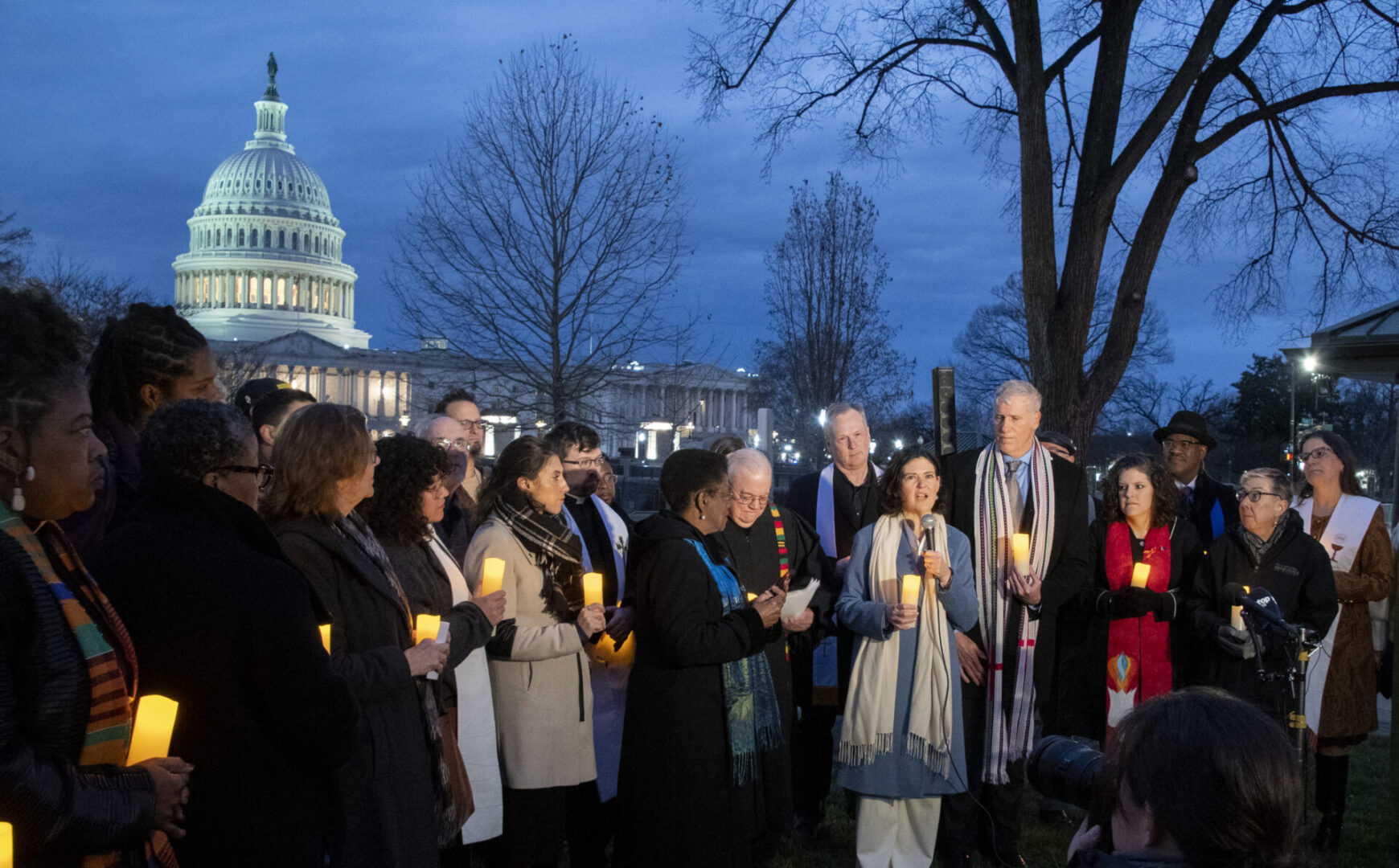
2019 BJC Fellows
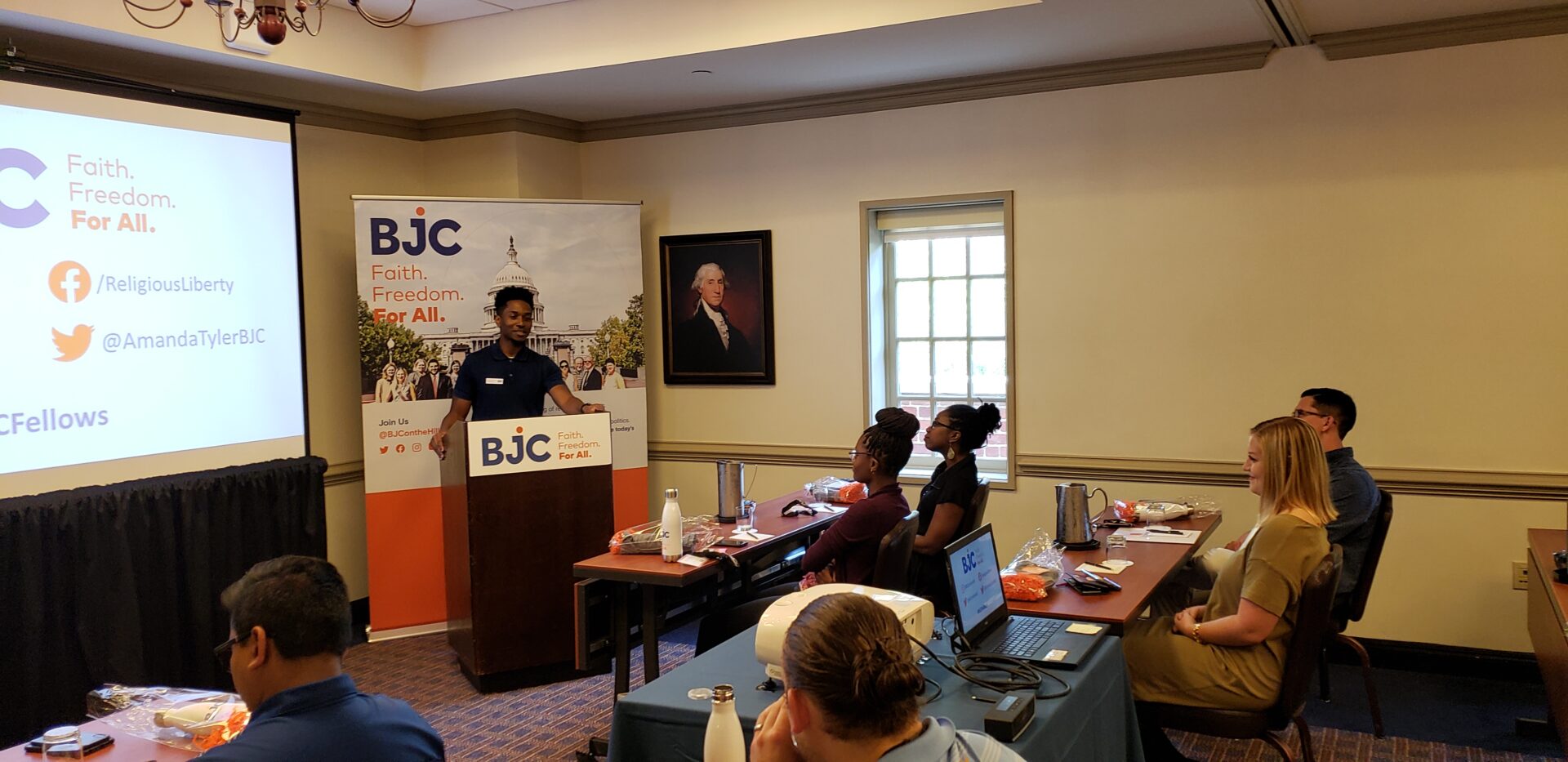
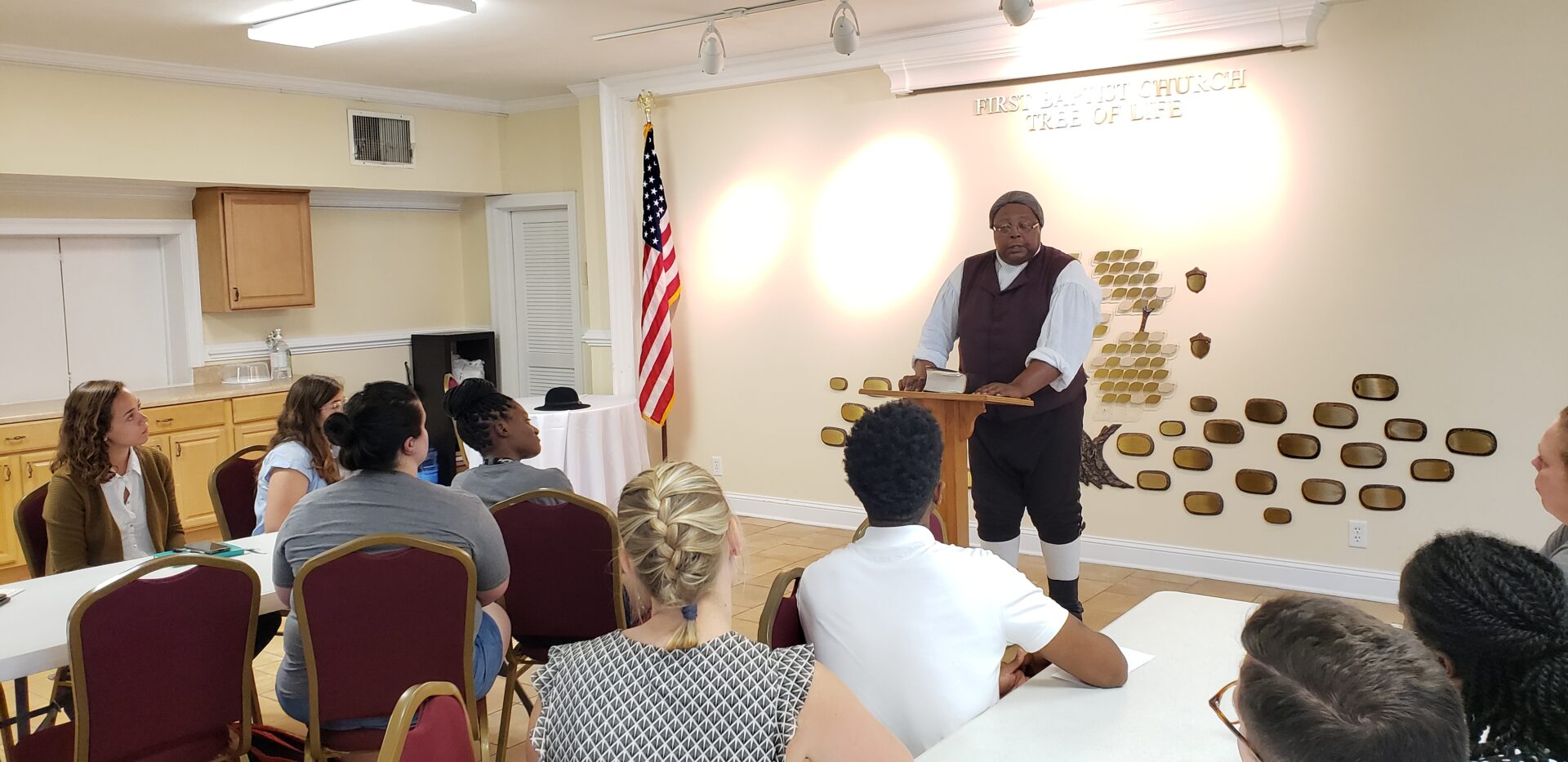
BJC welcomed the fifth class of BJC Fellows in 2019, introducing 10 young professionals to Colonial Williamsburg and providing a historical, legal and theological view of religious liberty. Learn more about their class below.
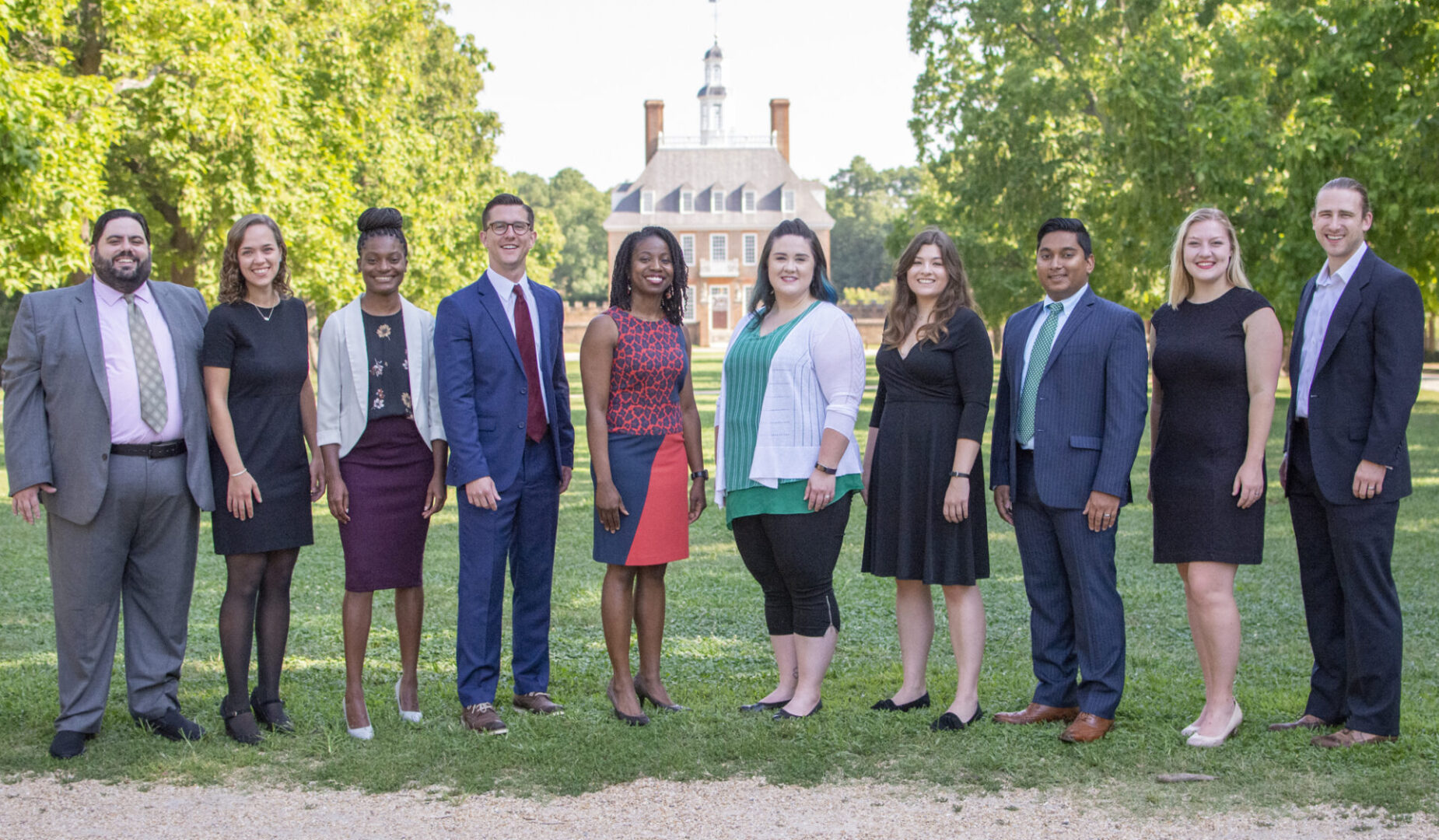
Meet the 2019 Class
-
-
Taylor Bell: Birmingham, Alabama
Keisha Patrick: Washington, D.C.
Sarah Henry: Arlington, Virginia
Brittany Graves: Cedar Park, Texas
Sarah Dannemiller: Abilene, Texas
Kyle Nicholas: Charlottesville, Virginia
Eftakhar Alam: Alexandria, Virginia
Chris Crowley: Richmond, Virginia
Molly Shepard: Dallas, Texas
Jillian Hankamer: Lewisburg, Pennsylvania
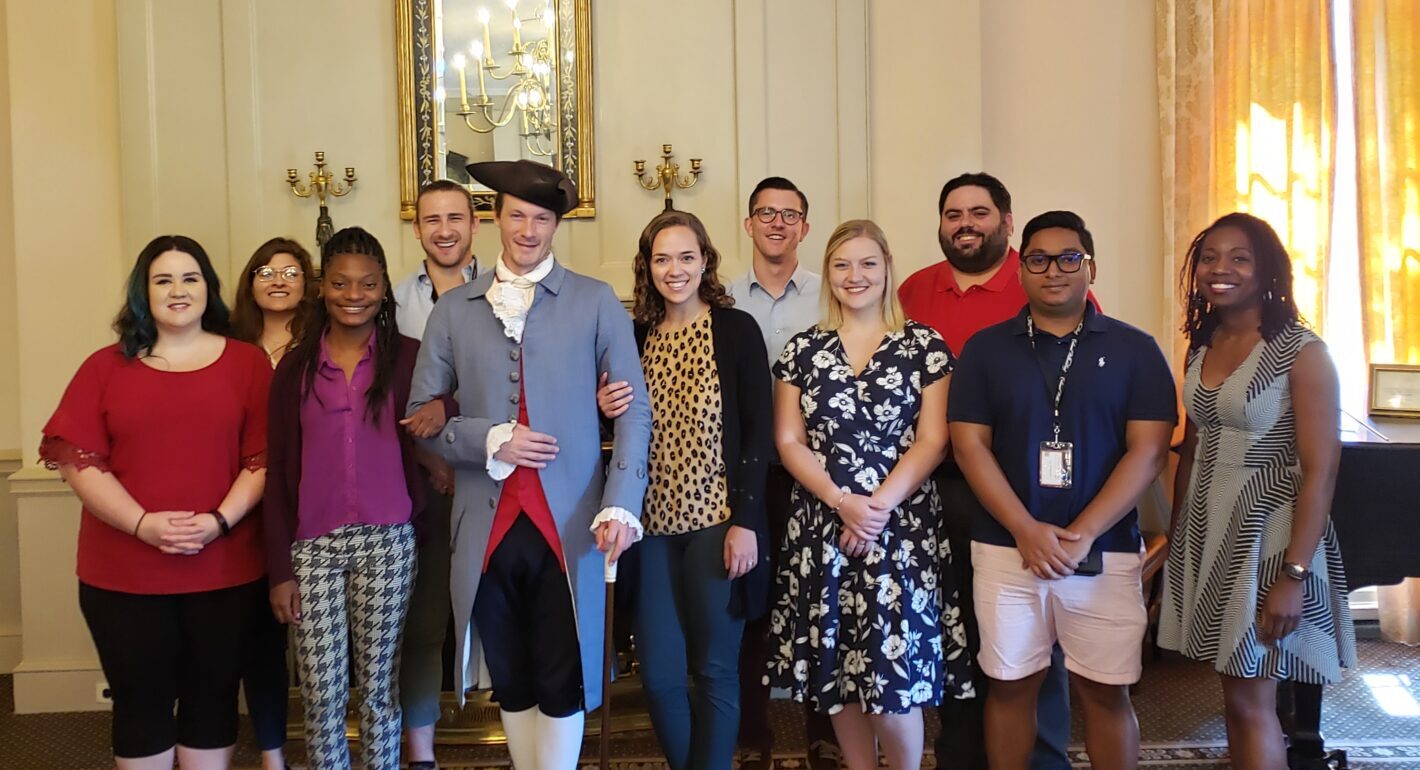
See Photos from the Week in Williamsburg
“We were not all white, were not all Christian, and we didn’t vote the same way. We were a diverse group of individuals who came together to engage, support and challenge each other in a deeper engagement of religious liberty.”
– Taylor Bell
“BJC is doing the hands-on work to effectively support religious liberty. It is inspirational to see and encourages me to make moves in my hometown, especially among people and groups that remain voiceless and marginalized. As I learn to advocate for religious liberty in new ways, the BJC Fellows Program gave me language to equip me for years to come.”
– Brittany Graves
“BJC exists and works every day on that thin line between what it means to be faithful followers of Christ and ensuring that all Americans are free to worship or not worship as they choose. BJC invests in their Fellows by making us advocates, and I am incredibly grateful to be part of this family.”
– Jillian Hankamer
“We were not all white, were not all Christian, and we didn’t vote the same way. We were a diverse group of individuals who came together to engage, support and challenge each other in a deeper engagement of religious liberty.”
– Taylor Bell
“BJC is doing the hands-on work to effectively support religious liberty. It is inspirational to see and encourages me to make moves in my hometown, especially among people and groups that remain voiceless and marginalized. As I learn to advocate for religious liberty in new ways, the BJC Fellows Program gave me language to equip me for years to come.”
– Brittany Graves
“BJC exists and works every day on that thin line between what it means to be faithful followers of Christ and ensuring that all Americans are free to worship or not worship as they choose. BJC invests in their Fellows by making us advocates, and I am incredibly grateful to be part of this family.”
– Jillian Hankamer
Read Reflections From the 2019 BJC Fellows
Becoming an Actively Engaged Citizen by Taylor Bell
What I deeply appreciate about the BJC Fellows Program is that, for BJC, it is not enough to simply teach this knowledge. They want you to use it. Therefore, they take great time and energy to teach us why this knowledge is important and how we can use it to preserve religious liberty for all. Not only did BJC teach me the political and existential necessity of religious liberty, they deliberately taught us the nuanced philosophical, political, legal, religious and historical scaffolding that defines and supports religious liberty. And they educated me on the complex political dynamics through which religious liberty is protected and threatened. I now am not only confident in my understanding of religious liberty; I am also confident in my abilities to use this knowledge to defend religious liberty in the American political, religious and public spheres.
This interweaving of knowledge with action makes the BJC Fellows Program, at its core, deeper than any sort of professional development or educational opportunity. At its root it is an empowering invitation to become an actively engaged citizen and advocate for religious liberty. In democracy, citizenship means being present and deliberately engaged within the public sphere. Being an engaged citizen who enacts change doesn’t occur through public reservation and private commentary that resonates only within an ideological siloed echo-chamber. We need to be citizens in the democratic sense. Meaning we need to directly engage our diverse public square and its complex discourse on religious liberty, with all its political, legal and religious nuance, as an expressed commitment to religious liberty.
BJC prepared and empowered me for this engagement by modeling this public discourse amongst us. We were not a homogenous group; we were not an echo-chamber. We were not all white, were not all Christian, and didn’t vote the same way. We were a diverse group of individuals who came together to engage, support and challenge each other in a deeper engagement of religious liberty. In other words, BJC’s means were just as formational and the ends. The process of teaching just as important as the knowledge itself. So much so that I know being a BJC Fellow has prepared me to engage the public discourse on religious liberty in a truly constructive way because I have already begun to practice it.
Yet, perhaps the most profound takeaway from being a BJC Fellow is not the knowledge or preparation I received, but the imperative to protect religious liberty today. There was an inherent challenge interwoven into the fabric of the BJC Fellows Program: to use this knowledge and preparation in your daily private, professional and public lives, because religious liberty is at risk now. This imperative was not fear-driven hysteria. It emerged from a recognition of the American political climate and acknowledgement that the democratic understanding of religious liberty is being destabilized.
This destabilization is led by the mainstream political resurgence of Christian nationalism, a historical threat to democratic religious liberty gaining powerful traction once again. This political ideology, in conjoining American and Christian identities, defines religious liberty theocratically: that to be American one must be Christian and therefore Christianity is justified in having greater privilege over against religious minorities and people of no religion. This privileging violates both the Establishment and Free Exercise clauses of the First Amendment. BJC was not afraid to educate, engage and challenge us on this difficult and polarizing issue. Indeed, if we are to be advocates for religious liberty, we cannot avoid it.
The BJC staff shares a deep vocational commitment: religious liberty is essential for both American democracy and humanity, and BJC is committed to protecting it. This commitment was the tethering thread for the BJC Fellows program that wove everything else together. And in engaging this difficult and polarizing ideology, BJC both embodied and shared this commitment with us. Through this sharing, they invited and challenged us to join them in becoming advocates for religious liberty. I say “challenge” not as a high school football coach threatens their players with more wind sprints if they drop the next pass. I say “challenge” in that BJC helped me to see if I care about America and its people, then how can I not join in protecting religious liberty for all today? The challenge is embodied in the commitment to actively advocate for religious liberty. How can I be both an American citizen and Christian who cares about my country and all its people and not advocate for religious liberty for all? My answer, especially as a 2019 BJC Fellow, is that I can and must be an advocate. I can do nothing else. As BJC has taught me, it is how I both work to realize the ideal of American democracy and “love my neighbor as myself.”
Empowered by History by Keisha I. Patrick
I first encountered Colonial Williamsburg on a three-mile jog through the town around 6 a.m. on the first full day of the BJC Fellows seminar. The AirPods in my ears, the iPhone in my running shorts, and the pounding of my tennis shoes against paved streets reassured me that I was not being transported back to a time when people cloaked in deep brown African skin like mine were considered three-fifths human, at best. Still, I felt that my surroundings had been designed to conjure a sense of nostalgia that I could not comfortably feel.
My trouble with 18th century Williamsburg is that its leaders demanded freedom for half of its population while denying the same freedom to the other half — others who looked like me. Throughout the BJC Fellows seminar, I was similarly troubled that 21st century America extends religious freedom to some of its population in word and deed but to others in word alone. For example, we discussed the Supreme Court’s recent decision to allow a state government to continue funding a gigantic cross, a Christian symbol, on public land. This ruling implicitly others taxpayers who choose religions with different sacred symbols or who choose no religion at all. We also discussed a new state law requiring public schools to prominently display the words “In God We Trust” on their walls. Such a law “others” students who exercise their freedom of conscience to choose no god or religion, or those whose god is called something other than the English “God.” Seeing those words daily could be tortuous for a child who is struggling with her beliefs or who feels pressure to believe differently than what she is being taught at home. The discomfort I felt on that first morning’s jog helped me to consider and empathize with the discomfort of others, particularly those who don’t identify as Christians in America.
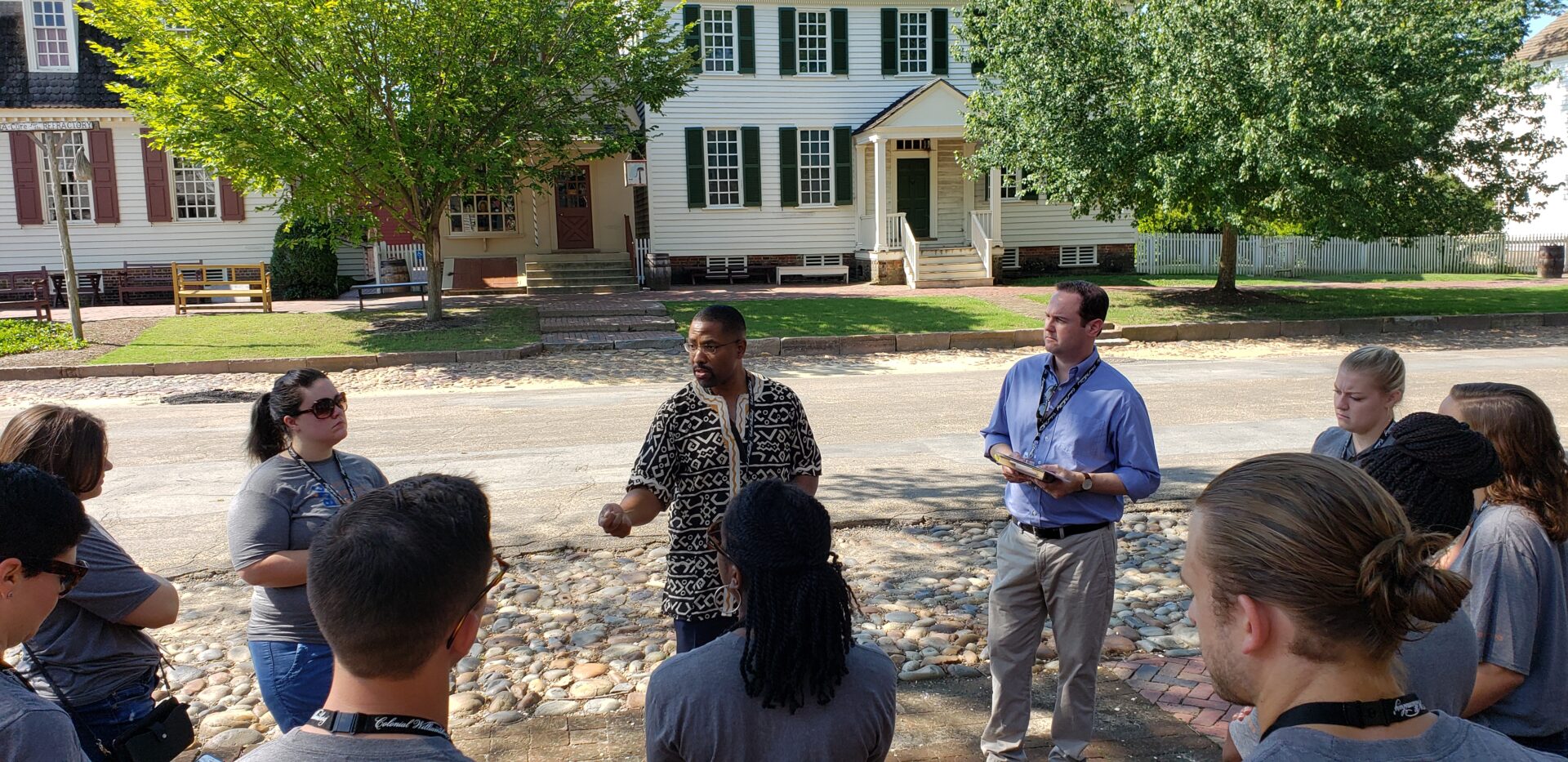
Shortly after my morning jog through Colonial Williamsburg, I went on a guided tour of the town with the BJC Fellows. I was reminded that religious life in America began with the “othering” of people who didn’t adopt their Colony’s established religion. In Colonial Virginia, Baptists were the others. Baptists preachers faced beatings and imprisonment for exercising their faith instead of the Christian denomination that Virginia’s Colonial government had chosen. Our tour guides read to us the personal accounts of some persecuted Baptists and led us to replicas of the small, dark, brick prison cells where the persecuted were often confined. As a punishment, one white Baptist preacher was forced to witness the beatings of enslaved Africans who had been in his audience. There were layers to this governmental “othering.” Yet, it seemed to me that even Baptists were eligible for some of the privileges of colonial citizenship, but such privileges were utterly denied to persons identifying as Catholics or Jews. No concern was shown for the religious choices of the enslaved Africans, who constituted slightly more than half of Virginia’s population.
Despite Colonial America’s dehumanizing religious establishments, my week in Williamsburg made me hopeful that religious freedom can be achieved in America today. Through the reading of Endowed By Our Creator: The Birth of Religious Freedom in America and a Q&A with the author, Michael Meyerson, during the Seminar, I was able to peek into 18th century America and glean some of the motivations and thoughts underlying the Founders’ approach to religious freedom. Meyerson’s historical research and findings show that many of the Founders were both devout Christians and deeply concerned about the dangers of state-sponsored religion. Meyerson’s work debunks modern claims that America was founded as a “Christian nation.” In fact, the plain language of the Constitution and its First Amendment show the Founders intent to ban religious tests for elected officials, prohibit state-sponsored religion and protect the free exercise of religion. Thus, the newly-birthed United States ratified constitutional promises purposed to prevent the “othering” of its citizens on the basis of religion.
I am an evangelical Christian, not in the political sense but in the belief that my faith in Jesus compels me to share the Gospel message with people who are willing to listen. I reject political evangelicalism that seeks to Christianize America through laws based on some Christians’ biblical interpretations and results in the “othering” of all who disagree. I have yet to find a Bible verse that mandates Jesus’ followers to win souls or communities through government action. The Jesus I follow instructed his disciples to render unto Caesar what is Caesar’s and to God what is God’s. One of my major takeaways from the BJC Fellows Seminar is BJC Associate General Counsel Jennifer Hawks’ statement that any gospel that depends on government action is incapable of changing the world.
One of my core beliefs is that God created each human being in God’s image with intrinsic value and freedom of conscience. Religious freedom is based in freedom of conscience, and it provides liberty to choose one’s own god and religion or no god or religion at all. My BJC experience confirmed for me that denial of religious freedom to any person or group is a denial of freedom of conscience and, thereby, a form of dehumanization. It’s a way of saying to the other “you don’t belong” or “you’re less than human.” Such messages are incongruent with America’s assertion that all people are created equal with certain inalienable rights. Dehumanization almost always leads to violence, denial of freedom and rejection of full citizenship. It is the enduring guarantee of othering.
As the sun glazed over my skin during morning jogs through Colonial Williamsburg, my brown hue richened. I grew fond of the town because of the experiences I had as a BJC Fellow. But no sense of nostalgia for centuries past overcame me. Like my brown skin, the history of dehumanization there was deep. Yet, I found that Williamsburg holds hidden gems in America’s journey from Colonial religious establishments to constitutional religious freedom. This history empowers me to promote religious freedom for all.
A Humanist and a Baptist Walk Through Colonial Williamsburg by Sarah Henry
Read Sarah Henry’s reflection on the BJC Fellows Program as published in The Humanist: A Humanist and a Baptist Walk through Colonial Williamsburg…
Get to Know Other Classes