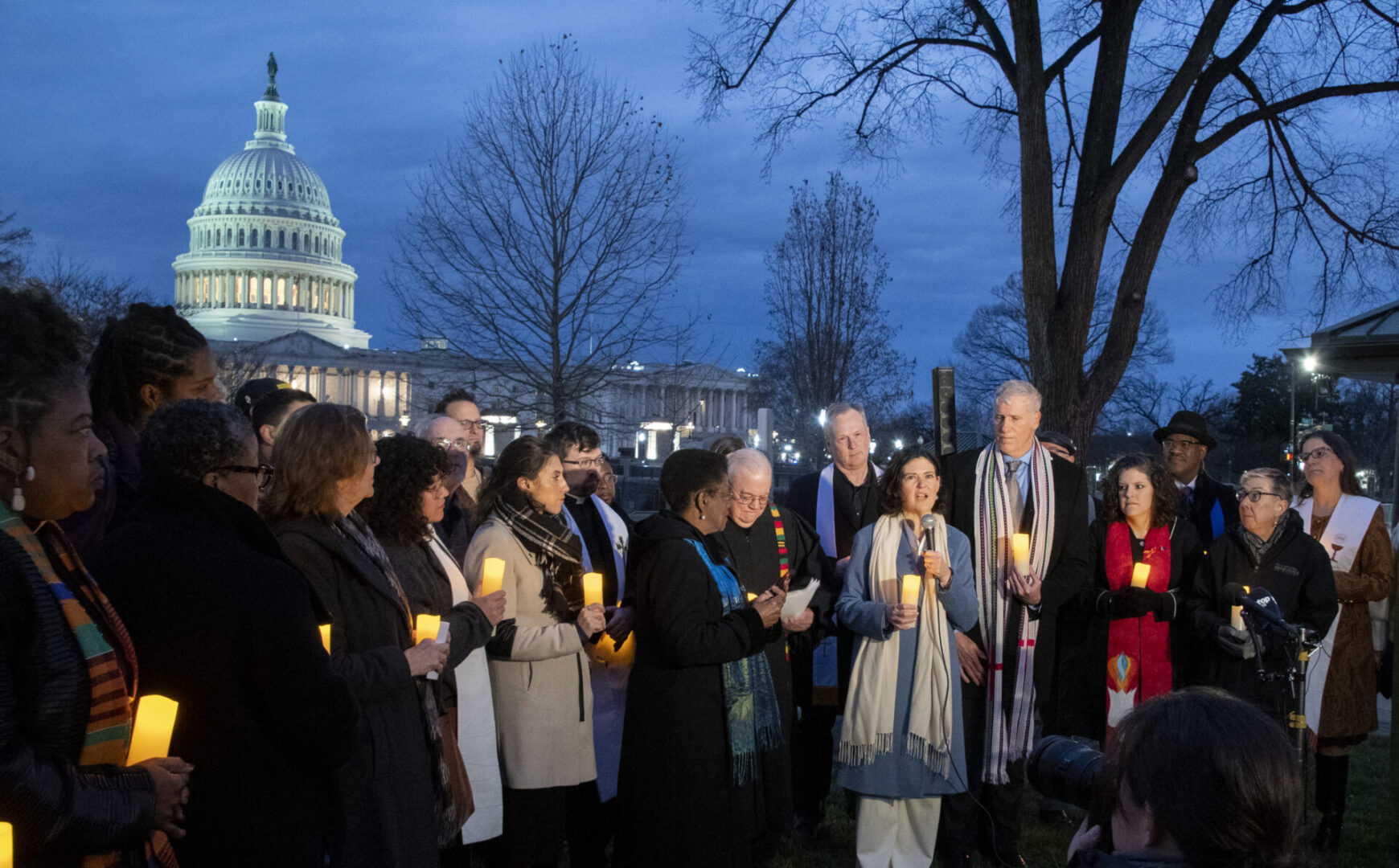
2015 BJC Fellows
BJC launched the inaugural BJC Fellows Program in 2015, offering young professionals the opportunity to deepen their historical, theological and legal understanding of religious liberty and develop skills to advocate for the cause throughout their careers.
Ten BJC Fellows were selected from diverse educational, professional and religious backgrounds and attended the 2015 BJC Fellows Seminar in Colonial Williamsburg.
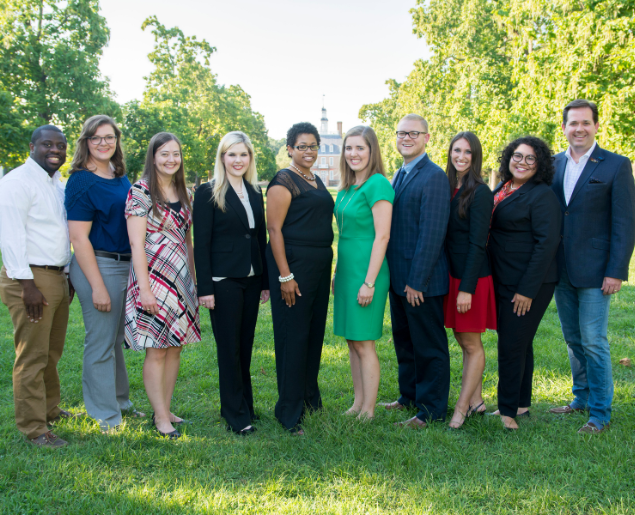
Meet the 2015 Class
-

-
Alyssa Aldape, Atlanta, Ga.
Danielle Ashley, Laurel, Miss.
Sabrina Dent, Petersburg, Va.
Caitlyn Cook Furr, Arlington, Va.
Kristen Harris-Bridwell, Abilene, Texas
Lauren McDuffie, Winston-Salem, NC
Katie Ferguson Murray, Dallas, Texas
Kyle Tubbs, Georgetown, Texas
Adam Wright, Dallas, Texas
Elijah Zehyoue, Washington, DC
See Photos from the Week in Williamsburg
“A particular quote which resonated with me came from Thomas Jefferson, who said that ‘whenever people of reason gather together to discuss religion they will find more to agree upon than they ever find to disagree over.’ Baptists have always been their best when embracing the unifying distinctive of religious liberty for all – historically making us an incredibly powerful denomination inspiring humanity by our belief that we are inherently designed and endowed by God to be free.
-Adam Wright
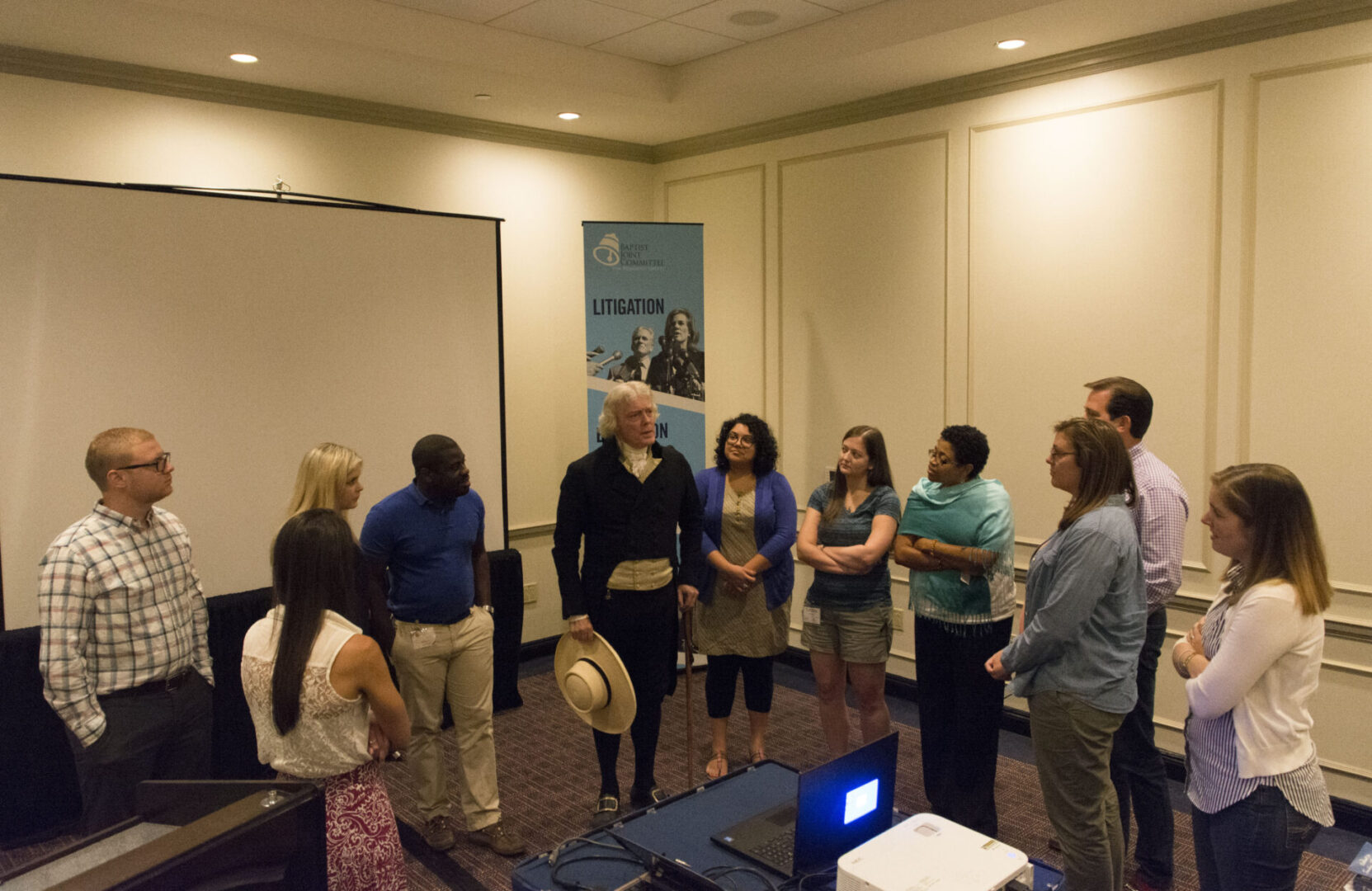
My voice was represented in hearing about John Leland’s disdain for the idea of “tolerance.” I’ve always felt a little pretentious saying that I “tolerate” someone else — that tolerance was a lower ideal to be reached compared to acceptance, encouragement, and/or empowerment. Who am I to put myself on a pedestal and look down on someone else? I want to seek mutual cooperation with those different than me to make this world a better place.
-Kyle Tubbs
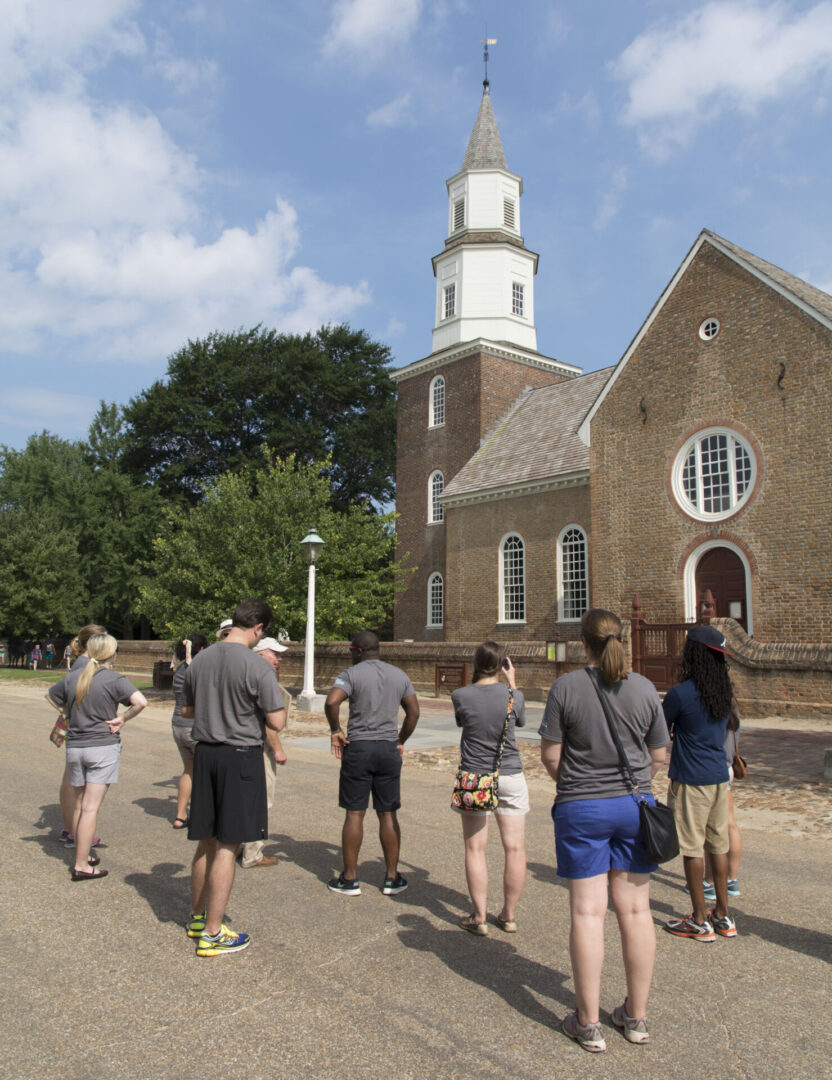
During BJC Executive Director Brent Walker’s lecture, we discussed the importance of language and the difference between tolerance and liberty. We ought not to be a people of tolerance. Tolerance implies that one side allows another to exist. According former BJC leader James Dunn, if people made in the image of God do not have the freedom to say “no” to religion, their “yes” is meaningless.
-Alyssa Aldape
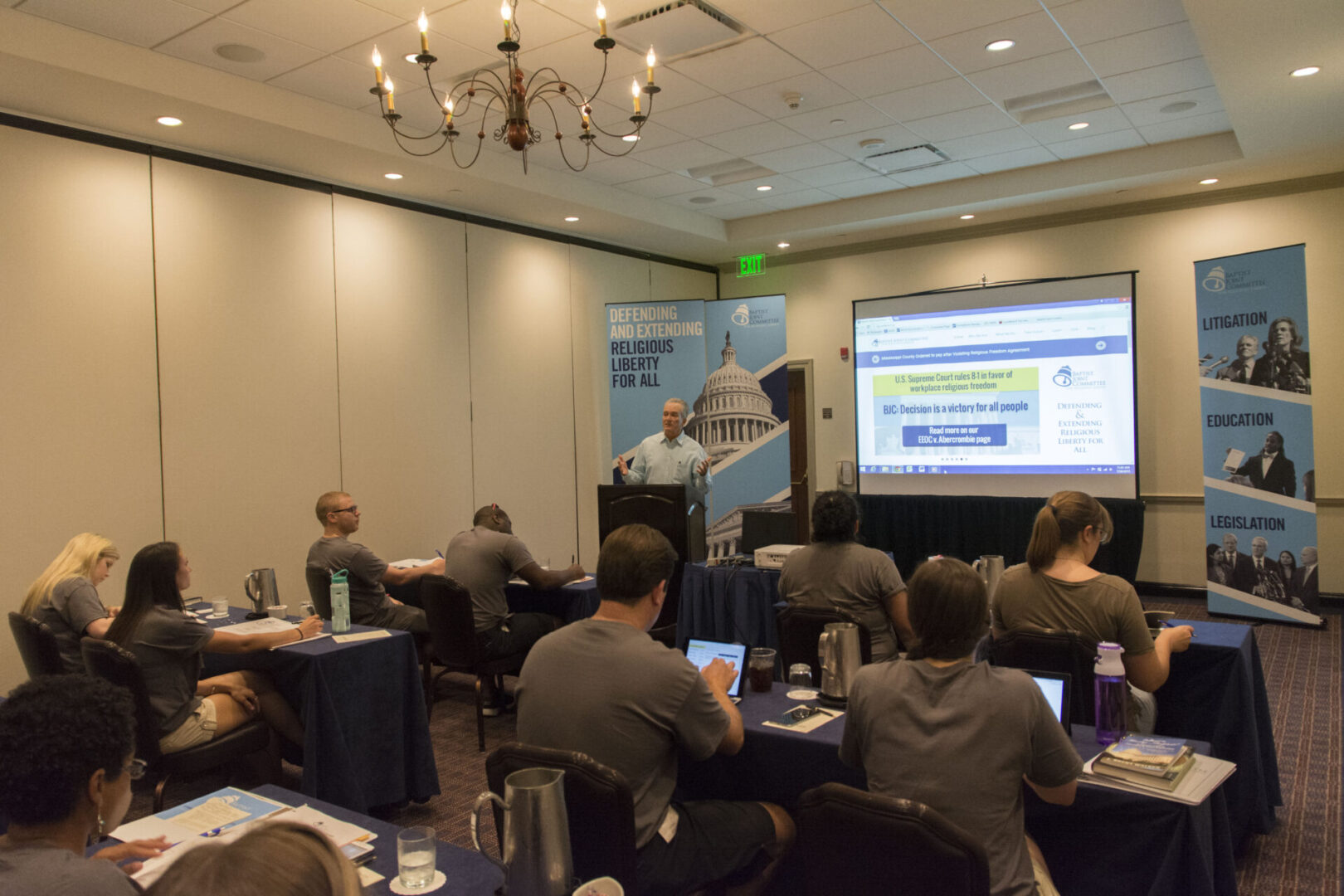
Though one might think we would have become tired of sitting in this room based on the amount of time we spent within it listening to lectures, this is where some of the best moments of the week took place. Many great conversations and revelations occurred and several friendships were sparked.
-Kristen Harris-Bridwell
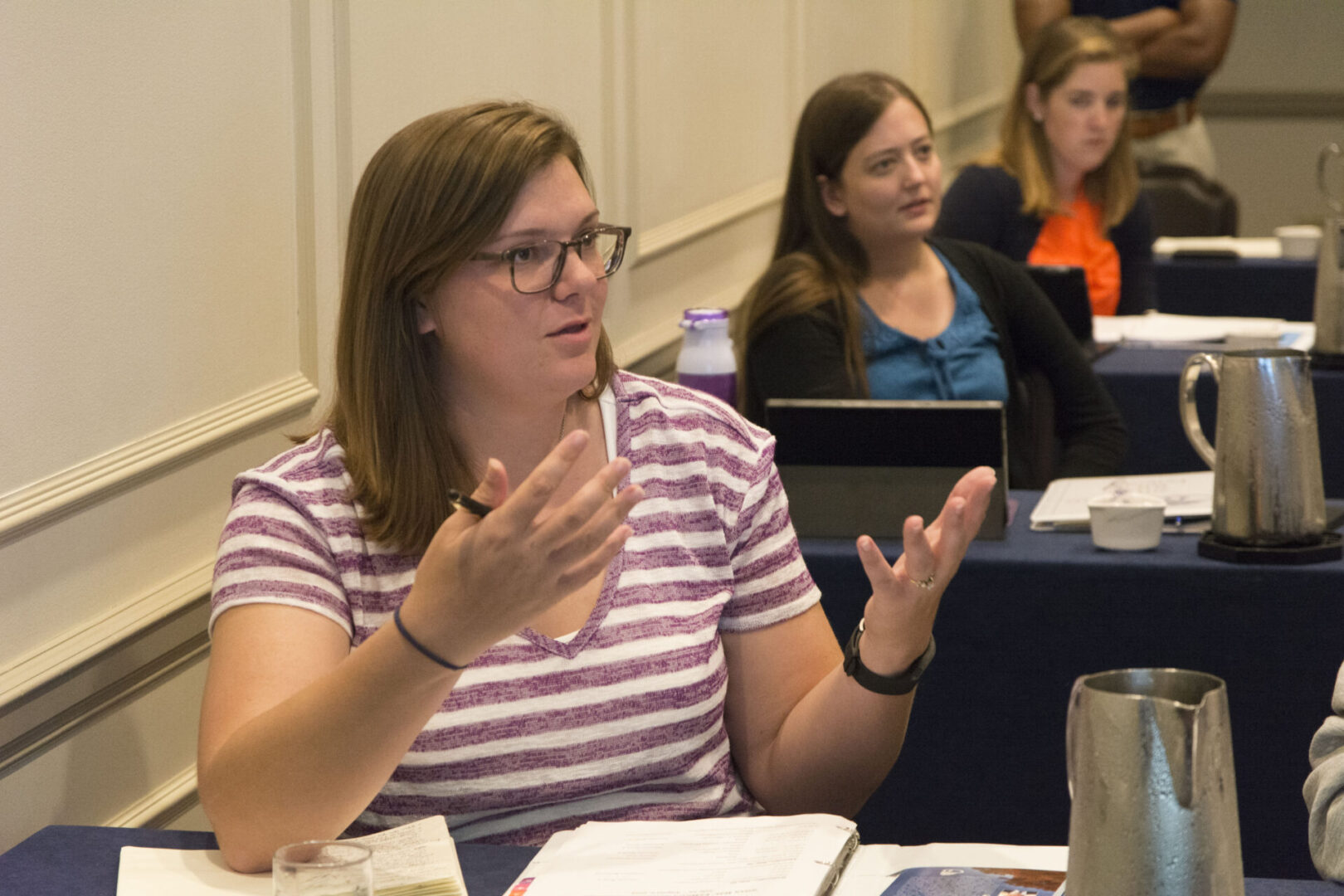
“A particular quote which resonated with me came from Thomas Jefferson, who said that ‘whenever people of reason gather together to discuss religion they will find more to agree upon than they ever find to disagree over.’ Baptists have always been their best when embracing the unifying distinctive of religious liberty for all – historically making us an incredibly powerful denomination inspiring humanity by our belief that we are inherently designed and endowed by God to be free.
-Adam Wright
My voice was represented in hearing about John Leland’s disdain for the idea of “tolerance.” I’ve always felt a little pretentious saying that I “tolerate” someone else — that tolerance was a lower ideal to be reached compared to acceptance, encouragement, and/or empowerment. Who am I to put myself on a pedestal and look down on someone else? I want to seek mutual cooperation with those different than me to make this world a better place.
-Kyle Tubbs
During BJC Executive Director Brent Walker’s lecture, we discussed the importance of language and the difference between tolerance and liberty. We ought not to be a people of tolerance. Tolerance implies that one side allows another to exist. According former BJC leader James Dunn, if people made in the image of God do not have the freedom to say “no” to religion, their “yes” is meaningless.
-Alyssa Aldape
Though one might think we would have become tired of sitting in this room based on the amount of time we spent within it listening to lectures, this is where some of the best moments of the week took place. Many great conversations and revelations occurred and several friendships were sparked.
-Kristen Harris-Bridwell
Read Reflections from the Class
A Responsibility to Defend Freedom for All by Lauren McDuffie
The first full day of the BJC Fellows Seminar was focused on two separate but vitally important conversations. BJC Executive Director Brent Walker spent the morning leading us in a consideration of the biblical and theological underpinnings of religious liberty, and our afternoon with Professor Michael Meyerson was spent considering the lives and work of several important Baptist leaders: Roger Williams, John Leland, and Isaac Backus. I found my own voice as we looked to these members of the Baptist clergy who were compelled by their identity as Christians and as Baptists to defend religious liberty. Baptist ministers like John Leland played a key role in carving out the central place religious liberty came to hold in the system of government developed in the United States. What a legacy to learn from and to be a part of as I live into my own calling as a Baptist minister.
It is a challenge as someone who has grown up in the modern Baptist church to consider how much we have changed. Professor Meyerson began his discussion of Baptist leaders by explaining the ways that Baptists in the colonial and early American period of history saw themselves as a “hated minority.” I became increasingly aware of how much more privileged Baptists are in the United States today, as a powerful denominational group within the context of an American Christianity dominated by mainline Protestants and evangelicals. I also became aware of how much this privilege impacts the way religious liberty shows up as part of the framework of what it means to be Baptist, or if it even shows up at all. When we no longer face the urgent necessity to fight for our own religious liberty, why would we be compelled to fight for anyone else’s?
The answer is, of course, in the biblically-based understanding of soul freedom which we had already spent our morning with Walker discussing. If we understand ourselves and our fellow travelers on this journey – fellow Baptist or not – to be created in the image of a God who is sovereign and free, then how else can we understand the journey of faith except as one in which we are free to participate as we feel called? And if this is the case, how much more important is it for us to defend the right of all to express their faith in a way that is authentic to them, even if it does not look the same as the faith that is authentic to us? Walker described this soul freedom as our “God-infused liberty of conscience … not because we are Christian, but because we are human.” It seems that this implies an inherent responsibility to defend that freedom for all, even if we have personally been afforded that freedom at this point in history.
The seminar was an excellent way to begin the fellowship year, providing us with tools and resources to use in each of our unique ministerial settings. I came back from our gathering to present a unit project to my Clinical Pastoral Education peers entitled “Advocacy as Ministry,” and I was able to frame this conversation with the roles and responsibilities of clergy in the context of religious liberty. What does pastoral leadership look like when we feel compelled to advocate for concerns beyond the walls of our own churches? It was a helpful exercise to invite other clergy nearing the end of our residency year to think about how these issues will impact their ministry. I am also looking forward to integrating these tools into my work as a congregational minister. It seems that many churches are looking for ways to move “outside of our walls,” and what better way to do that than advocating for a freedom which is such a central part of our grounding as Baptists? I hope to encourage my community of faith to see this work as an essential part of our identity as both Christians and as Baptists.
My Cry for Humanity: Let Me Tell My Story by Sabrina Dent
Throughout my life experiences, I have learned to recognize the sacredness of humanity and human life. In my opinion, to diminish the value or experience of any group in history is to undermine their relevance to the human story. Thus, it is with deep conviction and reflection that I share my story of pain, pride, victory, spiritual awakening, healing, and critical analysis as it relates to my engagement in the BJC Fellows Program. Quite honestly, I only imagined the logical and practical outcomes of learning more about the Baptist Joint Committee for Religious Liberty. I never imagined that my experience would cause me to wrestle with who I am spiritually; and, as a woman of color who still seeks to tell her story unapologetically in a society that seldom listens.
There is so much that I could reflect on about Day One. Should I talk about the rage, pain, and frustration that I felt reading Michael Meyerson’s book Endowed by Our Creator: The Birth of Religious Freedom in America? How I should fully process that the same brilliant framers of the Constitution, who meticulously worded this historic document to ensure religious freedom for all, were well-practicing people of faith and unreformed slaveholders? Even when I reflected on the words by James Madison, who spoke against the local jailing of Baptist ministers by saying “…this vexes me worst of anything whatever” led me to question his humanity. Whereas, he was identified in history as a “humane slaveholder,” this phrase clearly reflects the contradictory practices of Christianity. As I see it, there is nothing humane about the institution of slavery.
Well…maybe, I should speak about the internal struggle to engage the idea of touring Colonial Williamsburg as a critically thinking adult versus adolescent. In elementary school, we were taught stories about the great settlers who founded America; but, as an adult I knew better. I wondered, “Who will tell the story of my ancestors? Or, will the truth about their stories be told?” Therefore, I admit that going on the historic tour took a lot of courage, self-control, and trust that the BJC Fellows team would recognize the significance of everyone’s story being told. Whereas the tour guide was quite informative and witty, my soul was still searching for that voice. You know…The voice that could speak to my heritage, person, and spirit to validate an African-American’s perspective in this historic living museum. I anxiously awaited my breakthrough…And then, there was a mention of Gowan Pamphlet. Who or what was a “Gowan Pamphlet”? I recall asking another BJC Fellow if it was a brochure or a person. They also, had no knowledge. But, to my surprise Gowan Pamphlet would be that divinely inspired voice that would speaking hope and healing to my wounded spirit. Never, in my Black Baptist seminary experience of being exposed to liberation theology was his name mentioned. Yet, he was a Black voice in the 18th century spiritual awakening movement for enslaved people who would influence my 21st century experience as BJC Fellow. Not to mention, there was a deeper connection because of our Virginia Union University roots.
As I sat there embracing the words, movements, voice inflections and tone of James Ingram as Gowan Pamphlet, I recall the moment that he spoke of the powerful implication of “The Right Hand of Fellowship.” That was the pivotal moment in my day. When he extended his hand to [BJC Fellow] Alyssa Aldape and asked if we identified that action, I immediately responded with the correct answer. As a matter of fact, I immediately thought of all my experiences in any church (Pentecostal, Baptist, or Scientology) that welcomed me as a new member. However, the gesture took on greater meaning when he said, “The Right Hand of Fellowship was significant for the Africans, Irish, and Indians because they were finally recognized as humans; they now had a community to be a part of…and one that had to accept them as humans.” In reflecting on those words, I experienced a transformative moment of soul freedom and liberation.
Wow! The Right Hand of Fellowship was no longer just a simple gesture of welcome; but, a full acknowledgement of our humanity. When you consider the gospel message that was beaten into enslaved people for the sake of obedience and salvation with fear of God without acknowledgement of their humanity is now the same gospel message that affirms them as humans, it is quite sobering. It was important to have this story told by Gowan Pamphlet, a relatively unknown significant person in history who was a former slave turned preacher and freeman. His story yielded my heart to experience the antithesis to the painful history of Colonial Williamsburg. For me, learning about the Anglicans’ responsibility to fully identify these marginalized people as humans profoundly spoke to their religious convictions in light of their inhumane and immoral practices of slavery. In short, our time with Gowan Pamphlet not only provided healing for my soul – it removed any emotional barriers that would prohibit me from engaging the fullness of the BJC Fellows experience. For that, I am extremely grateful because I can honestly say that I heard my ancestors’ story and projected my voice in the conversations that mattered most to me.
So, how do I take all of the information from my experience to promote religious liberty in practical ways? Well, like most people of oral traditions, I will tell my story. I will share my BJC Fellows Program experience with others which will encourage meaningful dialogue about religious liberty. Additionally, I will create space in my ministry context of the Interfaith Council of Greater Richmond to invite the Baptist Joint Committee to speak about the relevance of the topic to our interfaith community. Mostly importantly, I will listen to the conversations of others to inquire about opportunities for partnership with this progressive, essential, and faithful organization. It is through co-sponsored events or programs that I intend to bring greater awareness to others about what matters to many Americans—that is, protection of their First Amendment rights. Lastly, I cannot forget about the power of networking. Word of mouth will forever be the best form of advertising; thus, I will use it wisely.
For me, the BJC Fellows Seminar was a lived experience which allowed me to define my truth, inhale my hopes, and exhale my anxieties while feeling each moment. Thus, I would affirm that my cry for humanity was heard in my comments, reflections, conversations, and inquisition about the unspoken and painful history of slavery during the time of this religious freedom movement. My engagement with staff, lecturers, and other Fellows afforded me the opportunity to become aware of my own strengths, challenges, and areas for growth. As a person who has a deep sense of spirituality and faith without the need to self-identify as a Christian, I recognized that I am even more unapologetically Sabrina and Black (this part was an Aha! moment for me). As a Black woman who stands tall on the shoulders of many strong sisters in history like Anna Julia Cooper, Fannie Lou Hamer, and Jarena Lee, I am reminded of my moral, spiritual, and social responsibility to be a voice and an advocate in furthering my pursuits to building interfaith relations among others with the Black community. When and where I enter as an authentic voice addressing the harsh realities of our difficult past with Spirit guiding me, I open a door of greater awareness for my love towards humanity. So, thank you for letting me tell my story.
I would like to express my sincerest gratitude to the Baptist Joint Committee for carrying the mantle of protecting the religious liberties for all people. Additionally, I wholeheartedly appreciate the sacred and private space that was provided in our accommodations. It allowed me to reflect and debrief from the overflow of information. Yet, I highly valued the communal meals and fellowship opportunities to learn more about my amazing cohort members. I truly look forward to continuing this marriage of kindred passion in the fight for religious liberty with my new friends and BJC family. Ashe.
Get to Know Other Classes