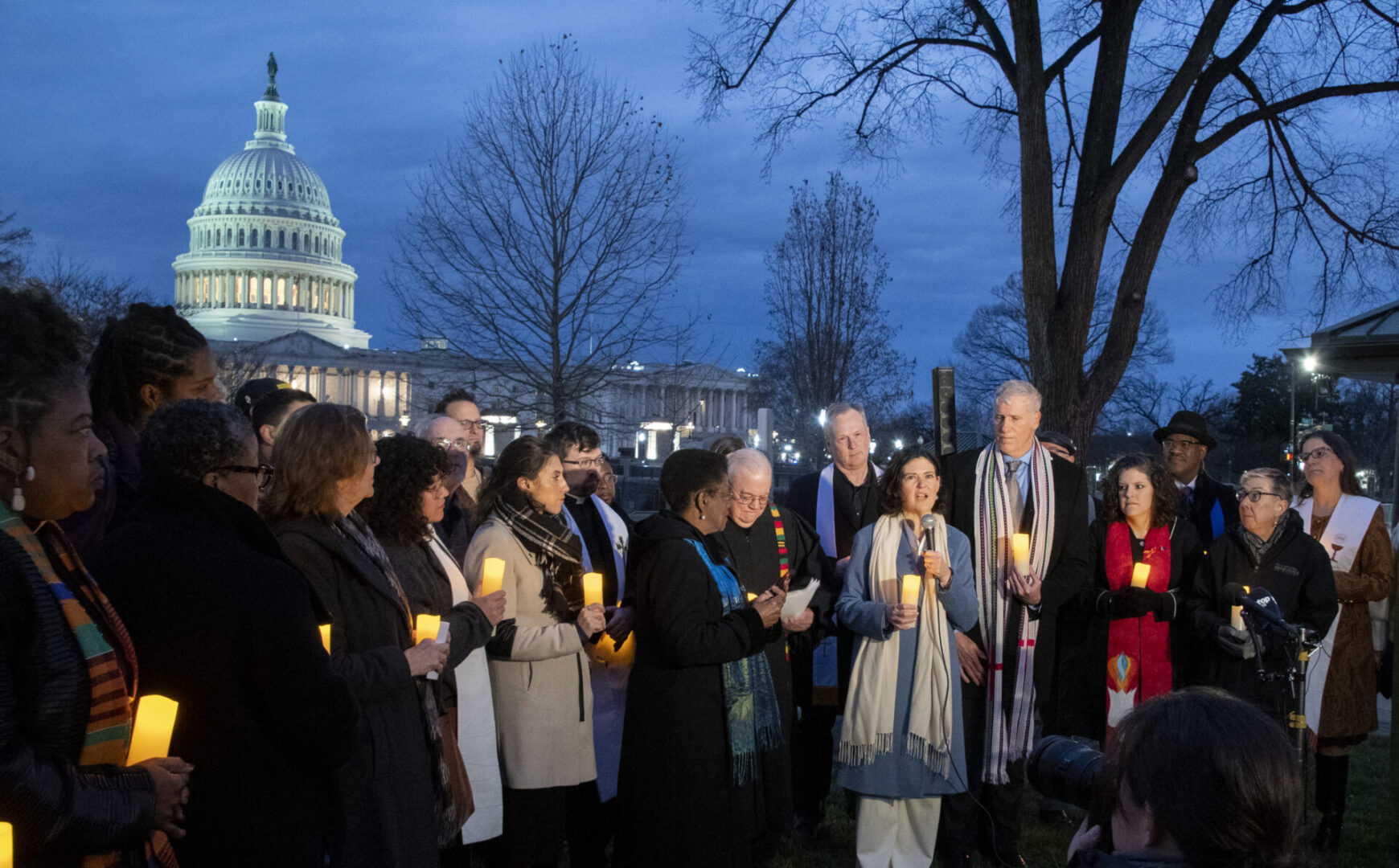
2021 BJC Fellows
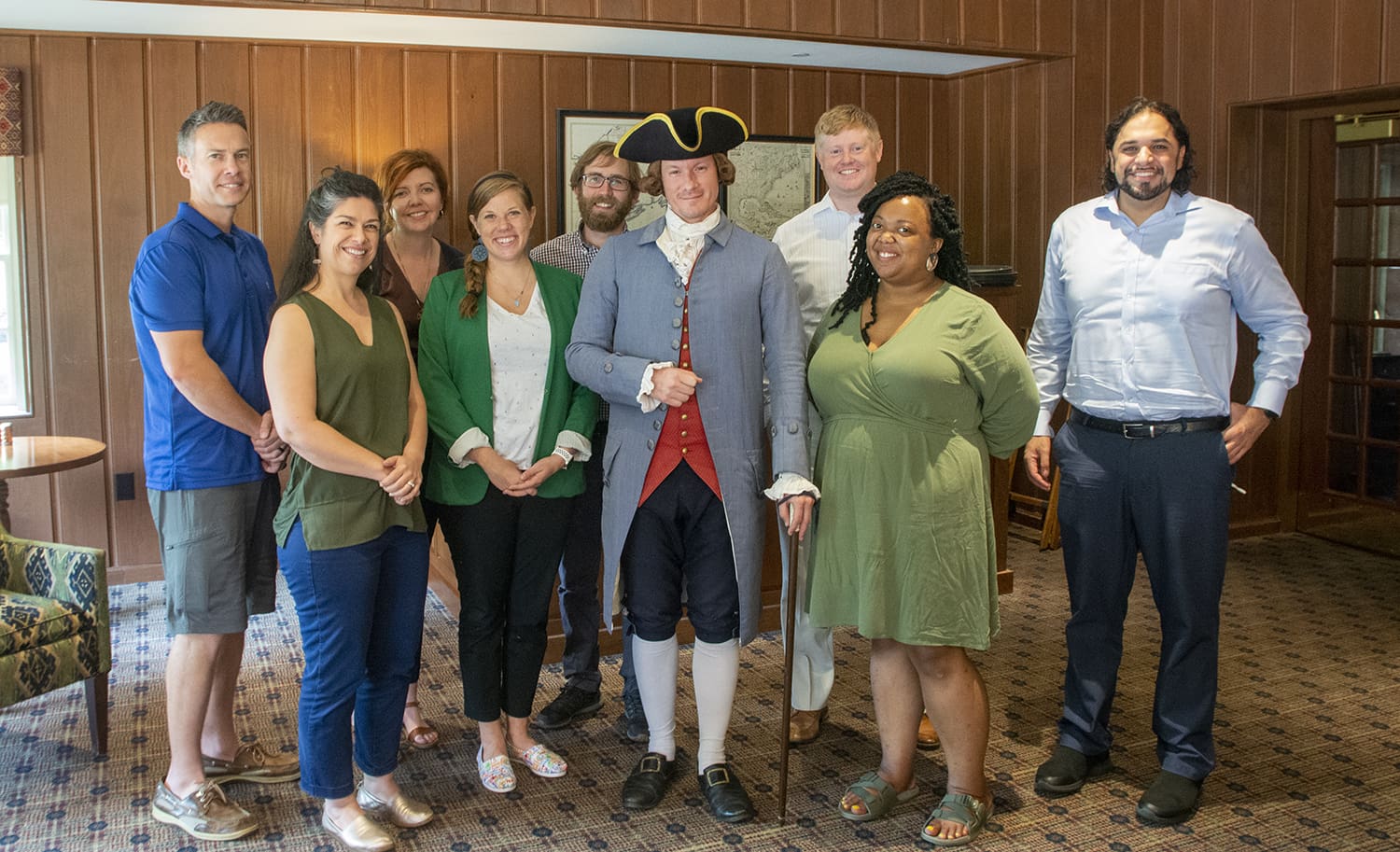
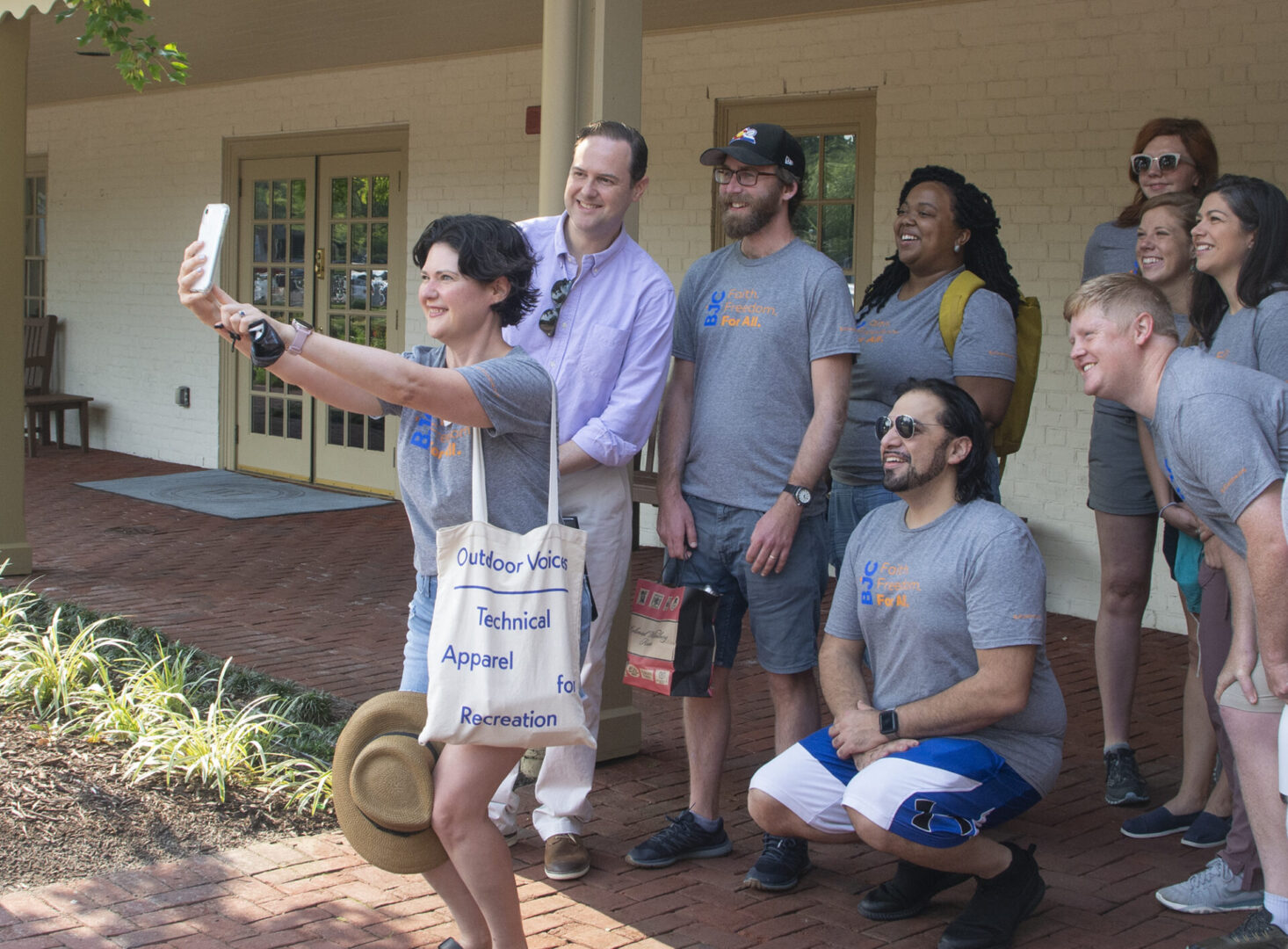
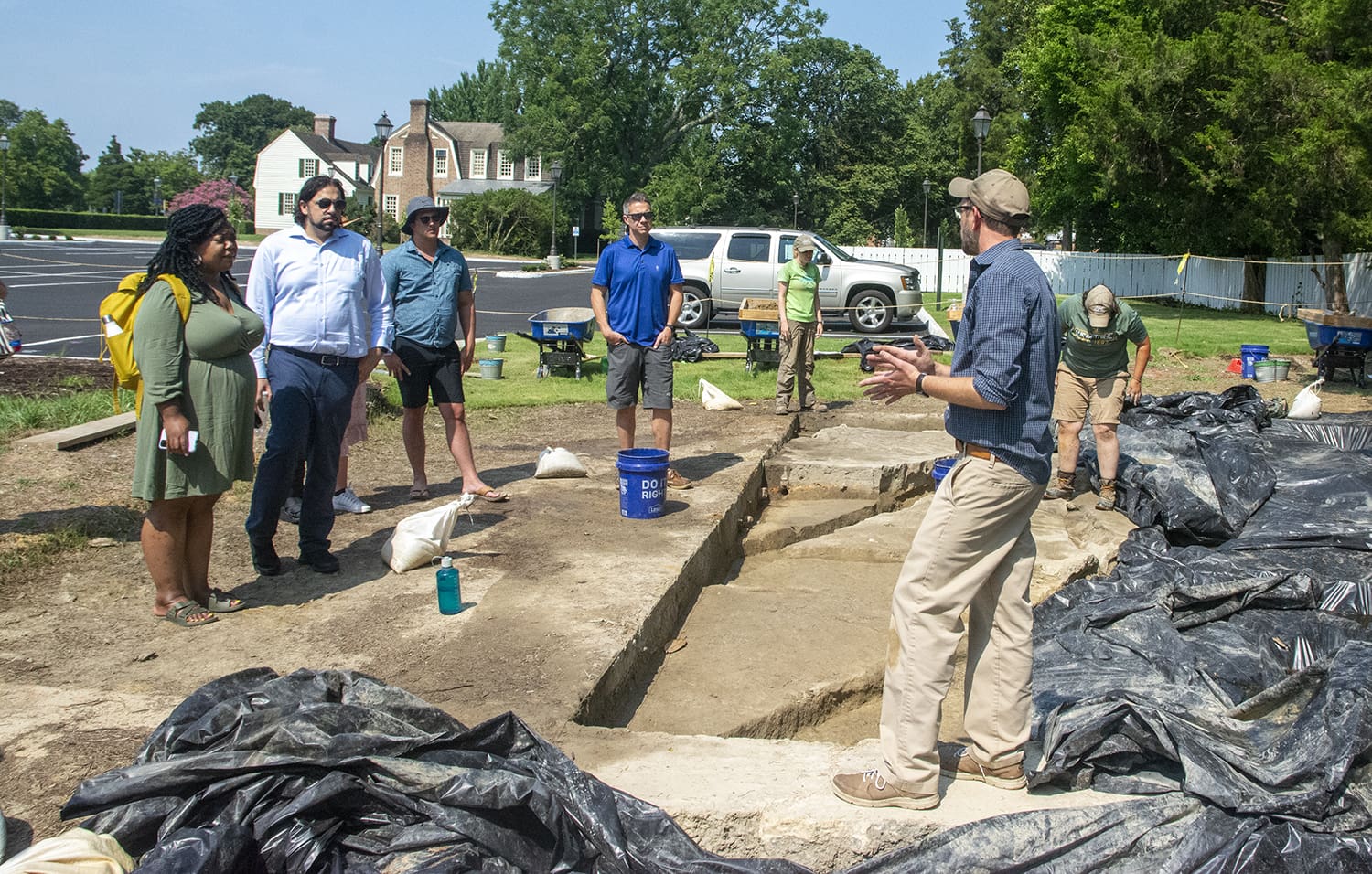
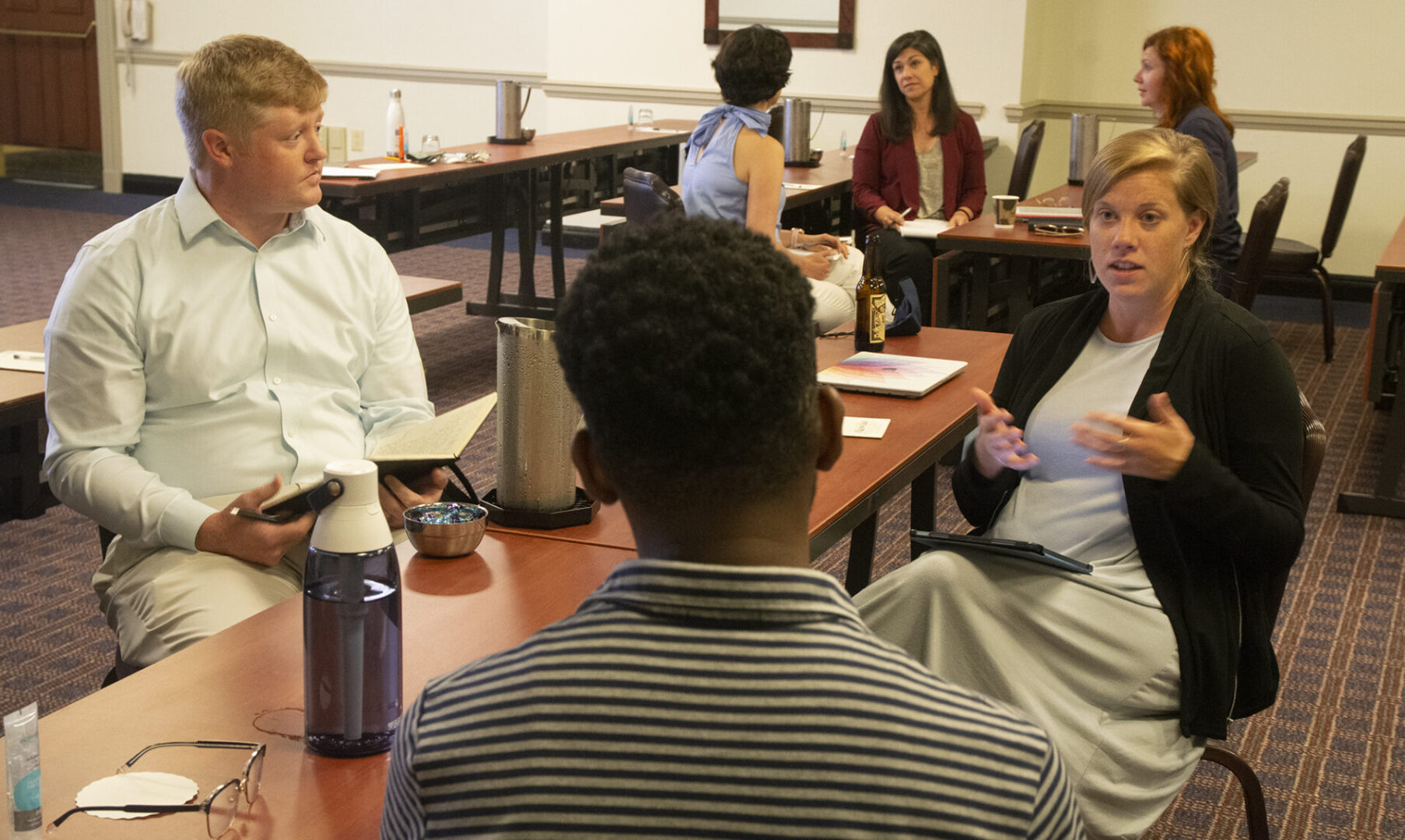
In the first in-person event hosted by BJC since the COVID-19 pandemic, BJC welcomed the sixth class of BJC Fellows to Colonial Williamsburg in 2021. There, the young professionals got to hear from historical interpreters as well as BJC staff members and other experts about the historical, legal, and theological underpinnings of religious liberty.
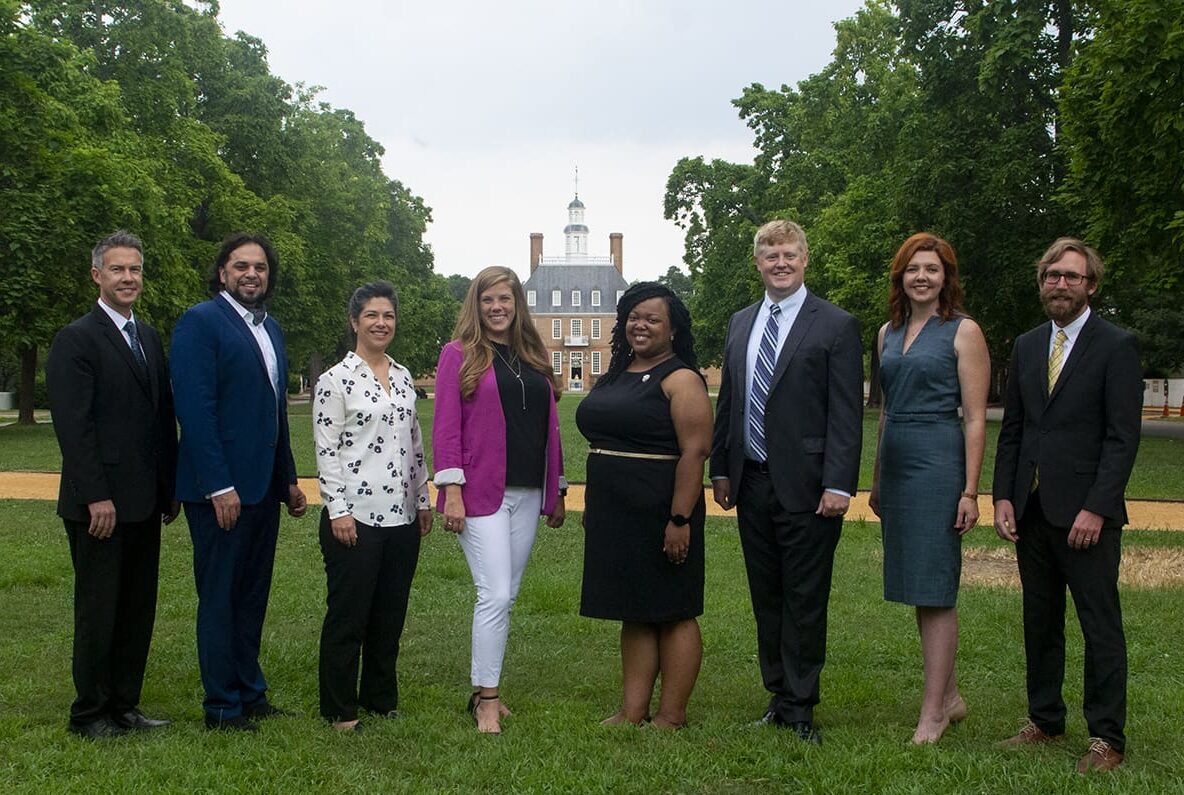
Meet the Class
-
-
Andy Brookshire: Dallas, Texas
Kat Kimmel: Memphis, Tennessee
Kristan Pitts: Charlottesville, Virginia
Erica Whitaker: Louisville, Kentucky
Christian McIvor: Greensboro, North Carolina
Bryan Kelley: Denver, Colorado
Adeel Zeb: Los Angeles, California
Brittany Stillwell: Little Rock, Arkansas
“Religious liberty for all is incredibly important to me, and it was wonderful building relationships with BJC Fellows and staff who also clearly hold this commitment. I’m very happy that we had a range of voices present. I am not Baptist, and am not religious, but I still felt very welcome and respected in our conversations around religious liberty, which is a crucial right for those of any religion as well as for those who are not religious”
– Bryan Kelley
“As we explored the history of our nation, the Baptist tradition and religious liberty in general, freedom was a constant theme. Freedom is often thought of too narrowly and individually. If we are to achieve true religious freedom, we must look beyond ourselves and lift up the most marginalized among us.”
– Kat Kimmel
“Throughout our time together, we would learn to consider new perspectives and to look for the narratives that have been tucked away in the shadows.”
– Brittany Stillwell
“Religious liberty for all is incredibly important to me, and it was wonderful building relationships with BJC Fellows and staff who also clearly hold this commitment. I’m very happy that we had a range of voices present. I am not Baptist, and am not religious, but I still felt very welcome and respected in our conversations around religious liberty, which is a crucial right for those of any religion as well as for those who are not religious”
– Bryan Kelley
“As we explored the history of our nation, the Baptist tradition and religious liberty in general, freedom was a constant theme. Freedom is often thought of too narrowly and individually. If we are to achieve true religious freedom, we must look beyond ourselves and lift up the most marginalized among us.”
– Kat Kimmel
“Throughout our time together, we would learn to consider new perspectives and to look for the narratives that have been tucked away in the shadows.”
– Brittany Stillwell
Read Reflections From the Fellows
Digging Past Our Divides by Rev. Brittany Stillwell
We gathered in Colonial Williamsburg from our scattered places all over the country, a diverse group of BJC Fellows with various faith backgrounds. This was an event almost two years in the making, finally realized after a delay due to the COVID-19 pandemic. I was excited to meet everyone. We were a diverse group, and this diversity was both intriguing and nerve-racking. We started with small talk: getting acquainted, forming connections and finding common interests as the people we had only experienced behind a screen slowly became real and embodied.
It wasn’t until the first dinner, however, that the group really began to bond. There is something universal about the experience of eating together. It is a mysterious and wondrous thing to behold. At the table, conversations deepen, questions and concerns are raised, and opinions and perspectives are both shared and heard. Over the course of our time together, we would enjoy long, delicious meals full of laughter, spirited debate and meaningful dialogue.
At the table, we would experience first-hand what Dr. Sabrina Dent would later describe in her presentation as one of the central ways we learn to see. “If you have more people at the table who are different,” she reminded us, “then you’ll have to see the issues differently.
As we stood there, right smack in the middle of history, it occurred to me that this is what we were there to do. We were there to dig past layers of casual conversation and biased assumptions, to excavate narratives that had been disregarded and covered up, and to push beyond the prejudices and misconceptions that privileges some while limiting others until we could begin to see the foundation of what held us together: a deep desire to protect the faith and freedom of all people.
And that is what we did. In the intentional and unique space and time carved out for us by the generosity of BJC supporters and the intentional, diligent work of the BJC staff, we began to move from a diverse group of individuals toward a beautiful pluralism, experiencing a glimpse of the archetype of religious liberty for which we strive.
Eboo Patel describes the difference between diversity and pluralism by writing, “Diversity … is simply a demographic fact; pluralism is a hard-won achievement,” in his book Out of Many Faiths. Making space for such a diverse group of people is never easy and requires us all to bring the best versions of ourselves to the table. Patel suggests there are three key ingredients to building an ethic of pluralism: “respect for different identities, relationships between diverse communities, and a commitment to the common good.”
This is what I experienced in the BJC Fellows Program: pluralism made possible by BJC’s long-standing commitment to religious liberty and the intentional ways they lead us all into dialogue and deeper relationship with each other. We came together to learn more about religious liberty, and in doing so we found ourselves free to stand firm in our faith and convictions even as we grew in respect, appreciation and genuine love for those who see the world from a different perspective.
Turning a Commitment to Faith Freedom into Action by Bryan Kelley
I really enjoyed my time as a BJC Fellow — unexpectedly, this one-year program ended up becoming a two-year program thanks to changes and delays tied to the COVID-19 pandemic (and I continue to be thankful BJC was very reasonable and proactive in adjusting plans in light of COVID!). I’ve been a big fan of BJC’s important work promoting religious liberty for all for a long time, so I am not surprised I ended up loving my time as a BJC Fellow and the few days I spent together with the other BJC Fellows in Colonial Williamsburg. It felt even more special as this was my first time traveling across the country in a very long time, and it ended up being time well spent with a great group of BJC staff and fellow Fellows.
Meeting in person gave us a great opportunity to get to know each other better, learn about the historic roots of religious liberty in the United States, dig deeper into contemporary debates and upcoming religious liberty cases being considered by the Supreme Court, and develop our advocacy skills in a way that would translate into continued positive action once we all go back home.
Religious liberty for all is incredibly important to me, and it was wonderful building relationships with BJC Fellows and staff who also clearly hold this commitment. I’m very happy that we had a range of voices present. I am not Baptist, and am not religious, but I still felt very welcome and respected in our conversations around religious liberty, which is a crucial right for those of any religion as well as for those who are not religious. BJC is clearly committed to the concept that a threat to religious liberty for anyone is a threat to religious liberty for everyone, and those values came through in the BJC Fellows Program. The ability to talk through religious liberty issues with other BJC Fellows — particularly with those who are members of or heads of houses of worship with members who may not agree with BJC’s commitments to religious liberty — really helped me appreciate BJC’s work even more.
BJC has an important voice and a unique positioning to be able to lead campaigns such as Christians Against Christian Nationalism, and I was happy to learn more about this program and how it has been used. I think our sessions going over the nuances of the First Amendment, and the “play in the joints” between the Establishment and Free Exercise Clauses really helped to solidify my appreciation of BJC’s understanding that religious liberty is not an absolute right that can simply allow the religious to trample on the civil rights of others in the name of religion. At a time when the phrase “religious liberty” has been weaponized by some to become a sword that works to deny the civil rights of others, BJC is such an important organization to stand up for religious liberty’s true value as a shield to ensure religious liberty for all.
The BJC Fellows Program really helped me think about how I can take my commitment to religious liberty and act on it to advocate in more concrete terms than simply promoting awareness of or speaking out about religious liberty issues. As part of our seminar, we had a session on legislative advocacy, including mock interviews with “legislative staffers” to make specific asks regarding religious liberty to representatives in their offices. I’m looking forward to putting those skills into action and becoming more of a voice to promote religious liberty in specific, actionable ways in my personal life. BJC Fellows will also be developing personal projects in the months following our time in Colonial Williamsburg, and I appreciate this opportunity to find ways to continue to put words into action in promotion of religious liberty for all.
Bring All of Who You Are, Spiciness and All by Kristan Pitts
“There is no such thing as a single-issue struggle because we do not live single-issue lives.”
-Audre Lorde
“It is our duty to fight for our freedom.”
― Assata Shakur, Assata: An Autobiography
“It is in collectivities that we find reservoirs of hope and optimism.”
― Angela Y. Davis, Freedom Is a Constant Struggle
A word I frequently use in my personal lexicon is “spicy.” Colloquially, the term “spicy” is used to mean “good, bad, or interesting.” Audre Lorde, Assata Shakur, and Angela Davis’ lives and legacies may be deemed “spicy” by some. Their spiciness has and continues to inspire my commitment to justice.
Unlike my usage of the term “spicy” to positively describe Lorde, Shakur, and Davis, I most often use it to describe something that falls along the spectrum of bad to interesting. The term “Baptist” has many different connotations. Having recently been approved for ordination, the “spiciness” that comes with being connected to the Baptist tradition is not lost on me. Even with its “spiciness,” it is in Baptist communities that I first made the connection between my Christian faith and the biblical call of justice-making. Since making that connection, over the past several years, I have been wrestling with the following questions:
- What will it take to build and sustain a just and equitable society?
- How is my vocation in alignment with building and sustaining a just and equitable society?
- What tools and actions are needed to build and sustain a just and equitable society?
I have been journeying with myself and the communities with which I am connected to answer these questions. Although I am still exploring, I have loosely arrived at the following ideas:
- In order to build and sustain a just and equitable society, I believe it will take policy change and strategic implementation.
- As I reflect on the work I feel most drawn to, my passions, and my skills, I see community healing, education, advocacy, and action as tools to help communities and our country achieve the goal of becoming more just and equitable for all.
I have had several opportunities to engage in a variety of justice-centered work around addressing racism, LGBTQIA+ rights, and environmental justice. One thing I noticed early in my work was how siloed each movement seems to be from the others. I believe all justice work should be intersectional because, as best put by American writer, feminist, womanist, and civil rights activist Audre Lorde, “There is no such thing as a single-issue struggle because we do not live single-issue lives.” As I was preparing to go into my final year of my Master of Divinity program, I thought about how my life and work could be more intersectional which motivated me to apply for the BJC Fellows Program. In participating, I hoped to better understand how religious liberty intersects with other justice issues. In engaging BJC programs and throughout the 5-day seminar, the intersections became more evident.
One of my favorite sessions during the BJC Fellows Seminar was with Dr. Sabrina Dent. At the start of her presentation, she asked participants to share what identity markers were most salient for them. The identity categories that are most salient for me are my gender identity, sexual orientation, socio-economic status, race, and region of origin. As I shared and listened to others share, my belief that “ we bring all of who we are to the spaces and places that we frequent” was reaffirmed. Also, in seeing how different each participant was, I found hope that despite our differences, we were committed to religious liberty for ALL. In our individual and collective work, as Angela Davis suggests, I “see a reservoir of hope and optimism in our collectivities.”
As a Black, Queer woman from the South, who has spent most of my life as a low wealth person, I am committed to fighting for a just and equitable world. That fight also includes religious liberty for ALL. I invite you to bring all of who you are — “spiciness” and all — because religious liberty intersects with every issue and impacts us all.