Published August 10, 2026
Protect the Ballot, Protect Faith Freedom
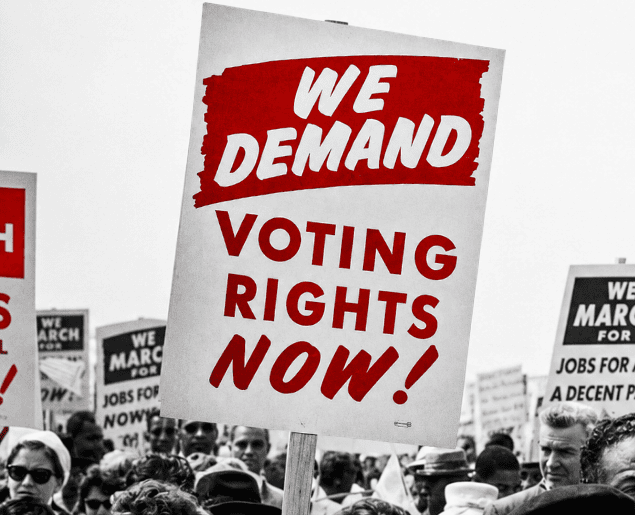

As we see new state laws and Supreme Court rulings that hamper access to the ballot and roll back the right to vote, what is the role of people of faith who feel called to stand in the gap?
This summer, the BJC Center for Faith, Justice and Reconciliation joined with Sojourners and Protect Democracy to host a webinar to discuss the threats and the practical steps people can take. The work begins now, well before Election Day.
“Attacks on voting are attacks on religious freedom,” said BJC Executive Director Amanda Tyler during the webinar. She pointed out that both religious freedom and the people’s power to elect their representatives are foundational to our constitutional system.
“Put plainly, if people cannot vote, they cannot protect their communities or their own churches,” she said. “If we do not protect our right to vote, then our very foundational freedoms — including our right to worship — may be compromised.”
The Rev. Adam Russell Taylor, president of Sojourners, named the complicated feelings that come with celebrations of America’s 250th birthday when we see so many freedoms under attack. When our country was founded, voting was restricted to white, land-owning men.
“Since then, there has been an ongoing struggle to expand who is fully included in ‘we the people’ enshrined in our Constitution,” he said. He pointed out how the vote has expanded to women and people of color, but not without great effort and struggle, often led by people of faith.
The efforts to subvert our elections are well underway, according to Corey Dukes of Protect Democracy. He outlined the threats, explaining how the White House is marshalling federal power toward undermining a free and fair election, using strategies that deceive, disrupt, and deny if things don’t go how they want.
Faith communities are not powerless in the face of such threats, and they are rising to meet the moment. If you aren’t sure where to start, check out the new Executive Override Faith Companion Action Guide, which provides practical strategies that faith communities can engage in to ensure every vote is counted. It moves from naming the moment to grounding a moral response to it.
“Faith communities need more than an analysis,” said the Rev. Moya Harris, senior director of projects at Sojourners, who introduced the guide. “Congregations need practical ways to understand when and where they can act, what this moment requires, and how their role changes across the life of an election.”
She explained how restrictions on voting deny the full dignity of people and their ability to live freely in our society, thus impacting other foundational freedoms. Election integrity is connected to religious commitments to justice, truth-telling, and protecting the vulnerable.
Dr. Sabrina E. Dent, director of the BJC Center for Faith, Justice and Reconciliation, invited everyone to remember the people they care about in the face of threats to free and fair elections. In light of the challenges, she asked us all to consider: “What is your moral obligation in taking your next steps?”
Get Ready for November
What can you do to ensure access to the ballot this November? How can you make an impact as an individual? Can your house of worship take action?
We have a new online home to give you specific, actionable steps, which you can adapt for your community.
-

Webinar
Watch “Protect the Ballot, Protect Faith Freedom,” which was a partnership between BJC (Baptist Joint Committee for Religious Liberty), Sojourners, and Protect Democracy.
-
Executive Override Faith Companion Guide
Created by Sojourners in partnership with Protect Democracy, this resource brings a faith-rooted perspective to the challenges facing the 2026 midterm elections and offers practical ways to respond before, during, and after Election Day.
-
Faithful Civic Engagement
No one congregation or organization can do it all. This one-page document from BJC helps you consider where your congregation is today and choose a few next steps that align with your gifts, relationships, and your community’s needs.



Spotlight: Progressive National Baptist Convention
-
There is a massive amount of energy in the Black church to get voters registered for midterms, according to leaders of the Progressive National Baptist Convention. One of BJC’s member bodies and the denominational home of the Rev. Dr. Martin Luther King Jr., PNBC held their annual convention in Washington, D.C., this summer. They scheduled time for participants to take their concerns about voting rights and other issues to Capitol Hill. Many said they were specifically motivated by the recent Supreme Court decisions that are leading to more gerrymandering.
But their work is not limited to in-person visits. In advance of Independence Day celebrations, PNBC released a liturgical guide for churches called “The Hope of America and the Reality for Black and Brown People,” which is still available online.
“We follow a tradition that did not wait for an invitation to the nation’s table before speaking truth to it,” said the Rev. Dr. David Peoples, president of PNBC at the time of the guide’s release. “It is time for us to resist the status quo and demand full inclusion in this democratic experiment.”
-
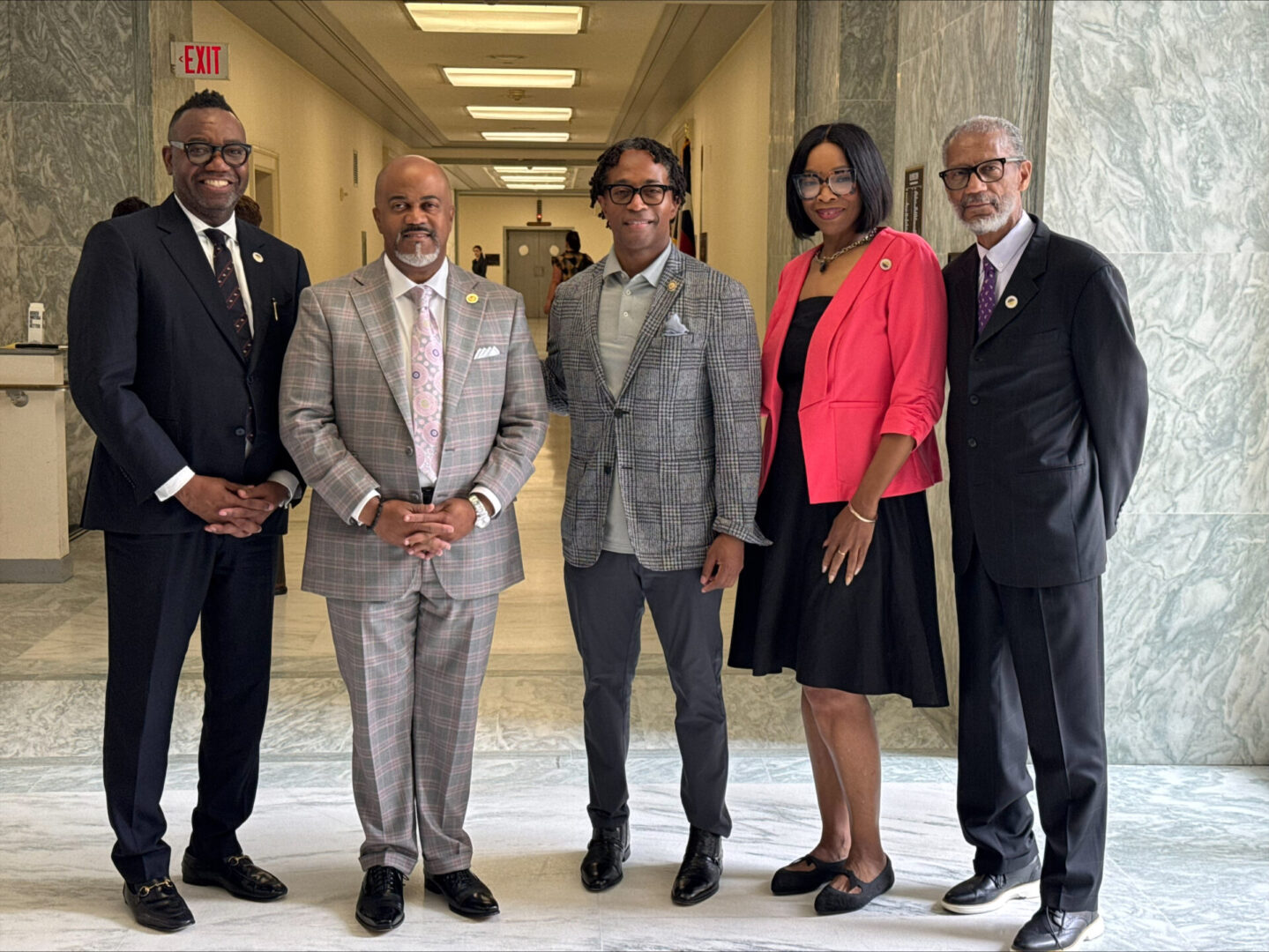
Inside a congressional office building in Washington, D.C., Rep. Wesley Bell, D-Mo., stops for a photo with members of PNBC’s leadership during their Capitol Hill visits. Pictured left to right: Rev. Thomas Bowen, general secretary of PNBC; Rev. Dr. David Peoples, president of PNBC; Rep. Bell; Rev. Dr. Jacqueline Thompson, 2nd vice president of PNBC; and Rev. Dr. Darryl Gray, PNBC director general of social justice. This visit was before PNBC’s 2026 officer elections. Photographer: Landon Brooks, MAWH Productions
-
Read the Magazine Online
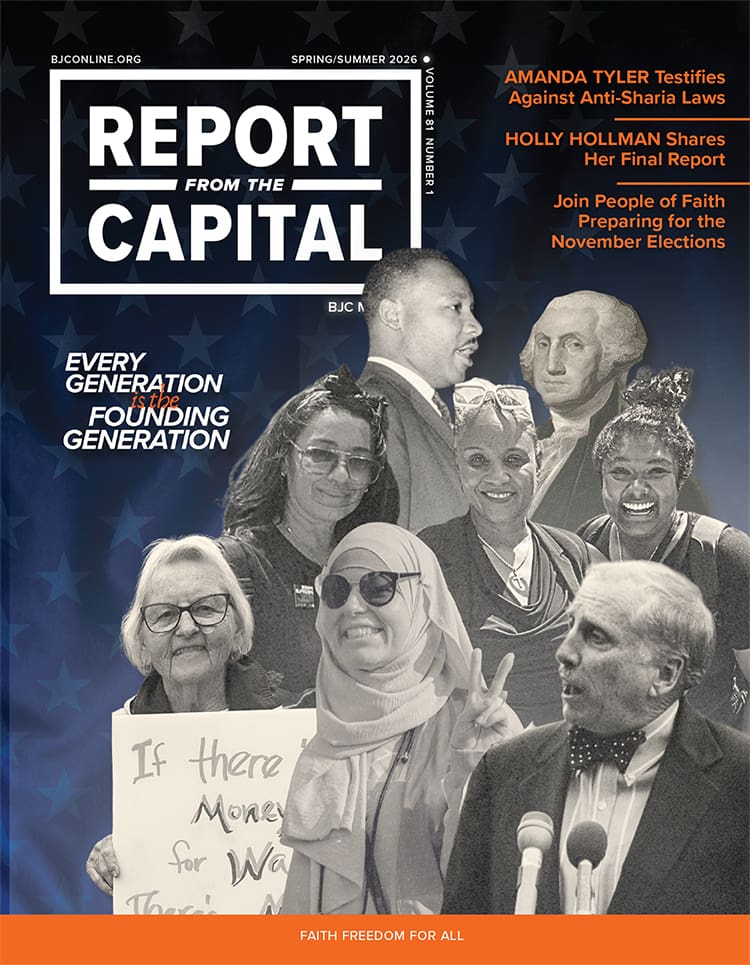
This article appears in the Spring/Summer 2026 edition of BJC’s magazine, Report from the Capital. Visit our page for more articles online, or read a PDF version of the entire magazine.
-