Published June 23, 2026
BJC: Supreme Court limits religious freedom
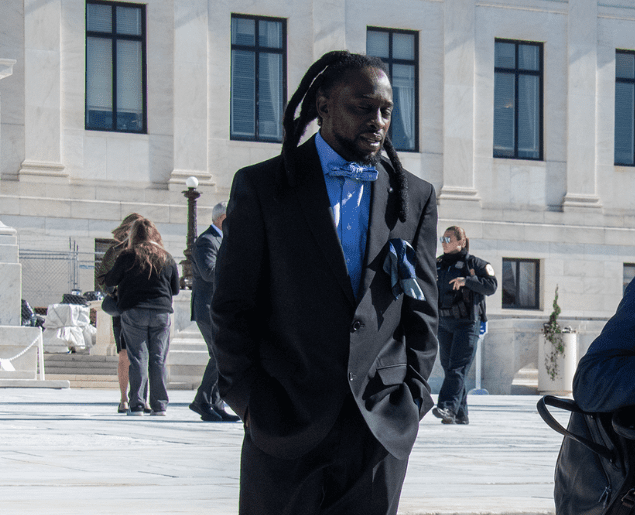
Today’s Landor decision weakens prisoners’ ability to seek justice
For Immediate Release
Media Contact: Cherilyn Crowe Guy | [email protected]
WASHINGTON – Today, the Supreme Court denied a person’s ability to receive monetary damages from individual corrections officers for an egregious violation of his religious freedom. The 6-3 decision in Landor v. Louisiana Department of Corrections said individuals may not be held liable in their personal capacities under a federal statute absent express consent for such a remedy.
The case centered around Damon Landor’s religious freedom rights while incarcerated. A devout Rastafarian who took an oath to let his hair grow long, Mr. Landor showed prison officials a paper copy of a federal court decision upholding Rastafarian prisoners’ right to long hair. But the officials threw the decision in the trash, held him down, and forcibly shaved his dreadlocks.
Holly Hollman, chief legal officer for BJC (Baptist Joint Committee for Religious Liberty), issued the following statement:
“We are disappointed in the Court’s decision, which narrows the relief available when prisons violate the religious freedom of those in their custody. Congress passed the Religious Land Use and Institutionalized Persons Act (RLUIPA) in 2000 on a simple premise: religious freedom is for everyone. States and local governments accept federal money to run their prisons on the condition that they respect the religious rights of the people held there.
Both the lower court and the Supreme Court acknowledged that officials grossly violated Mr. Landor’s rights. Yet today the Court held that the statute’s promise of “appropriate relief against a government” does not allow money damages against the individual officers responsible — weakening prisoners’ ability to seek justice and to deter future violations.
BJC and our coalition partners will continue to defend RLUIPA and the religious freedom it guarantees for everyone.”
BJC joined a brief in this case supporting Mr. Landor alongside a number of groups that do not often see eye-to-eye on Supreme Court cases, including the Christian Legal Society, the ACLU, the Alliance Defending Freedom, and the Ethics and Religious Liberty Commission of the Southern Baptist Convention. The brief noted that Mr. Landor is protected by RLUIPA, which demands that prison systems not impose substantial burdens on incarcerated individuals’ religious exercise without compelling justification.
Rooted in a Baptist commitment to soul liberty, BJC (Baptist Joint Committee for Religious Liberty) is a 90-year-old organization building a movement toward a just society that cultivates and expands religious freedom for all. BJC is the home of Christians Against Christian Nationalism.