Court Case
Grand v. City of University Heights
At Issue: When can a person sue the government for chilling their right to host worship in their home?
BJC Says: A person should not have to wait for a final administrative ruling from the government in order to bring a claim, particularly if their religious exercise is being stopped while waiting.
Case Status
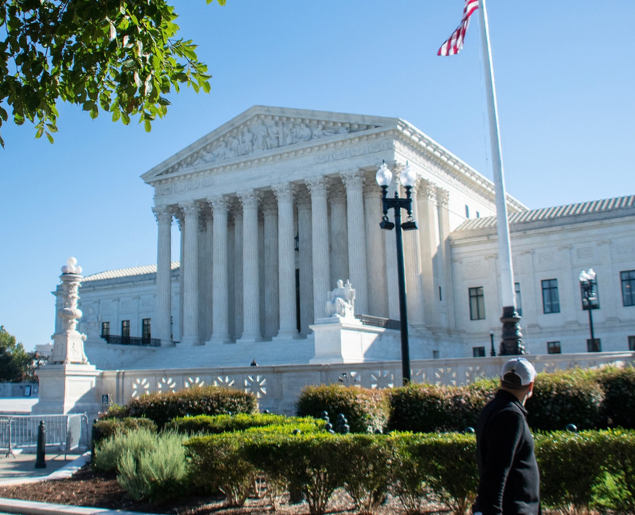
The Supreme Court will hear oral arguments in Grand v. City of University Heights on Dec. 9, 2026.
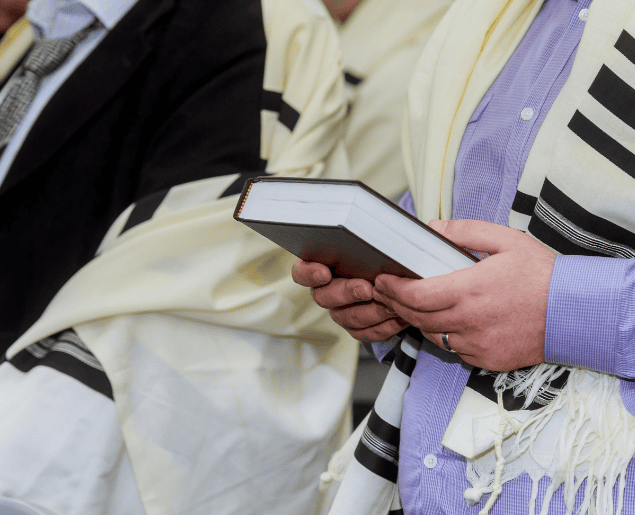
Daniel Grand is a practicing Orthodox Jew who does not drive on the Sabbath, is required by faith to pray with ten men — known as a “minyan” — and who hosts others in his home to practice their faith together.
But, the city government in University Heights, Ohio, told him to stop, issuing a cease-and-desist order. It even deployed police to surveil Mr. Grand’s home and asked his neighbors to report any religious activity they saw in his private home.
The right to at-home worship is core to the free exercise of religion. Why would a city stop an ancient, common, and nondisruptive religious practice in someone’s home?
University Heights said Mr. Grand needed to apply for a special permit to operate as a “house of worship” under local zoning ordinances. He initially applied for a special-use permit but withdrew because that type of permit — intended for houses of worship — would have disqualified his home for residential use.
When Mr. Grand asked the courts to intervene, bringing claims under the First Amendment and the Religious Land Use and Institutionalized Persons Act (RLUIPA), they dismissed his case. The 6th U.S. Circuit Court of Appeals said Mr. Grand couldn’t bring a lawsuit because the local zoning board hadn’t made a final decision. So, it wasn’t “ripe” for a lawsuit.
But, Mr. Grand wasn’t able to exercise his religion in his home while he waited.
BJC joined a brief in support of Mr. Grand, defending his right to have a religious gathering in his home — and his ability to sue to protect that right. Led by the Harvard Law School Religious Freedom Clinic, the brief also includes Agudath Israel of America and Ratio Christi.
In the legal filing, we emphasize the importance of at-home worship and prayer in Jewish and Christian traditions. And we point out that when situations like this arise, a legal concept called “finality” should not apply — someone like Mr. Grand should not have to wait on various government red tape to clear before his situation is “ripe” enough to bring a lawsuit.
“Ripeness requirements must allow plaintiffs to seek prompt enforcement of their federal rights in federal court,” according to the brief. “Without that ability, their precious rights will be violated and chilled by state and local officials who are all too often insensitive — if not outright hostile — to people of faith.”
Resources on the Case
-

Press Release
“Being free to exercise your religion must include the ability to worship, gather, and pray in your own home,” said BJC Executive Director Amanda Tyler.
-
What Freedom Do We Have?
What can you do when your town effectively chills your ability to practice your religion? Apparently, not much. The Supreme Court has a chance to change that.
-
BJC's brief
BJC joined a brief in support of Mr. Grand. Led by the Harvard Law School Religious Freedom Clinic, the brief also includes Agudath Israel of America and Ratio Christi.

Key Quotes from BJC's Brief
“The City’s order to cease and desist a small prayer gathering in a private home is not a mere land-use dispute; it is a direct intrusion on religious exercise at the place where the First Amendment’s protection should be at its apex. For centuries, both the Jewish and Christian traditions have centered core forms of worship in the home, and American law has consistently refused to treat such ordinary religious practice as an activity that exists only at the sufferance of local officials. By allowing a discretionary permitting regime to burden that practice—and then delaying judicial review until the religious plaintiff submits to it—the decision below entrenches the very system of permission-based religious exercise that the First Amendment was designed to eliminate.”
“In Judaism, as in Christianity, at-home religious observance is not a mere matter of convenience, but a core practice rooted in millennia of teaching and tradition and often required by practical necessity.”
“To the founders, religious freedom conditioned on government permission was no freedom at all. And so they drafted the First Amendment’s Religion Clauses ‘in large part to get completely away from [England’s] sort of systematic religious persecution.’ Engel, 370 U.S. at 433. The First Amendment thus ‘contend[s] for . . . more than toleration,’ because toleration—administered through licensing or permitting—’supposes that some have a pre-eminence above the rest, to grant indulgence.’ John Leland, The Virginia Chronicle with Judicious and Critical Remarks, Under XXIV Heads 40 (T. Green 1790). By replacing a permission-based system with the right of free exercise, the founders intended religion to be ‘wholly exempt’ from the cognizance of civil society. James Madison, Memorial and Remonstrance Against Religious Assessments ¶ 1 (1785).”
“Apart from the historical justification for protecting home-based worship, there is a strong practical need for protecting it too. As this case illustrates, local communities can deploy zoning and land-use regulations to prohibit small, home-based religious assemblies, even without any genuine land-use concern. And such discrimination often evades detection because zoning regimes vest sweeping discretion in local officials or turn on vague and malleable standards—features that ‘provide ample opportunity for any biases to operate.’ Douglas Laycock, State RFRAs and Land Use Regulation, 32 U.C. Davis L. Rev. 755, 776 (1999). Though statutes like RLUIPA were crafted as a bulwark against such dangers, vigilant judicial enforcement is required to actually prevent them.”
“The finality requirement is also in stark conflict with ordinary rules for First Amendment cases. It would wrongly require believers to submit to a burdensome process before they may bring a challenge—even after they have suffered a constitutional injury. Here, the City imposed a permitting process on in-home worship, conscripting Mr. Grand into a process of government approval that delayed and disrupted his religious free exercise. That delay and disruption of his religious exercise itself warrants immediate relief, because ‘the loss of First Amendment freedoms, for even minimal periods of time, unquestionably constitutes irreparable injury.’ Elrod v. Burns, 427 U.S. 347, 373 (1976) (plurality opinion).”
“Ripeness requirements must allow plaintiffs to seek prompt enforcement of their federal rights in federal court. Without that ability, their precious rights will be violated and chilled by state and local officials who are all too often insensitive—if not outright hostile—to people of faith.”