Published July 29, 2026
What can we do after the Supreme Court undercuts a prisoner’s relief?
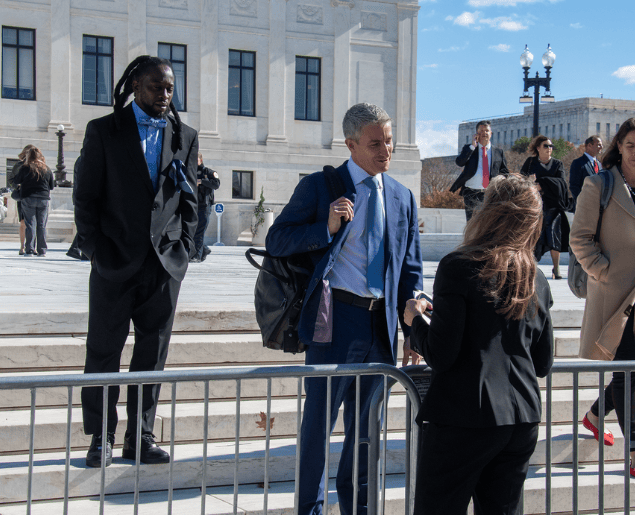

When Damon Landor, a devout Rastafarian who had taken an oath not to cut his hair, was transferred from one Louisiana prison to another, he was prepared to stand up for his rights.
As someone who was incarcerated, Mr. Landor knew there were limits to what he can do, but he also knew that this country protects everyone’s religious freedom.
We have the First Amendment to the Constitution, and Congress passed the Religious Land Use and Institutionalized Persons Act (RLUIPA) 25 years ago to ensure the religious rights of people in government custody.
He knew that the law accommodated his religious practice of keeping long hair, despite the grooming policies of the state department of corrections.
Mr. Landor was prepared when he met the new prison officials, bringing a physical copy of a court decision that recognized a prisoner’s right to the same religious practice. Mr. Landor’s long hair had not been threatened in other institutions.
Yet, officers at his new facility in Louisiana shaved his head and trashed the opinion.
What remedy did he have? This wasn’t as simple as a religious text being kept from him – that’s easier to fix.
His head was bare. His long hair – part of his religious oath – was now gone. What took years to grow was destroyed in a matter of seconds.
Everyone agreed it was an egregious violation. What became a matter of a significant and highly technical legal dispute, however, is what could be done about it.
Mr. Landor sued the Louisiana Department of Corrections and the individual officers in their personal capacity, seeking money damages for his mistreatment.
The Supreme Court said – in its 6-3 decision – that those officers can’t be held liable in their personal capacity.
Sure, state and local governments accept federal money to run prisons, and that federal money is conditioned on those prisons following the law. The law requires accommodating the religious needs of people held in prison. But, because these individual officers didn’t specifically agree to being held accountable for money damages, the Court says they can’t be made to pay.
So, they’re off the hook.
We did learn during oral arguments that the warden – under whose leadership this happened – is no longer there. Maybe the Department of Corrections learned a lesson from Mr. Landor’s lawsuit. As Justice Jackson noted in her powerful dissenting opinion, the statute requires compliance, and court cases have been necessary to interpret and enforce the law. She referred to a previous Supreme Court case that protected a Muslim prisoner’s right to wear a beard and the fact that prisons aren’t accommodating religious needs voluntarily. The law requires it.
But, in Mr. Landor’s case, justice was not served.
This case is not just about the money or the amount for Mr. Landor. It’s about how we hold people accountable and deter egregious violations of religious freedom from happening again. The decision takes away what should be a common sense remedy that would deter any such action.
Religious freedom is for everyone: prisoners, pastors, politicians, and people like you and me. RLUIPA is still the law of the land, and we have to make sure officials know how they should protect religious freedom rights. Mr. Landor’s case reminds us of the work to be done so that every warden and prison official understands the significance of religious rights.
Religious freedom does not just exist on paper – it is something all of us have to make real. By following the law, by doing the right thing, and by educating others.
Want to hear more?
For an in-depth conversation about the Supreme Court’s decision in Landor v. Louisiana Department of Corrections, listen to the Respecting Religion podcast.