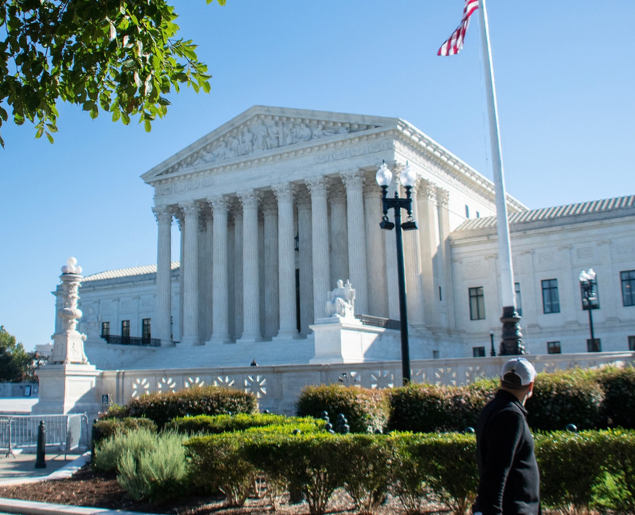

The first Monday in October kicks off the new Supreme Court term. Over the next few months, the justices will be asked to take up questions that impact our lives. Can a man be stopped from praying in his home? Should a child be forced to sit beneath government-mandated Scripture?
Each year, the Court receives thousands of requests, and they agree to hear about 1% of those cases. The justices are still filling the docket for this term, but they have already agreed to hear two cases involving religious freedom law and will likely take up a third. BJC is weighing in.
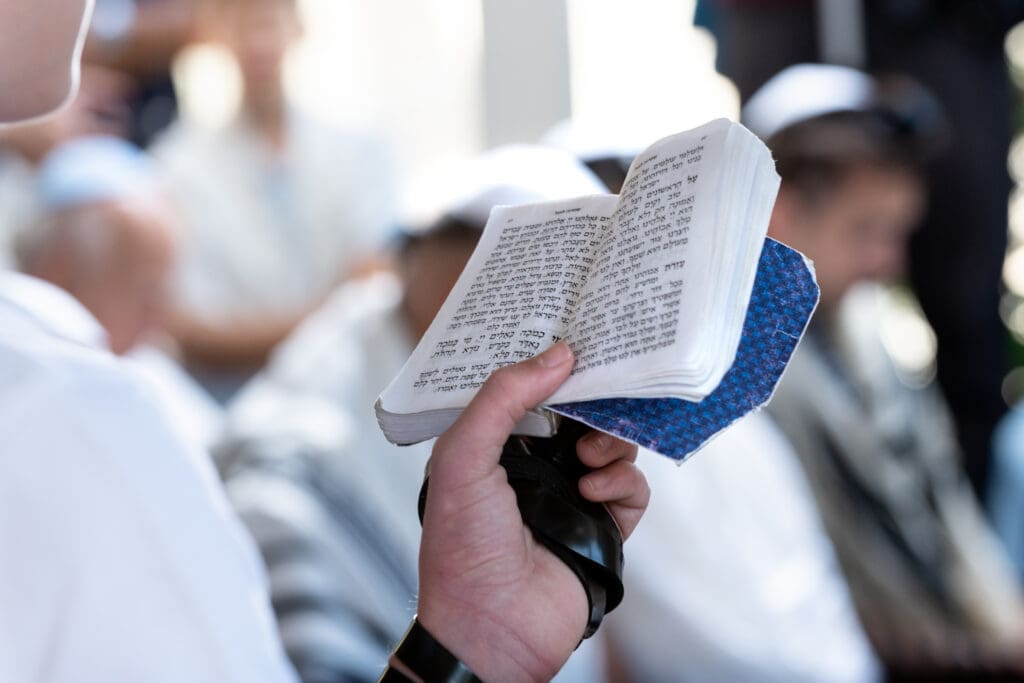
Grand v. City of University Heights
What can you do when your town effectively chills your ability to practice your religion? Apparently, not much. And the Supreme Court has a chance to change that in Daniel Grand’s case.
Mr. Grand is a practicing Orthodox Jew. He doesn’t drive on the Sabbath, and his faith requires him to pray with ten men — known as a “minyan.”
He tried to host those prayer gatherings in his home, but the city government issued a cease-and-desist order. They said Mr. Grand needed to apply for a special permit to operate as a “house of worship” under local zoning ordinances. He applied for a special-use permit, but he withdrew his application because that type of permit — intended for houses of worship — would have disqualified his home for residential use.
Now he couldn’t practice his faith in his own home. When Mr. Grand asked the courts to intervene, they dismissed his case. The ruling wasn’t concerned with his claim – instead, the court simply said he couldn’t sue because the local zoning board hadn’t made a final decision. So, they said his situation wasn’t “ripe” for a lawsuit.
In reality, though, his right to religious freedom had already been taken away. He was not allowed to host his minyan while waiting for the zoning board’s decision. Or while waiting for the court’s decision.
In an unusual move, Mr. Grand appealed his case to the Supreme Court himself – he had no legal representation. The justices found his petition so powerful, they agreed to hear it. Mr. Grand now has attorneys, and they’ll be in front of the Supreme Court on December 9.
This is one of two cases the Supreme Court will hear this term involving the Religious Land Use and Institutionalized Persons Act (RLUIPA) – the other was announced just last week, but its dates have not yet been set.
BJC joined a brief in support of Mr. Grand, defending his right to have a religious gathering in his home — and his ability to sue to protect that right.
Read more: Grand v. City of University Heights
Rabbi Nathan, et. al. v. Alamo Heights Independent School District, et. al.
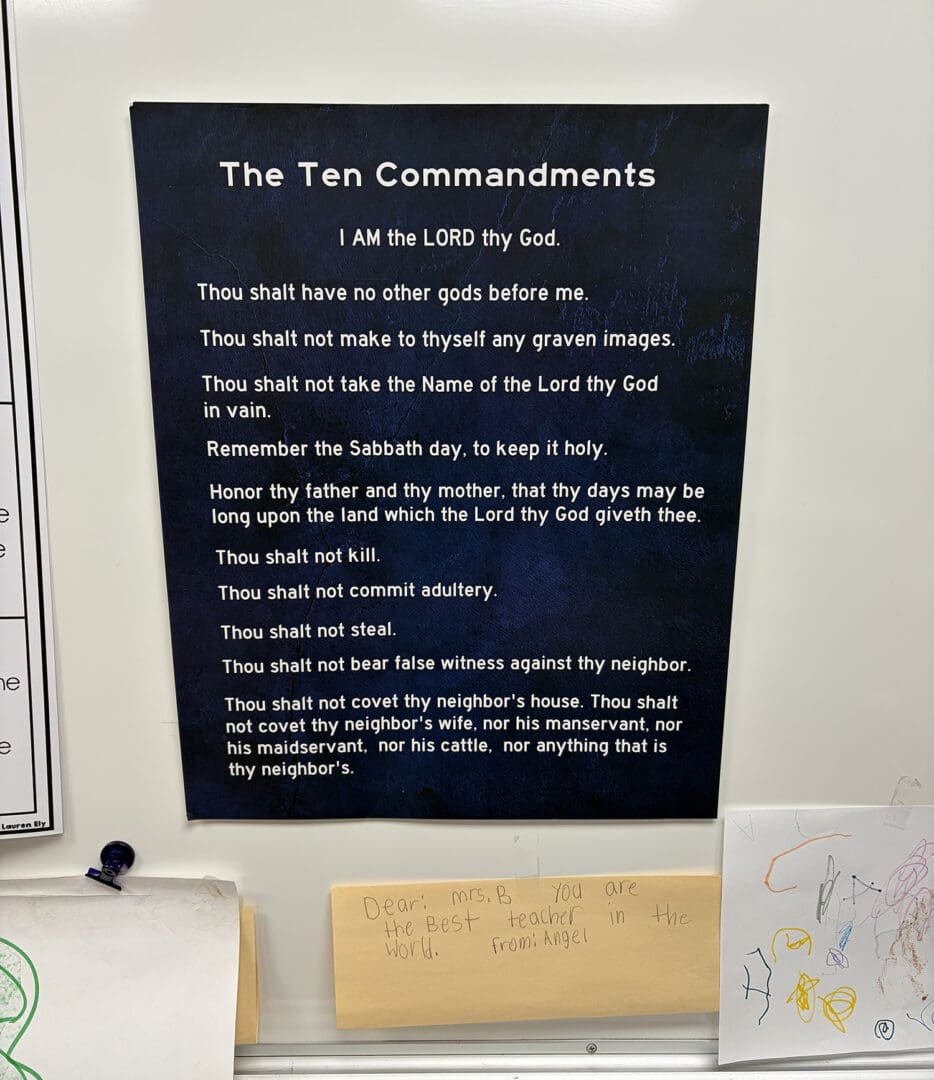
In classrooms across Texas, a 16-by-20 inch government-approved poster of the Ten Commandments watches over students. The state legislature chose the text – an edited version from the King James translation of the Bible. The law requires the poster to be in a conspicuous place, visible and readable from every seat in every classroom, from kindergarten through twelfth grade. There is no explanation, commentary, or context provided – just an austere list of commandments, hanging on the wall.
The lead plaintiff challenging this law is a rabbi.
Rabbi Mara Nathan is among the Jewish, Christian, Unitarian Universalist, Hindu, and nonreligious parents suing to stop these displays. They all agree that this law interferes with their right to teach their children about religion. These parents are not saying the Ten Commandments don’t matter. Instead, they argue that it is the job of families, not lawmakers, to decide how and whether to teach religion. And for the Christian and Jewish families in these cases, flattening holy Scripture into mere classroom decoration is its own kind of harm.
At first, judges and courts consistently sided with the families, blocking the posters in Texas and stopping a similar law in Louisiana. But, a full panel of the 5th U.S. Circuit Court of Appeals reversed its earlier decision, and the posters went up.
Now, the families are down to their last option: Asking the Supreme Court to hear their case.
The justices haven’t yet said whether they’ll take Rabbi Nathan v. Alamo Heights ISD. If they do, the argument likely will be in spring 2027. Meanwhile, children attend school each morning and take their seats in front of a set of scripture their state government selected for them.
BJC is supporting the families in friend-of-the-court briefs and will keep advocating against government-sponsored religion and for religious freedom for all students. For everyone who values freedom of conscience and soul liberty, these laws are troubling attempts to promote a religious text and force it on children.
Learn more about the various Ten Commandments cases on our website.
The Court’s new session can shape our country for years to come, and the justices have to answer some tough questions. If you can’t host prayer in your own home, what freedom do you have? If you can’t attend school without having a government-approved Scripture staring you down, what freedom of conscience do you have?
BJC will make our arguments as the justices take up these cases this term.
Learn About BJC's Work in the Courts
Our litigation efforts defend everyone’s right to religious freedom – people from all faiths and of no faith.