S7, Ep. 06: Updates on Oak Flat, the Johnson Amendment, and efforts to post the Ten Commandments
Amanda and Holly share their up-to-the-minute reaction on several items making news.
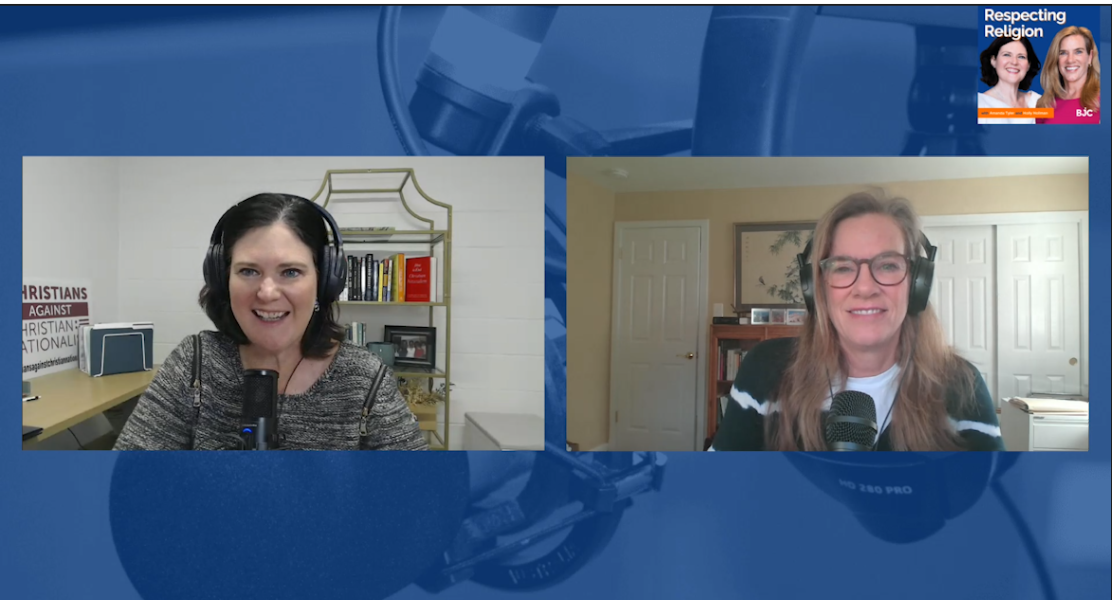


Hear Amanda and Holly react live to some breaking developments in today’s Respecting Religion podcast. One day after new legislation was introduced in Congress to save sacred Indigenous land, they discuss the history of and need for the Save Oak Flat from Foreign Mining Act. Plus, they talk about a brand-new class action lawsuit in Texas trying to halt the unconstitutional posting of the Ten Commandments in classrooms, and they share an update on the latest court activity regarding efforts to protect the Johnson Amendment.
This conversation aired live on social media on BJC’s Facebook and YouTube channels on Thursday, December 4, at 12:30 p.m. ET / 11:30 a.m. CT.
SHOW NOTES
You can watch this podcast on BJC’s YouTube channel.
Oak Flat:
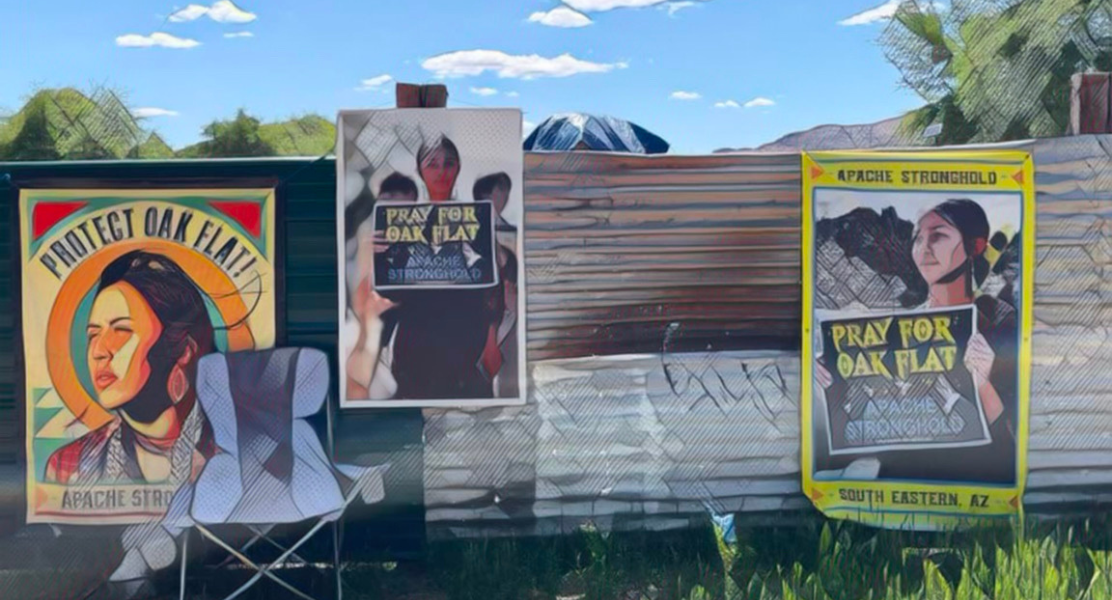
Rep. Adelita Grijalva introduced the Save Oak Flat from Foreign Mining Act on Dec. 3, 2025. You can read more details in a release from her office, which includes a quote from Amanda.
For more on this issue, visit BJC’s resource page at BJConline.org/SaveOakFlat
Johnson Amendment:
Read this piece by Amanda published in the Dallas Morning News about the latest hearing on the Johnson Amendment: The court case that could accelerate mixing religion and politics
Read BJC’s statement about the members of Congress who reaffirmed their support for the Johnson Amendment in November at this link on our website.
For more resources on the efforts to protect the Johnson Amendment, visit BJConline.org/JohnsonAmendment
Ten Commandments in Texas:
Here’s a roundup of news items relating to the ongoing battled over the forced posting of the Ten Commandments, from Jaden Edison, Eleanor Klibanoff and Alejandro Serrano for the Texas Tribune: As appeals court is poised to consider Texas’ Ten Commandments law, other legal challenges mount
Read more about the latest class action lawsuit in this story from Baptist News Global: New class-action suit filed to stop Commandments in Texas
Respecting Religion is made possible by BJC’s generous donors. Your gift to BJC is tax-deductible, and you can support these conversations with a gift to BJC. Clicking that link to make your gift lets us know you are a supporter of the podcast.
Transcript: Season 7, Episode 6: Updates on Oak Flat, the Johnson Amendment, and efforts to post the Ten Commandments (some portions of this transcript have been edited for clarity)
AMANDA: They were reticent to put up Ten Commandments.
HOLLY: Wanting to follow what they know!
AMANDA: Exactly. Reading the newspaper, understanding that this was unconstitutional, that every single court to rule on it so far has held these laws to be unconstitutional.
AMANDA: Good afternoon to those of you joining us from the East Coast. Good morning for people here in Texas like me and elsewhere. And welcome to this live broadcast of Respecting Religion, a BJC podcast series where we look at religion, the law, and what’s at stake for faith freedom today. I’m Amanda Tyler.
HOLLY: And I’m Holly Hollman. Good to see you, Amanda.
AMANDA: Good to see you.
HOLLY: We are so glad to be back with everyone today, live and building on something we started earlier this fall, this season, to allow us to have live quick conversations on the latest news and developments on the religious freedom front.
So it’s really good to know that some of you are with us right now on Facebook or on YouTube. And, of course, we’ll be releasing this — we are releasing this — on our regular feed. So we welcome those of you who continue to listen on your favorite podcasting platform to do so, just like always.
AMANDA: That’s right, Holly. And we did plan to have a live show in advance, not knowing exactly what we’d be discussing when we planned it, but we know that a lot is happening. A lot is happening very fast. We’re, of course, coming to you live a week after Thanksgiving and just a few days after a Thanksgiving break.
So we wanted to make sure we all had time to kind of get back into our rhythms after the holiday. But, of course, the news never takes a break, including over holiday weekends, so we’re here to cover some of the latest that we’ve been seeing on a quick show.
HOLLY: Yes. Since our last show, BJC’s also been busy, because we have moved our offices. We’re still on Capitol Hill, but we’re going to be at a new location, just down the street from our old office. So this live episode, you can say we are still in transition, but we’ll be coming to you from a new location soon.
AMANDA: That’s right. It was a big move for BJC. We had been in our old space for 60 years, six-zero. That’s almost unheard of, I think, these days, so a new beginning for us in some beautiful new office space, and I’m looking forward to being up there soon and being able to work there. And I’m sure we’ll have some of these conversations that we’ll get to record in person.
It was sentimental for us, Holly, because one of the landmark things that happened in that office was the very first recording of Respecting Religion, so new day for BJC, new day for Respecting Religion, too.
HOLLY: That’s right. Well, I’ll look forward to being together in our new offices soon. And as I said, those offices are still on Capitol Hill, where we continue to monitor all the religious freedom developments on the Hill.
And actually there was something that happened this week that we were excited about, and that is that Congress introduced the Save Oak Flat from Foreign Mining Act, introduced just yesterday.
AMANDA: That’s right. It was introduced by one of the, if not the newest member of Congress. That’s Congresswoman Adelita Grijalva, who was recently elected in a special election to a seat that had previously been held by her father.
And she was actually just recently sworn in, so her special election was on September 23, but because that occurred in the midst of a government shutdown or right before it, she had to wait until several weeks — or she did wait several weeks until the House reconvened in order to have her swearing in.
HOLLY: Yeah. She was kind of part of this little mini-drama unfolding in all of the drama around the government shutdown, all the difficulties. But we were glad to see that once she’s sworn in, she got to work on this very important act that we’ve followed for a long time.
And we’ll put a link to the press release which gives a good overview of the act. We’ll put a link to the press release in our show notes today. But you all know — you’ve heard us talk about — the importance of saving Oak Flat.
The Save Oak Flat Act was first introduced by her father back in 2015. It’s a landmark bill that would repeal the 2014 controversial National Defense Authorization Act rider that handed over 2,422 acres of Arizona’s Tonto National Forest, including the sacred site of Oak Flat to a foreign mining company, corporation.
And, of course, BJC got involved with this and helped lead with some other religious groups to really emphasize the religious freedom nature of this huge plan. It’s got a lot of devastating impacts that could happen if this mining goes forward, including the desecration of land that has particular religious meaning and has for so, so long to indigenous communities.
AMANDA: Yeah. And we have had the opportunity to join a broad and diverse advocacy coalition that is trying to pass this piece of legislation. The full name of this piece of particular legislation is the “Save Oak Flat from Foreign Mining Act,” and Representative Grijalva is carrying on the legacy of her father in making this her first piece of legislation in Congress.
Part of what our advocacy is to do is to bring attention not only to the environmental impacts that would have on this land but, of course, to the religious freedom interests. Sometimes, because of Christian privilege, because of Christian nationalism inherent in the United States, we often when we think about religious freedom, we think about worship spaces, we think about buildings.
But for indigenous neighbors, many Indigenous neighbors, it’s not just the building. It’s the land itself that holds this special — you know, this special and unique importance for religious freedom. And so we definitely want to bring attention to that through our advocacy for this act.
HOLLY: Yeah. And, Amanda, I was glad that you were quoted in the press release that we will put in the show notes, saying that, “Sacred land without a steeple is no less deserving of protection than a big, steepled church in the heart of downtown.” And, “Too often the U.S. has failed when given opportunities to protect the religious freedom of our indigenous neighbors.” But, “This is a chance to get it right and to make the promise of the First Amendment a little truer for us all.”
So that was well said, and we look forward to continuing to support this important act of Congress.
AMANDA: And we’ll link in show notes a link to our website where we have lots of information. We also have talked previously that there was an opportunity to accomplish some of these same goals through litigation, but unfortunately, as we’ve noted before, over the dissent, really the powerful dissent of Justice Gorsuch, the Supreme Court declined to hear a case that would have also taken up the religious freedom arguments here.
So it’s up to Congress, and we’ll be joining that large coalition in pushing for the passage and eventual, you know, hoping [there will be a] signing of this act into law.
HOLLY: And another issue that has continued to develop and we had some recent news on is the controversy over the Johnson Amendment. I say, kind of manufactured controversy over the Johnson Amendment, because one thing that our listeners know and BJC knows is that the Johnson Amendment, that provision of the U.S. [Tax] Code that protects nonprofit organizations from partisanship, is not very controversial when you ask people about it.
But we have addressed the Johnson Amendment many times on this show, and BJC has long supported its validity and being upheld. But recently, actually just on November 20, 13 members of Congress, nine representatives and four senators, reaffirmed their commitment publicly to the Johnson Amendment. As we know, they did this because there is ongoing litigation that threatens to upset the Johnson Amendment and how it is interpreted.
AMANDA: Yeah. We covered that litigation on a recent episode of Respecting Religion, an episode that got quite a bit of attention from our listeners, I think, people who are eater to figure out, OK, what’s going on in this court case that was filed in a federal court in Texas, where the parties there, both the plaintiffs who brought the lawsuit and the government that was defending it, tried to end the lawsuit with a proposed consent decree.
And so this particular letter from the members of Congress is asking the acting commissioner of the IRS to withdraw that proposed consent decree. And so in this short letter — or three-page letter, really — they go through the arguments about why the Johnson Amendment is still good law and should be respected as good law.
They invoked, in the very first sentence of their letter, the late, great Congressman John Lewis, who they note was an ordained Baptist minister and a hero of the Civil Rights Movement, and how he had advocated — both in 2017 and in earlier attempts to change the law — he had advocated about why it was so important to keep religious spaces free from the influence of partisan campaign politicking.
HOLLY: Yeah. I mean, he basically always did a great job emphasizing what we know makes common sense and what the Johnson Amendment then codified as explained in this letter from members of Congress, and that is that nonprofit organizations should be serving their charitable purposes and should be protected from the partisan influences of political campaigns for office.
And what I really like about the letter coming from members of Congress is that it emphasizes a point, Amanda, that you and I always make really clearly which is not only is this a legitimate law that we know serves a very vital purpose in protecting houses of worship and other nonprofit organizations. It can’t be changed — it shouldn’t be changed, it can’t be just changed on a whim or by a couple of private parties in litigation.
Instead, if you want to change it, you know, bring some new legislation to Congress, which this letter minds us has been done a few times, always to then fail in Congress, because it is — these changes are typically unnecessary and unwanted and would do great damage to houses of worship and other nonprofits.
AMANDA: That’s right. So despite this, I think, very well-written letter, so far the IRS has not changed their decision, and so there was a hearing that was held just a couple of days before Thanksgiving, on November 25, in a federal courthouse in Dallas, and it was heard from a federal judge who’s actually from the Eastern District of Texas.
And so he was holding a hearing to consider arguments about whether to accept this consent judgment. At the hearing, he did not grant the motion. In fact, he asked for some additional briefing, wanted some additional information, and so as we have our conversation here today, we’re awaiting a decision from that federal judge. And, of course, we’ll be bringing updates as we can to the Respecting Religion audience about what’s happening.
In the meantime, we think it’s really important to continue to raise public awareness. Of course, we are raising public awareness on Respecting Religion, Holly, but also in the greater public. And so I had an opportunity to submit an opinion piece to my hometown newspaper, The Dallas Morning News, that published an opinion piece on the day of the hearing about why we should be paying attention to what’s happening in this court case and what the ramifications could be for not just the parties in this case but if it were to signal a larger change in policy from this IRS and, you know, what negative impacts that would have, particularly on houses of worship.
HOLLY: Yeah. I’m glad you got that piece out there, Amanda, because while I think most churchgoers understand and know this and know this is important and don’t want to see their houses of worship taken over by partisan influence, the impact on the greater sector, nonprofit sector, is something that, you know, some people may not have considered yet, and it’s vitally important.
So we will continue to do that, and we will continue to urge houses of worship and other nonprofits to do the good work that they do and avoid these influences that, you know, could fundamentally harm their mission.
AMANDA: So we’ll link in show notes to, you know, the statement that we put out, praising the members of Congress, as well as the opinion piece, and we’ll continue to keep our dedicated web page for this updated, BJConline.org/JohnsonAmendment, where you can go and find out the latest about what’s happening with this particular provision of the Tax Code and how it’s being interpreted for nonprofits.
HOLLY: And also breaking news to talk about on our live episode today is that you may have heard or seen in the news, there is new litigation about Ten Commandments in public schools. You might be saying, New? Wait. Don’t we know about this?
Of course we know about it. We’ve been talking about it. It’s been going on for a while, but it continues. There is more litigation to oppose the unconstitutional requirement of posting the Ten Commandments in every public school classroom. This is legislation that was first passed in Louisiana and found unconstitutional there, then passed in Texas and found unconstitutional there, passed in Arkansas and unconstitutional there.
But because Texas, Amanda, your home state, is such a big and diverse state, I guess, and you have a very aggressive AG, it’s taken multiple lawsuits there, so it’s quite complex and continuing to develop.
AMANDA: Yeah. We’ve been talking about Ten Commandments litigation and legislation for a while now, Holly. Way back in 2023, Texas tried to be the first state to pass this law, and we talked about that effort in 2023. And I think that Texas still has hard feelings that they weren’t the first state, that Louisiana was the one that beat them to the governor’s desk with the bill to sign.
And so there is a lot going on in Texas. There have now been three different lawsuits filed to challenge, and this third lawsuit, a lawsuit that was just filed this week, on December 2, is a class action lawsuit. And when I first read that, I had to read it a couple of times, because these other lawsuits that have been filed have not been a class action.
They’ve instead been filed by particular parents who have children in particular public school districts, and the rulings in those cases, at least in the Texas litigation, has only applied to the Texas school districts that are named in that lawsuit.
This one is different, because — and, I think, in part because of some really aggressive tactics from Texas Attorney General Ken Paxton, so he was saying that in certain school districts that had not been parties to some of these prior lawsuits, that they were reticent to put up Ten Commandments. You know, they’d seen the rulings from different federal courts, and so they weren’t —
HOLLY: Makes sense. Yeah.
AMANDA: — rushing to put them up. Right. And so — but he went to —
HOLLY: Imagine! Educators wanting to follow what they know!
AMANDA: Exactly. Reading the newspaper, understanding that this was unconstitutional, that every single court to rule on it so far has held these laws to be unconstitutional. But the attorney general of Texas went to the extraordinary step of actually suing three school districts in Texas for, in his words, not complying with Texas law.
And so we’ve really seen, I think, an acceleration of litigation and litigation strategy in these cases, and we’re kind of already looking forward to a date in January, Holly, and what might happen with maybe one of the next courts to rule here.
HOLLY: Yeah. So interestingly, the 5th Circuit, which is a circuit that both Texas and Louisiana are in in the federal court system, the 5th Circuit is going to have en banc hearing, where they have the whole 5th Circuit, reviewing the Louisiana case that we’ve talked about. That was, as Amanda mentioned, the first one — or we mentioned is the first one. And BJC filed a brief in the 5th Circuit, that case, the Louisiana case.
It’s going to be reviewed by the 5th Circuit en banc, and the court is on the same day in January going to review the Texas cases, so it’s all going to be in front of this extended 5th Circuit. And there’s a lot of briefing
There are a lot of different arguments being made. As we know, as listeners know, there are many reasons that the court could find that this kind of legislation is unconstitutional, but we’ll just mention a couple for us today, just as reminders, as this goes up and we continue to follow it.
And the first one is that the Supreme Court has squarely held that it’s unconstitutional in the case of Stone v. Graham back in 1980. So it’s a really aggressive tactic by these legislatures to pass this law in direct violation of Supreme Court precedent. And that’s one of the arguments we’re going to hear.
But what we always like to emphasize at BJC is just the fundamental difference between the role of the government and the role of religious institutions, informing people in their faith and deciding what scripture is holy and important in practicing the faith and kind of giving religious guidance, and all the different ways that religion is active in our lives and our communities is something that really is the primary job of individuals and religious communities. And this is just a bold attempt by government to get kind of way out of their lane.
AMANDA: Yeah. And I think it’s really interesting that a number of the plaintiffs in these cases — you know, we all wear a lot of different hats and have a lot of different roles in our communities. And a number of these plaintiffs are not only parents of students in public schools but also clergy members themselves. And so they can really speak very personally to the different roles that they see of religious institutions and of public schools
I think it’s a great example of religious people who are engaging in advocacy and in this case, in a really extreme version of advocacy, of actually being plaintiffs in a lawsuit. And I’ll just say very personally, I’m very grateful, especially in this environment, for, you know, these people who are really giving of themselves and holding themselves out as named plaintiffs in these different lawsuits.
It is a very bold move to try to ask courts to overturn established precedent in these religious freedom cases, and of course, a lot of court watchers believe that one or more of these cases will eventually end up in the U.S. Supreme Court, and the U.S. Supreme Court will be asked to review this old and established precedent from 1980 on Ten Commandments and the posting of them in public schools and whether that violates the First Amendment.
HOLLY: Yeah. Well, we certainly welcome the activism of people from all different religious traditions in this debate and appreciate some of those Baptists reminding people of our fundamental commitment and kind of why we are the way we are, and they’ve been active in these cases. And we’ll be following this litigation and will continue to do our advocacy as BJC in the courts, and I’m sure we’ll be back to this subject later.
And in the meantime, we will post a very good round-up about this legislation from the Texas Tribune. We’ll put that in our show notes.
AMANDA: Yeah. So something else happened this week, Holly. I knew because of my email inbox. Maybe you did, too. But it was Giving Tuesday this Tuesday, and I think all of our email boxes were full with so many nonprofits who took the opportunity to share about the good work that they’re doing and inviting people and giving people ways to support it.
So just wanted to pause with a moment of gratitude, gratitude to the many people who supported our work at BJC this giving Tuesday and I know will continue to be making contributions at the year end, which is when a lot of people do their charitable giving.
And so, you know, if you listen to the end of our shows, if you listen to our close each week, we end our shows with a request, and just wanted to say again how much your support can fuel the advocacy and the education that we do at BJC, in all of our myriad ways that we do our work, including our ability to bring you these conversations on Respecting Religion.
We spend a lot of time and energy putting in effort into these shows. We think it’s a worthwhile way to share information and have conversations and engage on these topics. So if you enjoy these shows and want to continue to support them with a year-end contribution, we would be so grateful.
And so we’re going to put a link in our show notes, and you can give through that link. And if you give particularly through that link, we know that you are supporting this show because you enjoy these conversations and want to support them.
HOLLY: Yeah. It’s one way that we get to interact with you. We always love hearing from listeners and invite your feedback and appreciate your donations.
So also make sure to subscribe, if you don’t already. If you’re listening and you’re like, hey, I need to make sure I don’t miss these shows, yeah, we’d love for you to subscribe.
We have two more shows before the end of this year, including an upcoming show on religious liberty in the military, an area that we want to address, because, of course, it’s been in the news a lot recently.
HOLLY: And with that, we’re at the end of this episode of Respecting Religion. Thanks for joining us for this live show. We hope you have a great day.
AMANDA: And next week we will be back with another episode on Thursday.
HOLLY: For more information on what we discussed and a transcript of this program, visit our website at RespectingReligion.org.
AMANDA: You can learn more about our work at BJC defending faith freedom for all by visiting our website, BJConline.org.
HOLLY: Plus you can send both of us an email by writing to [email protected].
AMANDA: You can find clips of this show on social media. We are @BJConthehill, and you can follow me on X, Bluesky, and Threads @AmandaTylerBJC.
HOLLY: Join us on Thursdays for new conversations Respecting Religion.