S7, Ep. 08: ‘A vibrant and free civil society is core to religious liberty in our country’
We close out 2025 by talking about the importance of protecting a free society


In our last show of 2025, Amanda and Holly talk about some of the news from the past week – including an expansion of the travel ban, devastating attacks around the world, and an appearance by Amanda before Congress to talk about the importance of protecting civil society. Plus, get an update on the podcast’s plans for spring 2026 as Amanda embarks on her first sabbatical.
SHOW NOTES
Segment 1 (starting at 00:33): Amanda’s most recent appearance before Congress
You can hear Amanda’s opening testimony at 06:37 in this podcast.
You can watch it online at this link.
Amanda and Holly mentioned the open letter from more than 3,000 nonprofits – including BJC – rejecting presidential attacks on nonprofit organizations. You can read it online.
Segment 2 (starting at 19:42): A weekend of tragedy and a new travel ban
Rob Reiner came on our podcast in 2024 to discuss his documentary “God and Country,” which takes a look at white Christian nationalism. It is available on several streaming services.
Read about the expansion of the travel ban in this story from The Washington Post by David Nakamura: Trump expands travel ban to 39 countries after shooting of Guard members
Segment 3 (starting at 27:06): Amanda’s upcoming sabbatical and podcast plans
Read Amanda’s column about her upcoming sabbatical in the winter edition of BJC’s magazine, Report from the Capital: A season of rest and freedom
Respecting Religion is made possible by BJC’s generous donors. Your gift to BJC is tax-deductible, and you can keep these conversations ad-free with a gift to BJC. Consider making a gift before the end of 2025.
Interested in merchandise and apparel with the BJC logo? Check out our new merch store.
Do you want special emails about our show? Click here to sign up for our email list!
Video of our episodes are now on YouTube! Click here for the season 7 playlist.
Have a show you really want us to air during Amanda’s sabbatical? Let us know at [email protected].
You can watch this podcast on YouTube:
Transcript: Season 7, Episode 8: “A vibrant and free civil society is core to religious liberty in our country” (some portions of this transcript have been edited for clarity)
AMANDA: There are no second-class faiths in this country. When the state elevates certain ideologies and stigmatizes others, it erodes both free expression and free exercise.
Segment 1: Amanda’s most recent appearance before Congress (starting at 00:33)
AMANDA: Welcome to Respecting Religion, a BJC podcast series where we look at religion, the law, and what’s at stake for faith freedom today. I’m Amanda Tyler.
HOLLY: And I’m Holly Hollman. It’s good to be back with you for another conversation today, Amanda, this being our last show of the calendar year. It’s certainly been a busy fall and winter season so far for BJC, including this week in the nation’s capital, so we’ll talk about that. And I am hopeful that our listeners, as we, are getting ready for a break during this holiday season.
AMANDA: Yeah. This always feels like this mad rush towards the end of the year, and then everything will just stop. So we are still running a little bit, running ourselves to get this final episode into your feeds of 2025.
We are recording this show on Wednesday, December 17, in the middle of a very busy week. I am joining you from Dallas, but I just got back, like less than 12 hours ago, from a 24-hour trip to Washington, D.C., for some very specific business on Capitol Hill.
HOLLY: Yes. Our work does not stop, it seems. And I’m sure our listeners want to hear about your trip, so it was good to have you here, and I’m glad you made it back safely to Dallas.
AMANDA: Yeah. So last week, Holly, you and I were together in our new offices —
HOLLY: That’s right. Yeah.
AMANDA: — and we wrapped up right before I was running to the airport, you know, then on Thursday, December 11, and right as I was about to get on the plane to come back to Dallas, I got word that I was being invited to testify before a subcommittee of the House Judiciary Committee this week.
HOLLY: And we know how that routine goes. It can be very hectic, and, in fact, you did just that. So today we are recording, the day after we took that trip over to Capitol Hill. So let’s talk about why you testified and how it connects with our broader work, Amanda.
AMANDA: Well, this was my fourth time testifying before Congress during my leadership of BJC. I first testified before the Senate Judiciary Committee and then twice before to the House Oversight Committee, all those times to a subcommittee. Right?
So there are many members or senators who sit on a full committee, and then they divide themselves into subcommittees. This time it was for the House Judiciary Committee Subcommittee on the Constitution and Limited Government.
I was called by the minorities on the committee. That’s the Democrats on the subcommittee, and I was their only witness. The majority set the hearing and the topic and had invited three witnesses to testify on their behalf.
HOLLY: Yeah. And we’ve seen this process before. BJC, as you mentioned, has been called on for many years at times, sometimes for hearings that are closer to us and more pressing to us than others. And we know there are pros and cons to that process. It sometimes comes up very quickly. The majority party sets the agenda, and, as you said, the minority party has a role getting witnesses.
But it can be pretty unpredictable, the amount of time that goes into preparing something that’s helpful to the committee, as we always would do, whether it’s for the majority or the minority. We put our testimony out there in writing and prepare to speak in person, as you did. And we don’t know for sure, you know, how the hearing’s going to go or who all will be there.
And in this case, it was a little odd. The hearing title was called, “Partisan and Profitable,” and it was targeted at a specific nonprofit who the hearing claimed has undue influence over civil rights policy. And your role, of course, was to talk about civil society in general and the importance of it.
And we were proud that you could do that, speaking really on behalf of the nonprofit sector and the importance of civil society in a healthy democracy. One thing that I thought was curious about this one — and, of course, when you get invited at first, we don’t know if it’s going to happen and how it’s going to — you just have to say you’re willing to do it, and then we see how it unfolds.
But I was struck by the name of the subcommittee, and I was thinking, okay, well, haven’t we been before these subcommittees before. But it was a new title. That subcommittee was formerly called the Subcommittee on the Constitution, Civil Rights, and Civil Liberties. That point, that it was now this committee on limited government, the Constitution and limited government, was something that was pointed out by a member, Representative Mary Scanlon of Pennsylvania, the ranking Democratic member on the subcommittee.
And I think it was noteworthy, not because they changed the name because that happens from time to time as congressional priorities shift, but because it was particularly at odds with the topic of this particular hearing.
AMANDA: Yeah. And that was, I think, our main impetus for being involved here is our deep concern with the overreach of government and government using its power, its, you know, tremendous enforcement capability, the threat of criminal prosecution, for instance, to use any of that use or showing of power to come down on a single nonprofit doesn’t feel very much like limited government to us. Right?
HOLLY: Right.
AMANDA: So there was a lot of irony or hypocrisy, I think, or just kind of confusing talk throughout. It might be, kind of as we’re setting the stage for this hearing, just very briefly — I think the quickest way to kind of talk about it is probably to play my opening statement. So, you know, this is a five-minute synopsis of why I was there, and so we’ll play that now, and we’ll include a link in show notes where you can watch it online as well.
AMANDA: (audio clip) Good afternoon, Chairman Roy, Ranking Member Scanlon, members of the subcommittee. I am Amanda Tyler, executive director of Baptist Joint Committee for Religious Liberty.
As a faithful Christian and a patriotic American, I’m honored to be here this afternoon to offer testimony about why the treatment of civil society organizations is directly relevant to religious liberty and First Amendment protections.
First, I mourn with the Jewish community in the wake of the deadly antisemitic attack at Bondi Beach in Australia this weekend. This latest attack, fueled by antireligious hate, is a tragic reminder of the need for a united front that will stand against every instance of violence and actively work to dismantle the ideologies that drive that violence.
For 89 years, BJC has worked to advance faith freedom for all. BJC has a consistent record of supporting both of the First Amendment’s religion clauses, No Establishment and Free Exercise. Our commitment to religious freedom stems from the historical experiences of early Baptists who suffered the pain of persecution that resulted from religious fervor, coupled with the coercive power of the state.
BJC works with a diverse group of organizations, both secular and religious, in various coalitions. Depending on the case or the policy we’re working on, we may find ourselves on the same or opposing sides with other groups that work on religious freedom issues or other concerns that are crucial to our pluralistic democracy.
Nonprofits, religious and secular, are essential to American democracy, creating opportunities for civic engagement, caring for neighbors, and standing up to abuses of power. When government attacks these institutions, especially during moments of instability or when government services are strained, communities suffer.
American civil society represents the broad diversity of the American people. Dissent and disagreement between these groups is a hallmark of a free society. We cannot conflate policy disagreement with dangerous conduct. Government, and especially law enforcement, should respond to facts, not ideology.
Civil rights organizations, Southern Poverty Law Center included, are part of the essential infrastructure of American civil society. Civil rights organizations have historically helped communities in many ways, including documenting and combating discrimination and racially motivated violence, ensuring access to justice, providing education and services where government capacity is limited, supporting those targeted by bigotry or political retaliation, and strengthening democracy by defending constitutional rights.
Today, as communities face rising extremism, political polarization, and gaps in federal support, these organizations remain crucial, often stepping in where government has stepped back.
Today’s hearing is not about one nonprofit. Instead, hearings like this one serve to normalize the idea that government should use oversight, enforcement, and public rhetoric to punish and make examples of organizations whose viewpoints or work challenge the administration’s agenda. Such retaliation can chill advocacy, undermine constitutional norms, and threaten the independence of the nonprofit sector.
Government targeting of nonprofits should concern all Americans. A functioning democracy depends on the ability of organizations across the spectrum of viewpoints to debate without fear of retaliation. What begins as political retaliation against civil society organizations quickly becomes a threat to conscience rights, religious pluralism, and the foundational First Amendment protections that safeguard all people and all faith communities.
Religious liberty depends on a government that remains neutral when it comes to religion, neither favoring nor denigrating any religious viewpoint held by individuals and groups. Government misuse of its authority, whether through investigations, rhetoric or selective enforcement, creates a climate where religious people, houses of worship, and faith-based charities are put at risk.
For faith to remain free, it must never be used as a tool of political power. Religion must never be used as a proxy for threat or danger. There are no second-class faiths in this country. When the state elevates certain ideologies and stigmatizes others, it erodes both free expression and free exercise.
A vibrant and free civil society is core to religious liberty in our country, as well as essential to achieving the promise of our constitutional democracy: that all belong, no matter how one worships, how one believes, or how one identifies religiously or not. Thank you.
AMANDA: You know, I think, Holly, one of the things I noted in that statement was, despite the title of the hearing, this really wasn’t about one nonprofit. It was a part of a broader pattern by this administration and by the Republican Congress of attacking civil society.
And, you know, I had some chance — and some of the members did, as well — of detailing some of the examples of what we’ve seen, but maybe we could talk through a little bit some of the most concerning aspects of government overreach that really interferes with the independence of the nonprofit sector.
HOLLY: Yeah. At the most extreme, you might see efforts for legislative change actually, as we saw a bill that failed at the end of the last session, that would have given the Secretary of Treasury authority to revoke any nonprofit’s tax-exempt status without due process.
This would have been a substantial increase of power to the executive branch over the nonprofit sector, which, of course, there are laws in place that provide oversight and regulation and prevent fraud and other grave concerns to nonprofits. But this was a bill that seemed targeted just to, you know, give power and threaten groups, just because the administration doesn’t like it. So it was good that that failed.
We also have seen attacks against religious social service agencies, some earlier this year, questioning their religious character or lodging baseless claims of criminal conduct against them. And, Amanda, you had the opportunity one time to mention that as well in the hearing.
AMANDA: Yeah. Earlier this year — yeah. As we’re at the end of the year, can you think all the way back to January, right after President Trump was inaugurated, and Elon Musk came in with a sledgehammer to the federal government and with the DOGE cutbacks? And one of the first targets of those cutbacks were some religious nonprofits, including Lutheran Social Service organizations that had had long partnerships with the government.
And Musk and Michael Flynn had lodged these attacks on these Lutheran groups, calling them money launderers — again without any kind of evidence — and really questioning, you know, putting Lutheran in quotes, for instance, which really shocks the conscience when we think about what the government’s role is and to stay out of, you know, questioning groups’ religious character or having really any opinion when it comes to religion as far as the government goes.
HOLLY: That’s right. And then in September, there was a — September 25 — presidential memorandum where the administration makes baseless claims directly linking ideologies, some quite broad, with violence. This is sort of an ever-expanding idea about organizations the administration might consider to be a threat, you know, to bring under their, really disfavor or kind of targeting, often focused on groups that they consider to be against capitalism or anti-Christianity or espouse what the administration considers to be extreme views on migration, race, and gender.
And, you know, from our standpoint, it seems clear that these are aimed to stifle dissent, to chill advocacy, and really an effort as a scare tactic. You know, it doesn’t change the law, but it has a deep chilling effect on all Americans and particularly those who hold dissenting views to this administration. It pulls us further away from the pluralistic democracy that we count on, that is core to who we are, and toward this authoritarian theocracy model that we see, you know, pushed by this administration at times.
AMANDA: Yeah. And just context. Right? This letter came out — or this presidential memorandum came out on September 25. That came just a couple of weeks, of course, after the horrific assassination of Charlie Kirk on September 10. And so it was in that context of responding to political violence that we have this tremendous government overreach in the form of this presidential memorandum.
HOLLY: Yeah. And appropriately, there was a wide pushback. And, you know, we are part of the much larger nonprofit organization community, and soon after, there was a response to this aggressive move by the administration. There was a letter of more than 3,000 nonprofit organizations all across the country, including BJC, [that] sent an open letter.
And I really want to mention here: The key part of that said very clearly: “Political violence is unacceptable, but efforts by the president of the United States to defund, discredit, and dismantle nonprofit groups he simply disagrees with are reprehensible and dangerous, a violation of a fundamental freedom in America. This administration is trying to bully people into silence, but speaking out is and has always been our collective mission. We stand with those wrongly targeted and with each other, no exceptions.”
You know, we were really glad to be part of that, Amanda, because it did just seem like such an offensive overstatement, just, yeah, a really ugly tactic and at a particularly sensitive time, too, when people were mourning and concerned about political violence in our country.
AMANDA: Yeah. And, you know, kind of getting back to the hearing yesterday, I think a lot of people were like, Oh, why would you ever do that? Why would you ever put yourself in the hot seat in such a, you know, obviously hostile environment? You know, we knew the hostility just from the title of the hearing, and we knew kind of what to expect as far as this particular aim, to single out and attack a single nonprofit.
And, you know, that paragraph you just read, Holly, that really speaks to it. We stand with those wrongly targeted and with each other, no exceptions, that there’s a real sense that when one nonprofit, no matter where they are on the ideological spectrum — right? We have a diverse society that is reflected in a diverse civil society, diverse nonprofit organizations — that we have to stand together and we have to be willing to stand up for each other and for our right to free association, free speech, freedom of religion, that these are times that we need solidarity.
And I, you know, very much viewed my time before the committee yesterday as public service, as public service to this aim of standing together against an authoritarian government that really is trying to use all of its powers to pursue an agenda and silence critique.
HOLLY: Thank you, Amanda, for, you know, providing that service. I know that it is appreciated by a large swath of the American people who understand that we are not living in normal times, and of course, the nonprofit sector is so important to who we are as Americans and that we want to avoid this kind of targeting.
Segment 2: A weekend of tragedy and a new travel ban (starting at 19:42)
HOLLY: You were testifying after a particularly tragic weekend.
AMANDA: Yeah. I know that we all mourn with the Jewish community worldwide as they come to grips with yet another mass shooting, targeting Jews, this time at Bondi Beach in Sydney, Australia, that so far has claimed the lives of 15 people, many more wounded who are fighting for their lives. And it’s just a reminder, a tragic reminder, of how much violence, hate-filled violence, there is in our world and, I think, also an imperative that we all work together to try to end it.
Then also, of course, yet another tragic shooting on a campus, this time at Brown University, where a gunman entered a room where students were in a study session, killed two students and injured nine other people. And so we mourn with Brown and with Providence, Rhode Island, and, you know, people all over the country who feel less safe yet again, even in their academic institutions.
HOLLY: And then we got the news of the murder of Rob Reiner and his wife Michele Singer Reiner, and that has, again, shocked our country for the horrific violence, the family tragedy. Of course, the Reiners have had this huge effect, not just on the culture but also in political life, just really being interested and involved in politics and open dialogue.
In fact, you know, Rob and Michele were with us in our office for a podcast in January 2024, talking about his “God and Country” documentary with director Dan Partland, which really just gave us a chance, a little glimpse at who he is and, you know, what we all have read and many people have experienced about his really insatiable curiosity and desire to educate people. And for us, it was an opportunity to see him and his work and to engage with him.
And, the film discusses the danger of Christian nationalism to the country, to faith and to pluralism, which, of course, is a key concern of BJC. And that day that he was on the podcast, that same day, we hosted the event with them at the U.S. Capitol Visitors Center. It was the first screening of that film, “God and Country.”
And I’m just really thankful that we had that personal opportunity, Amanda, that you were able to sit down with him and have conversation with him, and that we were able to see, to see the kind of positive influence he had and was trying to have.
AMANDA: Yeah. And as I’ve read these wonderful tributes to him and listened to these recounts of his amazing professional life, his artistic life and how much he offered as an actor, as a director, as a producer, something that comes out in a lot of those that I also experienced was just his warmth, just his friendliness, his — yeah — his curiosity and his advocacy.
And this was a project that he cared deeply about, this “God and Country” documentary. He talked about his own experience as a Jewish American and how he saw the threat, but really used that and used his enormous talent as a platform for trying to make our country better.
And, you know, just a tremendous loss for, I think, our country and certainly for Hollywood and for all of the art that he has made over the years. So just so much tragedy to take in this weekend in such a short amount of time.
HOLLY: Well, and as always in the face of tragedy, we are looking for hope. We are looking for continued commitment to taking up for faith freedom for all and the dignity of all people. But we will continue to have grave concerns.
Just this week, we have an update on something that happened earlier this year and that we fear, instead, moves in the opposite direction, and that is that the Trump administration expanded the travel ban.
AMANDA: Yeah. We’ll link in show notes to the most recent article from The Washington Post that talks about the expansion of the travel ban. It went into effect earlier this year on June 9 and at the time restricted entry by nationals from 12 countries and partially restricted entry by people from seven more countries.
At the time, I issued a statement on behalf of the organization, calling it a moral failure and a constitutional affront, and we also talked about this particular policy on an episode in June from last season.
So this week — just yesterday, on Tuesday, December 16 — President Trump added an additional 20 countries to the list, with a full or partial ban, which means that now we are restricting entry from 39 different countries around the world.
HOLLY: This is ostensibly tied to the aftermath of the shooting of the National Guard members here in D.C. by an Afghan national, and that’s how it’s been reported on. And, you know, we remain very concerned about this expansion of blaming particular violence, particular specific incidents, on entire peoples from particular countries.
AMANDA: When you review the list of the countries that are on the — you know, we’re not going to read all 39 here, but they are almost entirely either Muslim-majority countries or African countries. And, you know, we have continually said, to use a particular religion as a proxy for threat or a whole nationality or, in many ways, African continental racial categorizing people as threats — that these violate our constitutional principles.
And we will continue to speak out against this. You know, of course, we all want a country where we can feel safe, and we need to trust the processes. But just to be Muslim or just to be from one of these African countries does not make you a threat to the United States. And I think it’s really vital that we, the people, continue to speak into that, even when our government is passing these discriminatory policies.
Segment 3: Amanda’s upcoming sabbatical and podcast plans (starting at 27:06)
HOLLY: While there are many things that concern us in our world and will continue to challenge us as Americans and really force us to speak out and really reaffirm our core values, we know that we are only human, and we will be taking a break over the holidays.
And we hope all our listeners get that as well, as you all continue with us to do the important work of taking up for faith freedom for all in your communities and being informed citizens, taking up for our democracy.
We certainly wish everyone some rest, some time with family over the holidays, and we’ll continue to do our work, both during this time, but we’ll take a break, and we will continue in the spring as litigation and policy matters that BJC works on will continue.
But we want to let our listeners know that it’ll be a little bit different, because we are celebrating with Amanda that she is taking a well-deserved sabbatical, which means that she will not be working at BJC for the next few months, but will instead be enjoying a time of personal renewal and rest.
And, Amanda, I know people will be happy for you and that you’ve written about sabbatical in Report from the Capital, BJC’s magazine, and we can link to that article in the show notes. But very happy for you to have this time. It’s well deserved and coming at a time, right after such a busy time, so we look forward to that for you.
AMANDA: Thanks, Holly. Yeah. I wrote about it, in part because I thought — and want to talk about it here. I don’t know how familiar everyone is with the religious practice of sabbatical. I think often you hear that term in an academic setting, and you think about professors who might have time to go do concentrated research or work on an article or work on a book.
The concept of religious sabbatical is a little different. It comes from holy scripture. It comes from a commandment to keep the sabbath and to make it holy. Right? And so part of our commandment from God is to realize our own humanity and that we must remember to rest, and that is a religious practice.
And so I am looking forward to practicing sabbatical. It’s something I’ve never done before, and so I’m sure I’ll have a lot of learnings. I’d love to talk about what I learned about sabbatical when I’m back on the podcast.
So we won’t be in conversation, Holly, with new episodes, but we are going to keep Respecting Religion going during this time, and so I wanted to kind of preview for our listeners what they can expect over the next few months.
HOLLY: Sure. We’ve been at this quite a while now, have more than a hundred episodes, and while you’re out, Amanda, it’ll be a chance for us to play some all-time favorites. Our listeners will get to hear some of what are our favorite episodes as well as some of what their favorite episodes are. For those newcomers, they get a chance to hear again some of the episodes that have been most helpful to people in their conversations.
Of course, when there is important breaking news, I will be back, glad to announce any important legal decisions or developments that really deserve immediate statement. But we hope you all will stay with us. It’ll be a chance to, again, catch up or maybe share Respecting Religion with friends of yours.
And as we say each time in our closing, you know, we’re able to do this podcast and do it without advertisements thanks to the support of our listeners.
AMANDA: So as you all are thinking about your end-of-year donations, we would be so honored if you’d consider BJC as a nonprofit organization to support. Your donations are tax deductible, and you can use the special link in our show notes to let us know that you’re giving because you are a listener of this podcast. And your gifts help us keep this show going.
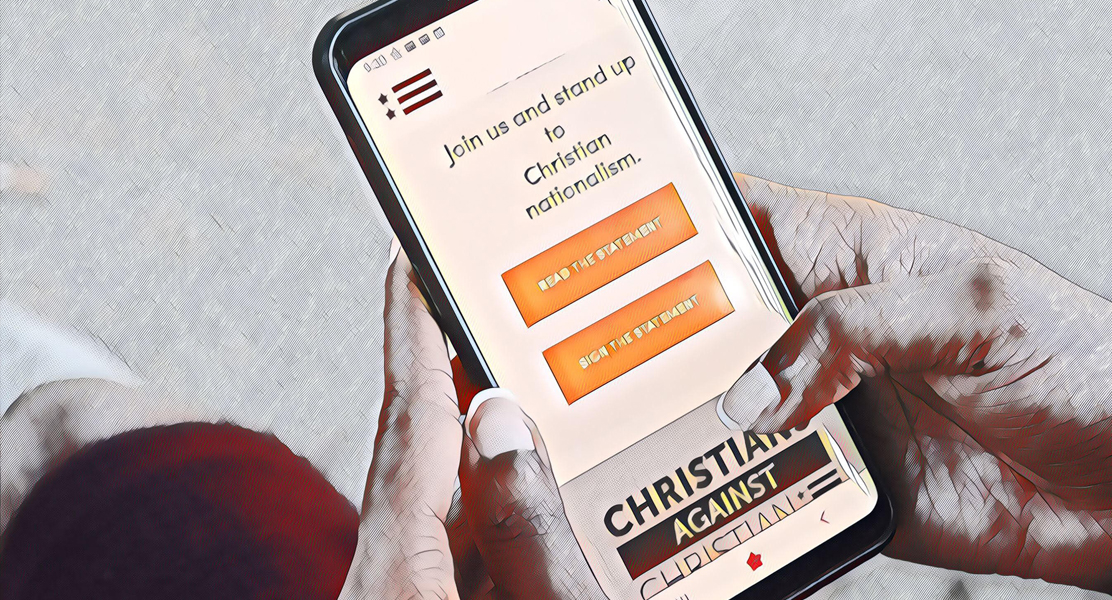
Also, when you’re on the BJC website making that donation, you can also go over to our new merch store. It’s a place where you can do some last-minute holiday shopping, and you can order some items. Some of them have BJC branding on them, and some of them can show your support for Christians Against Christian Nationalism.
HOLLY: Mostly we just want to thank all of you for listening and supporting our work, not just this podcast but the work of building a movement toward a just society that cultivates and expands religious freedom for all. We are rooted in our Baptist commitment to soul liberty, and we are so grateful for all of you, no matter what you believe, who join us on this show and partner with us in the work. It’s through your gifts and your time and your talents — all the ways that you give, we really appreciate.
And that brings us to the close of this episode of Respecting Religion. Thank you so much for joining us throughout this fall.
AMANDA: As I mentioned, I’m heading off for sabbatical, but keep your eye on this feed to hear some of our favorite shows over the coming months.
For links related to today’s show and a transcript, visit our website at RespectingReligion.org.
HOLLY: It’s our last show for a bit, so I’d like to take a second to give some credits. Respecting Religion is produced and edited by Cherilyn Crowe Guy. Transcripts are provided by Anita Tyler. And this fall we also want to thank David Segal for his editorial assistance.
You can learn more about our work at BJC defending faith freedom for all by visiting our website at BJConline.org.
AMANDA: And sign up for emails from us at BJC and Christians Against Christian Nationalism with the special link in our show notes. Using that link lets us know that you are interested in hearing from us about this podcast.
We sent an email last week just to the people who are on that list with some behind-the-scenes photos from our new location, so you don’t want to miss out. Sign up to get future emails from us.
HOLLY: You can send both of us an email by writing to [email protected]. Of course, Amanda won’t see it during her sabbatical. This thing is real! She’s getting a real break, but it lets you contact me and our producer Cherilyn.
AMANDA: You can find clips of this show on social media. We’re @BJContheHill.
HOLLY: And wherever you listen or watch, please take a moment to leave us a review or a five-star rating to help more people find this program.
AMANDA: I’ll say it once again. We thank you for supporting this podcast. You can donate to these ad-free conversations by visiting the special link in our show notes.
HOLLY: Join us in 2026 for more conversations Respecting Religion.