
S7, Ep. 03: Why is the Johnson Amendment under attack again?
Holly and Amanda talk about the concerning way the Trump administration is trying to undo a popular part of the tax code that protects nonpartisanship
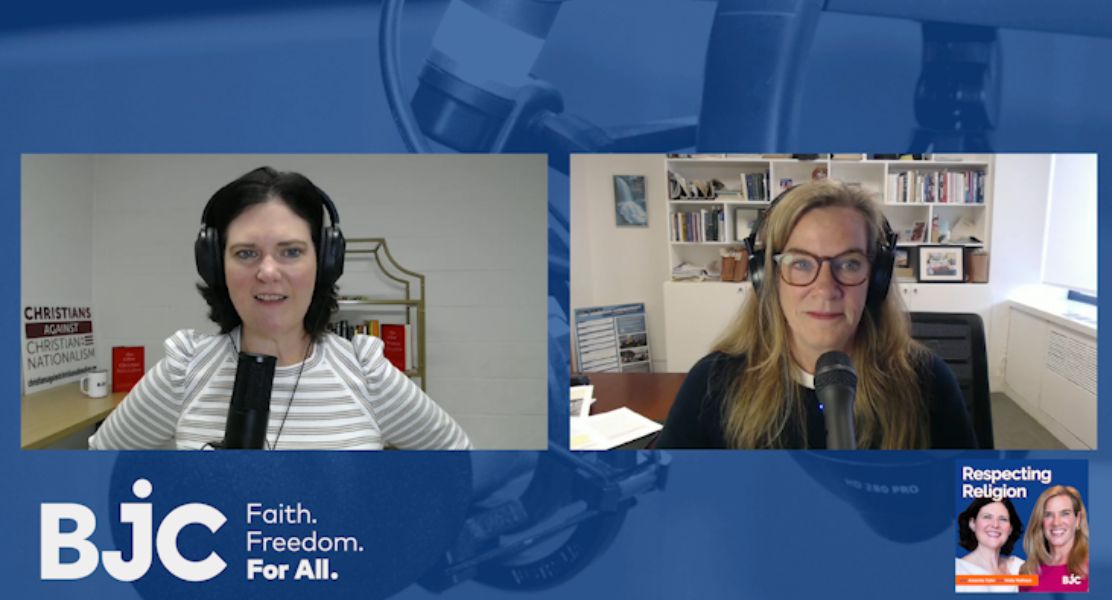


We hear a lot of misinformation about a long-standing part of the tax code that protects the nonprofit sector, and it’s newly under attack in a questionable manner. On this episode, Amanda and Holly discuss the Johnson Amendment, what it does and doesn’t do, and the concerning way the Trump administration is trying to undo it without going through a normal process. They also provide reminders of what all nonprofits – including houses of worship – can do without jeopardizing their 501(c)(3) status under that current law. It’s a curious case – politicians say no one wants this part of the tax code, but it’s proven popular over and over again. Join them for this conversation.
SHOW NOTES
Segment 1 (starting at 00:35): The protections of – and support for – the Johnson Amendment
Video of our episodes are now on YouTube! Click here to watch this episode, and you can click here for the season 7 playlist.
Do you want special emails about the show? Click here to sign up for our email list!
Segment 2 (starting at 15:41): Various attempts to undermine and to protect this part of the tax code
Read more about the work of faith leaders to protect the Johnson Amendment throughout 2017 and into 2018 by visiting BJConline.org/faith-voices
Segment 3 (starting at 30:54): What’s next?
For resources on the Johnson Amendment from BJC, visit our website at BJConline.org/JohnsonAmendment
The litigation mentioned in this program is continuing. There will be a hearing on this case November 25 in Dallas. The hearing was originally for November 7 in Washington, D.C., but it was rescheduled due to the ongoing government shutdown – Amanda and Holly discussed that briefly in last week’s live episode.
Respecting Religion is made possible by BJC’s generous donors. Your gift to BJC is tax-deductible, and you can support these conversations with a gift to BJC.
Watch the video of this program:
Transcript: Season 7, Episode 03: Why is the Johnson Amendment under attack again? (some portions of this transcript have been edited for clarity)
HOLLY: This is not about preventing anyone from speaking.
AMANDA: When I read this, both as an attorney, Holly, but also as someone who goes to church, I, again, had so many questions.
Segment 1: The protections of — and support for — the Johnson Amendment (starting at 00:35)
AMANDA: Welcome to Respecting Religion, a BJC podcast series where we look at religion, the law, and what’s at stake for faith freedom today. I’m Amanda Tyler.
HOLLY: And I’m Holly Hollman. Today we’re discussing a long-standing law that serves to protect civil society. Specifically, it’s part of the tax code that safeguards the nonprofit sector, including houses of worship and other religious organizations. These are organizations that serve society and do so without partisanship.
AMANDA: Hi, Holly. Good to see you.
HOLLY: Good to see you, Amanda.
AMANDA: So recently we were together in D.C., but we are recording in our usual offices today and I’m excited to do this video again with you on season 7.
HOLLY: And it’s good to talk about something today that we’ve been interested in for a long time. Both of us have engaged in this topic for a long time. It comes in and out of fashion and tells us that we always have to keep up the fight to protect nonprofits, houses of worship, and educate people about what the law is and why.
AMANDA: So in the season opener — our first episode that aired a few weeks ago — we talked about all that happened over our summer break and things that we were going to be revisiting, and so this is one of those topics. So over the summer, back in the news, back making headlines, is our old friend, the Johnson Amendment. So that’s the shorthand for what you very well described, this portion of the tax code that safeguards the nonprofit sector, that protects houses of worship from partisan divisions and interventions in campaign activity.
To get us started, I will just read directly from that part of the tax code that —
HOLLY: It’s not so scary. I know people say, tax code, and it seems a little scary, but this is really pretty easy. So give it to them, Amanda.
AMANDA: It is. It is. So since 1954, as part of the tax code, in the section that defines nonprofit organizations, it says that nonprofit organizations should not, quote, “participate in or intervene in any political campaign on behalf of or in opposition to any candidate for public office.”
That is a slightly abridged quote from the tax code, but that portion of the code that talks about campaign intervention often goes by the shorthand “Johnson Amendment,” again because it was Lyndon Baines Johnson who was then a senator who sponsored this language. So at least since 2017 when this part of the tax code became a conversation again around possible changes by the legislature, it’s gone by this shorthand of Johnson Amendment.
HOLLY: You know, we can talk about it being something that has been codified in the law since the 1950s, but also whenever I talk about this, Amanda, I’m always kind of struck by the fact that we have these little fights about it, people who misinterpret it or misconstrue it or want to change it, you know, a few people. We’ll talk about that.
But really it just fits that, by definition, nonprofit organizations serve civil society in ways to promote charitable works, to do work in education, religion, scientific endeavors. And those are really quite different from being engaged in partisan campaigns for elected office. So, you know, these are different things and should be regulated differently.
AMANDA: And, I think, as far as the sector goes, it’s really viewed as a protection. It’s a protection from, I think, the often messy and divisive world of campaign politics, also all of — especially with modern campaigns, campaign finance, all of the money that gets poured into these campaigns. They happen all the time. Right? There are campaigns for candidates for public office really every year, but particularly for national elections, every even-numbered year.
It’s a constant campaign cycle, something that most nonprofits really don’t want to be engaged in, and so it’s been viewed for most of its history as something that’s pretty noncontroversial and something that helps the sector, that helps protect the integrity of the sector and helps the sector focus on its very important mission.
HOLLY: Right. We often talk about it preserving the independence of nonprofits and protecting houses of worship from these partisan campaigns. And that’s been the law for more than 70 years. It’s been understood that way by the nonprofit sector and by the IRS through its guidelines and guidance in interpreting this. It’s been this absolute ban on endorsing or opposing candidates because that is intervening in, participating in partisan campaigns.
AMANDA: And often when we’re talking about and explaining it, I do think there’s a lot of misunderstanding. Sometimes I think it’s intentionally trying to obscure the facts, sometimes unintentional. But there’s a lot of ways that the nonprofit community, including houses of worship, can be involved in the democratic process, can encourage their members or congregants or other supporters or constituents they might have to be engaged and involved in elections.
They just need to do so in nonpartisan ways, so that can be through voter education, through helping people vote. A lot of churches are involved in a program called Souls to the Polls that helps provide some kind of transportation to help their members go vote. Even some houses of worship, including the church that I belong to, open their space up to host voting, early voting and election day voting, to make it easier for people in the community to have a place to vote.
They can host candidate forums even and also talk to their congregations about issues of public concern. Where the line is, what would become campaign intervention is when we’re actually endorsing candidates, as you say, or otherwise using the funds of the nonprofit or the funds of the house of worship to actually support or oppose a candidate for public office.
HOLLY: Yeah. And we should say something about why that is, Amanda, about how this nonprofit sector is defined, and that is that people who give to these nonprofits get a tax benefit, and so this rule goes along with protecting that sector and how it works.
AMANDA: Yeah, that’s right. So something that sets apart 501(c)(3)s from other kinds of organizations is the fact that donors to 501(c)(3)s get a tax deduction for any gifts that they give to that organization. And that’s different, for example, from donations that are made to 501(c)(4)s or a 527 political organization.
Those organizations, donors would not get a tax deduction for gifts, and for that reason, I often call 501(c)(3) the most favored tax status, and with that tax status comes certain requirements, including, as we’ve talked about, this commitment not to participate or intervene in a campaign for public office.
And we’ll get into it in a moment, but when there’ve been efforts to actually try to change the law in this way, those nonpartisan budget estimators and tax estimators have found that if they were to change the law, that we would see a redirection of a lot of campaign donations into the 501(c)(3) sector, in order for those donors to get a tax exemption for it. It would really turn the offering plate into a campaign donation plate.
And that’s at least what people have estimated would happen should the law be changed in order to have campaign intervention for candidates for public office happen in the nonprofit sector. And there are so many reasons that these nonprofits don’t want that to happen.
HOLLY: Yeah. I think we should get to that, and before we get to that, Amanda, I’d like to say a little bit more about the things that are allowed. You know, as you were focusing on thinking about how nonprofit organizations and churches specifically could be involved in encouraging voting, being involved in the democratic process, that’s certainly something that’s important to a lot of churches, and I think we should all care. You know, all of us should care about our democracy and exercising our vote responsibly.
And sometimes, I guess, that’s what people talk about when they want to — I guess, when they want to attack the Johnson Amendment. But I think it is often this idea about issues. They exaggerate and act like and suggest that churches can’t talk about issues, which is an argument that falls so flat on our ears, Amanda, as people who know churches, go to churches and have engaged with people from across the religious spectrum throughout our careers.
And we know that’s often what religious communities do, is that they talk about their principles, and they read sacred scripture, and they have sermons and different ways of engaging with what they’re called to do religiously, that, of course, overlaps with and maybe sometimes specifically addresses issues. And yet that’s not what this prohibition is about, and to the extent that people say that they are muzzled, they’re often making misstatements of the law.
AMANDA: Yeah. And I think it is really a red herring of an argument, because when you actually look at, to the extent that the Johnson Amendment has been enforced — you know, it admittedly has been very under-enforced, I think, by the IRS.
But any times when it’s been enforced, it’s been, I think, what has been a clear example of intervention in a political campaign on behalf of or in opposition to any candidate for public office. It hasn’t been when a pastor or other church materials in some way are talking about applying their religious beliefs to an issue of public concern, an issue even of political concern. Right?
And so I think we have to help understand and draw some clarity around the very real difference between being quote/unquote political and being partisan — that those are not the same things. I often say, I think Jesus was political, in that Jesus cared about the community that he was in. Jesus cared about bringing justice for those who were facing oppression in his community. He got engaged and involved in the lives of people that he lived with.
That is what I define and understand as being political. It’s a big difference from being engaged in the 21st century in a partisan campaign for candidates for public office. And so helping people understand the difference between those two, I think, can bring a lot of needed clarity to the conversation around the Johnson Amendment.
HOLLY: Yeah, I agree. And I think that we, maybe more than some other religious communities, Amanda, think of it that way and just accept that the gospel has political implications, because I do sometimes hear people use the term “political” in a broader way, to just avoid anything political, and, you know in a way that could suggest that you’re only engaged in matters of spiritual concern and not the day-to-day.
So I think it’s an area that when people look at it and, you know, contemplate it, it makes a lot of sense, because however you worship and however your tradition engages in day-to-day activity, however you’re led to engage in public life with your neighbors or policy, there’s a clear distinction that can be made between that and all the different ways that people interpret it, and electioneering, endorsing or opposing candidates for public office, which is what we’re talking about is prohibited under the law.
AMANDA: Yeah. And not only because there would be legal ramifications but also because, from a very practical and prudential orientation, what would happen to the church or other house of worship, just to invite all kinds of partisan divisions into our sacred spaces, into our worship services or our church committee meetings or any other time that the people of the church are gathered.
Also just a distraction from the core mission of the church, and the sense that for many of us, you know, really wanting to have a space, particularly in divisive election years, have a space where we can come together with people for whom we’re there, not because of how we vote or who we might be voting for but for other things that draw us together.
For all those reasons, again, the vast majority of churches and houses of worship that we’re in conversation with, Holly, view the Johnson Amendment very much as a protection of something that helps keep the electioneering out of our religious spaces.
HOLLY: Uh-huh. And those voices have been amplified at times that the Johnson Amendment has come under attack. You mentioned back in 2017 that there was a big effort. We can talk about that, and then we can talk about what happened this summer. But in both cases, not only individual faith voices but denominations, churches and all spoke out to, again, defend this rule which is a commonsense rule that serves the nonprofit sector and houses of worship specifically.
Segment 2: Various attempts to undermine and to protect this part of the tax code (starting at 15:41)
AMANDA: We can get into kind of a brief history of some of the prior attacks on Johnson Amendment. Holly, you were at BJC on the staff team back in the early 2000s.
HOLLY: That’s right. Decades ago we saw a big push. There were actually hearings in Congress on a piece of legislation — so we know that often legislation is floated, and just because it has a couple people behind it doesn’t mean that it gets or deserves attention.
But, yes. In the early 2000s, there were hearings on a bill called the Houses of Worship Free Speech Restoration Act. And, again, “restoring” — it’s, I think, kind of a lame attempt to attack, again, a law that’s been on the books for so long, you know, since the ’50s.
And so that was a time that Congress heard testimony, kind of busting some myths, and letting people point fingers, but then kind of getting through that and saying, like the rule still is popular and a large majority of churches support it. So that bill never went too far.
Then later on, there were what I would say more kind of communication campaigns to denigrate the Johnson Amendment, including one that got a lot of attention, had a lot of, I guess, money and coms effort behind it called Pulpit Freedom Sunday, where an organization tried to bait the IRS by getting churches to endorse candidates from the pulpit. And it seemed to me like a big gimmick. It did not work.
And it involved a lot of times mischaracterizations, again on this idea of saying that the Johnson Amendment somehow prevented pastors from talking about issues, which it does not, and the absolute prohibition, as it’s been interpreted on electioneering, opposing or promoting candidates.
And then, Amanda, early in your tenure leading BJC, President Trump made a big announcement that he would completely destroy and get rid of the Johnson Amendment. It’s kind of a well-known story, but we can tell it here, about how that came to be. But President Trump, like other people running for office, of course wants endorsements, so, you know, what do you do?
AMANDA: Yeah. Well, I mean, it started as a campaign promise when he was running for office. And, you know, I mentioned earlier, it’s our old friend, the Johnson Amendment. It really wasn’t called the Johnson Amendment until this campaign promise was made, and it was really trying, I think, to label it, you know, as this, I guess, Democratic priority or something — I mean, and to kind of have these side issues or try to get into the personality of LBJ or maybe what his own motivations might have been over passing it, to try to, I think, put a stain on the reputation of what we’ve said has been a really noncontroversial, if not popular, provision of the tax code, something that, again, most nonprofits and houses of worship view as a protection for them.
And so, you know, we weren’t overly surprised when, within just the first couple of weeks of his first term, [President Trump] made this public speech at the National Prayer Breakfast, where he vowed to completely destroy and get rid of the Johnson Amendment. I’m not going to do a President Trump impression here, but you can imagine, this was, again, an over-the-top kind of statement that this was going to be a priority.
And so we saw then what we would expect. You know, president announces a priority. We would expect that he would have sympathetic members in Congress who would introduce a bill to try to accomplish that. And so that’s what happened. Right? A very, I think, normal way of proceeding, that we would have a bill in Congress.
At that point again, because BJC had been tracking this, had been tracking prior legislative attempts, were able to quickly engage not just with other religious organizations, faith-based organizations, but also with the broader nonprofit community, specifically led by the National Council of Nonprofits, and so built a large and diverse coalition of groups, speaking on behalf of and really for our kind of organizations, not only us —
You know, BJC is a 501(c)(3) organization, but also we do so much work with churches around the country, and helping to bring their concerns forward and to the legislators. And one of the things we did was a campaign called Faith Voices, and it was a place for individuals who supported the Johnson Amendment to be able to add their name. We had 4,000 people from all 50 states, and we sent a letter to Congress in August of 2017.
I’ll kind of cut to the chase here, but that legislative attempt failed. For one, they never brought it up for a vote for the whole Congress, because it would have failed. Again, this is not something that the people were clamoring for. This was something actually the nonprofit community said, We like; we don’t want this changed. And they tried to put it into the big tax bill that was going to pass at the end of the year, but at the eleventh hour — quite literally, right before midnight — the Senate parliamentarian ruled that particular provision not germane to the whole bill, and it was pulled out.
And so the legislative effort failed. And I think that that’s an important piece of the conversation about where we are now, because the most recent attempt to get rid of the Johnson Amendment has bypassed the most accountable and democratic branch on the federal level, the U.S. Congress, because the first attempt in the first administration was unsuccessful.
HOLLY: That’s right. So what can the president do? If the Congress doesn’t act, you know, the president can make statements and has some power of interpretation to some extent, and fortunately can’t change the law by itself. The presidency can’t do that.
But as we learned and the public really learned this summer in a news story, there was litigation designed to attack the Johnson Amendment brought by a few churches and the National Religious Broadcasters in your state, Amanda, in Texas. And this was an attempt to get kind of a declaration against the law, to say that it is unconstitutional as applied to these particular parties.
So this was a novel litigation strategy, as you suggest, Amanda, to maybe — designed particularly to say, hey, let’s try a different tactic to get after the Johnson Amendment. And it really kind of broke on the scene and made news when the parties presented a consent order and a proposed settlement that would vastly reinterpret the Johnson Amendment as it’s long been understood.
AMANDA: Yeah. So this case is pending in the United States District Court for the Eastern District of Texas, and in this case — you know, court cases have that V in the middle. Right? And the “V” stands for versus, and that means that the people on different sides are — they disagree. There’s some conflict that they’re trying to have the court resolve.
And so for many months in this litigation, the U.S. government was defending the law, was defending the constitutionality of the law, and so this was a surprise in many ways when this summer, rather than defend decades of established law and policy, the IRS essentially folded, and they did so in this very harmful way by suggesting that a church’s political endorsement — this endorsement of a candidate for public office — does not constitute campaign intervention. This is a total 180 from, again, what the IRS had been saying for many decades.
HOLLY: And all the guidance. That’s right.
AMANDA: All the guidance, guidance that all these nonprofits had been following, and, you know, with one filing in one case involving a handful of parties, they say, Never mind. And in this filing, it’s a joint motion for entry of consent judgment, so it’s basically the parties, rather than being adverse to one another, come forward and say, actually we don’t have disagreement anymore, because we can agree that we’re not going to apply the law against these particular parties.
HOLLY: Yeah. Specifically the parties submitted — and, Amanda, I’ll just read kind of the basic outline of the consent order, the proposed order. The parties submitted that, “When a house of worship in good faith speaks to its congregation through its customary channels of communication on matters of faith in connection with religious services concerning electoral politics, viewed through the lens of religious faith, it neither” — quote “‘participates,'” — close quote — “nor” — quote — “‘intervenes'” — close quote — you know, the statutory language — “it neither ‘participates’ nor ‘intervenes’ in a political campaign within the ordinary meaning of those words.”
Okay. So this is the basic idea. They’re saying, hey, the law does not say what it really says. It’s kind of an attempt to carve this out. So the parties are concluding that a communication, including from the pulpit, about electoral politics would not run afoul of the Johnson Amendment.
And it just flies in the face of the clear idea that using the pulpit, all of the structure of the church, the gathered congregation that is together and led by paid clergy in the nonpartisan efforts that it’s involved in, you know, that that would somehow then be a basis for a total exemption from the law.
AMANDA: Yeah. And this filing raises more questions, I think, than it seeks to actually answer. Because in it, it goes on to say, “Bona fide communications internal to a house of worship, between the house of worship and its congregation, in connection with religious services, do neither of those things” — it doesn’t intervene or participate in a campaign — “any more than does a family discussion concerning candidates.”
Now, when I read this, both as an attorney, Holly, but also as someone who goes to church and is in a lot of different kinds of churches and houses of worship, I, again, had so many questions. Right? Like, what does it mean to have a communication that’s internal to a house of worship?
Have these people been in a church in the last particularly five years since the pandemic, when a lot of houses of worship are broadcasting their worship services, either livestreaming them or at the very least, recording them so that people who aren’t able to attend church can be a part of the community? Is that an “internal” communication?
It often just doesn’t look anything like, as they said, “a family discussion concerning candidates.” I mean, I think some of these questions would be and could be properly worked out in a normal course of business, like, say, a proposed piece of law, where you could have hearings on these questions and you could do fact-finding. Or even if you wanted to go through a more administrative route of, you know, having some rule-making and finding comments and all these kinds of things.
But just to put this in a consent decree and ask this one federal judge to decide and determine all these questions really seems like an ineffective and really fundamentally undemocratic way to go about some kind of major policy shift, which this purports to be.
HOLLY: Yeah. And we saw quick reaction. Amanda, you issued a statement right away that said, “By recasting pulpit endorsements as a family discussion concerning candidates, the IRS was upending decades of established guidance.” And, you know, we worried that it would permit churches to take sides in electoral contests while retaining their tax-exempt status.
And that’s a good reminder. Remember, this is not about preventing anyone from speaking. They could always speak and endorse candidates if they did so outside their tax-exempt organization, and, you know, many people do. And you noted that that shift threatens churches. It threatens to turn churches into political action committees and undermine the core mission of religious communities that then become targets for candidates from all the parties.
And we were quick to react and to also look closely, as we’re having this discussion now at what this language does and doesn’t do. As you note, it does not change the law. It’s not an act of Congress. As I called it, it’s bad advice from the IRS. It’s bad advice for churches, based on misstatements and misinterpretations of law and guidance.
That bad advice which was said in many outlets as allowing endorsements, but, you know, as the language reads, it’s a little bit hard — you can interpret it this way or that. And our advice to churches was to continue to follow the law. And we would do that, whether it was the law or not, for the reasons we’ve said, about the integrity of houses of worship, the roles that they play in community and religious communities, but also beyond that in their civic communities.
Segment 3: What’s next? (starting at 30:54)
HOLLY: The litigation, in fact, is continuing. The judge has not signed this consent order, and instead, it attracted other parties into the litigation.
AMANDA: Yeah. So Americans United for Separation of Church and State very soon after this filing happened sought to intervene in the case, because the IRS was no longer defending the law. Right? There was no longer an adverse party, it seemed, in this case, because the IRS was agreeing to this consent order.
And Americans United made several procedural arguments to try to stop the entry of the order, including arguing that the lawsuit is barred by the Anti-Injunction Act, that the plaintiffs here don’t have standing to pursue their claims, and that the claims are not ripe for adjudication.
And then following Americans United, a number of other groups representing the nonprofit sector have also joined, including groups that care very much about campaign finance for all the reasons that we stated earlier and what impact this would have on funding of elections.
So instead of ruling or granting this motion, the judge in this case has issued an order for a hearing on the motion for a consent judgment and the motion to intervene, and though it seems to be implicating just these few parties that are involved here, the impact of what this could be is really national in scope and something that we’re all very concerned about.
HOLLY: The lawsuit, as the parties on the two sides of the V, the judge could decide in a way that just affects them. But any approval of this consent order, you know, would be a pretty big shift in what the law has meant, and as you noted earlier, an improper way of changing the law.
So we will be following that case very closely. We will continue to do our work of defending and promoting religious freedom for all, including the way houses of worship operate in our society, along with the rest of the nonprofit sector, encouraging people to understand this law, to think about it.
And the reason for the rule is to protect the integrity of these institutions that serve very important purposes, not to undercut them by dragging them into the kind of partisanship that infects so much of our society, and particularly to tread carefully right now when there’s so much misinformation out there.
AMANDA: Yeah. And I was looking at this, thinking, you know, why now? Why is this happening right now? And I do think, as we’ll do all season long, I think we need to situate ourselves in how very abnormal life is. Right? I started off talking about 2017. Everything was happening in the Trump administration. Even though it was very different than anything we’d seen before, I think compared to now, it still felt more business as usual.
And now, I think we are heading into another election year shortly, and I think there are very real concerns about free and fair elections. It already started this year with mid-decade redistricting in Texas and how that’s kind of set off other states who are looking into changing how their congressional lines are drawn, you know, a very, again, anti-democratic way of doing this. Voters should pick their representatives. Representatives shouldn’t be able to pick their voters. And yet we’re seeing more and more political redistricting.
The Supreme Court recently heard a case, and it seems like the Voting Rights Act may not be enforced the way it was intended to be enforced, particularly around, again, racial gerrymandering that seems to be happening in a lot of states. Militarization in American cities and concerns about whether that could be used to repress the vote — so I want to put this change in the larger context and real concerns that we have for American democracy right now.
HOLLY: We should all be concerned about what is going on in our country and how we can defend our democracy and how we can continue to live in peace with each other, and that includes being able to express our hopes and desires and dreams for our country through our nonprofit sector, and including the freedom to worship freely without the undue influence of political parties and candidates.
So we will be continuing this fight, and we urge you all to do that, too, to engage in responsible ways and to help us as we defend this very reasonable, commonsense rule of keeping the nonprofit sector nonpartisan.
And that brings us to the close of this episode of Respecting Religion. Thanks for joining us.
AMANDA: Next week, we’ll have a special program on the Sanctuary Movement, featuring a lecture from Dr. Sergio González. I heard it last week, and you are not going to want to miss this episode.
HOLLY: For more information on what we discussed today and a transcript of this program, visit our website at RespectingReligion.org.
AMANDA: Learn more about our work at BJC, defending faith freedom for all, by visiting our website at BJConline.org. You can also learn more about our work, particularly around the Johnson Amendment, by visiting BJConline.org/JohnsonAmendment.
And sign up for emails from us at BJC and Christians Against Christian Nationalism with the special link in our show notes. Using that link lets us know that you are interested in hearing from us about this podcast.
HOLLY: Plus you can send both of us an email by writing to [email protected].
AMANDA: You can find clips of this show on social media. We’re @BJContheHill, and you can follow me on X, Bluesky and Threads @AmandaTylerBJC.
HOLLY: And wherever you listen or watch, take a moment to leave us a review or a five-star rating to help more people find this program.
AMANDA: We also want to thank you for supporting this podcast. You can donate to these ad-free conversations by visiting the special link in our show notes.
HOLLY: Join us on Thursdays for new conversations Respecting Religion.